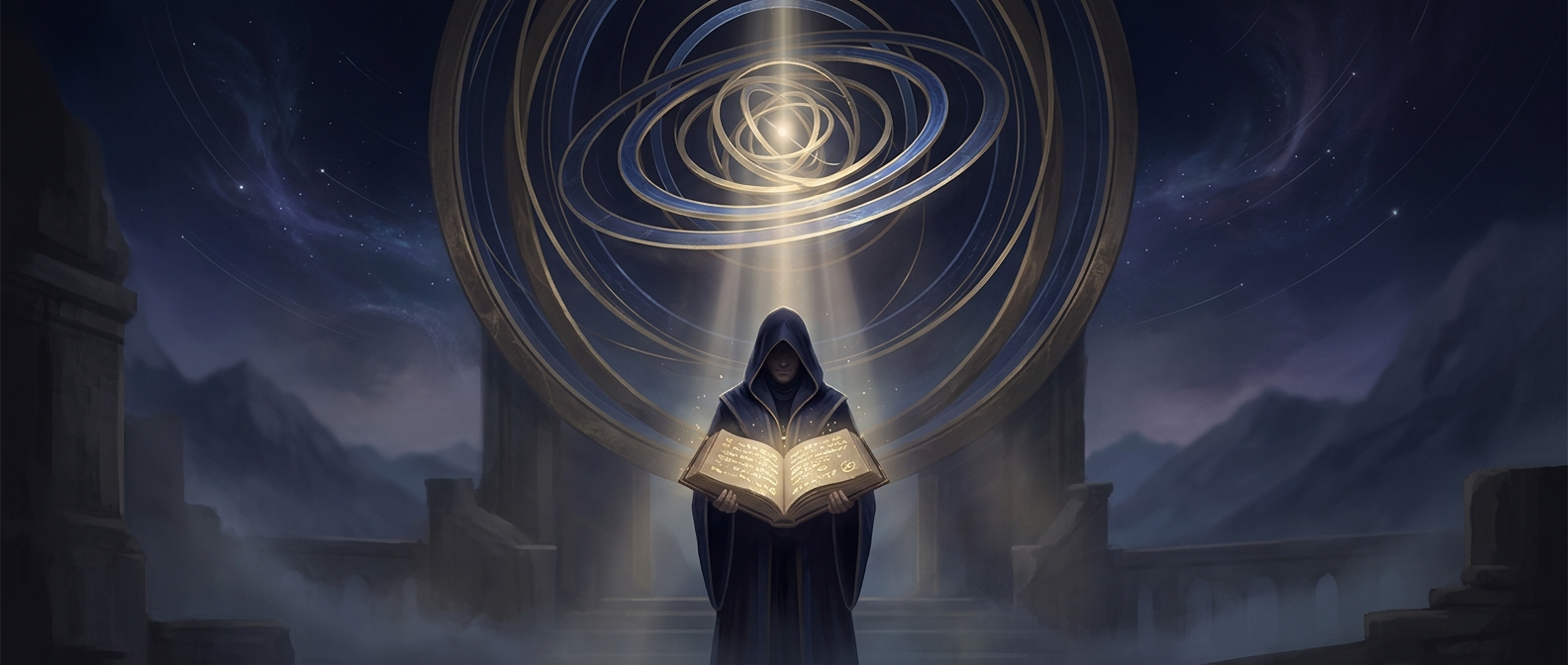
How Regiomontanus turns a question into a chart
In horary astrology, a chart is cast for the moment and place when a question is asked. Rather than describing a person’s life in general, the astrologer reads the chart as a symbolic map of that particular concern: whether a missing object will be found, for example, or how a negotiation may unfold.
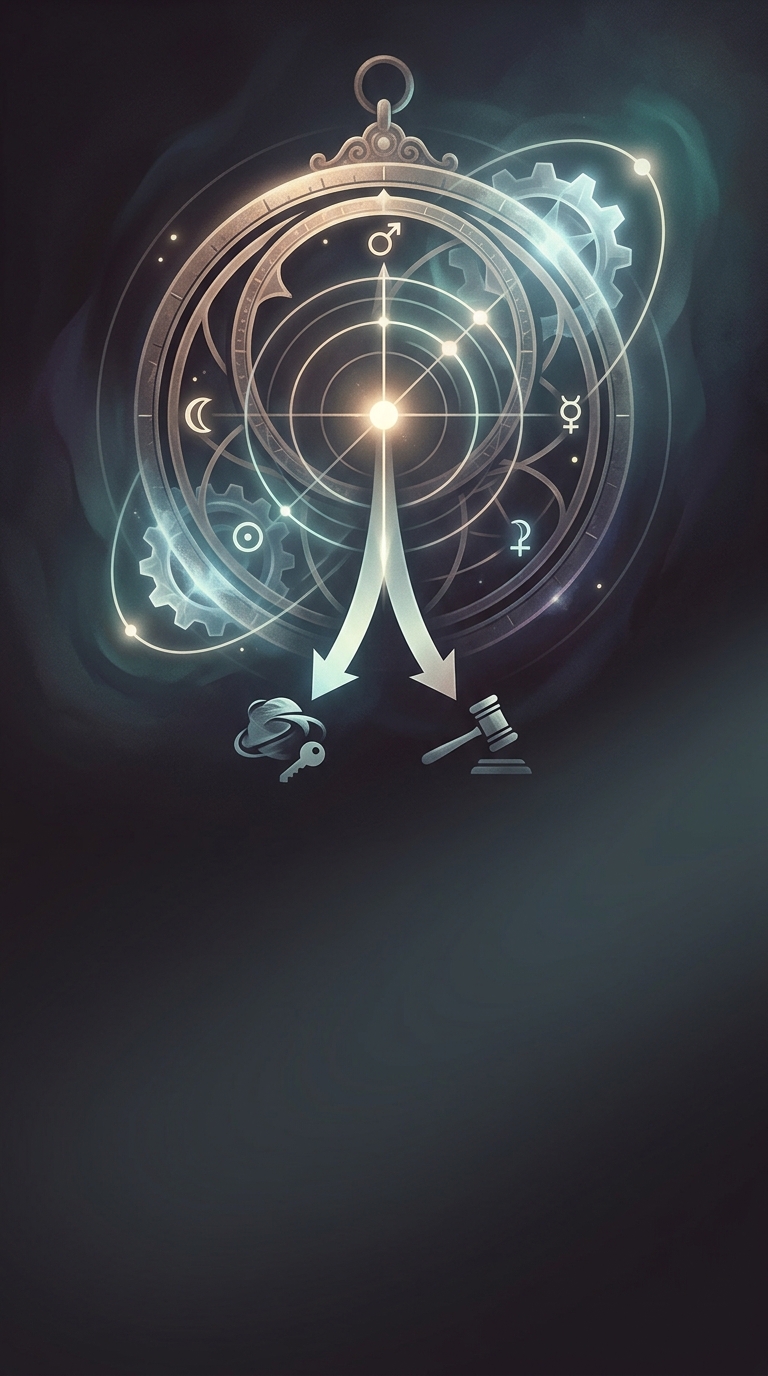
Regiomontanus is one way to divide that map into twelve houses—sections associated with different subjects, such as the questioner, a partner, money, or travel. Its geometry starts by splitting the celestial equator, the sky’s imaginary version of Earth’s equator, into twelve equal arcs. Great circles drawn through those divisions and points on the horizon establish the house boundaries.
Why the house boundaries matter
The planets’ positions are interpreted in relation to the houses. A planet’s sign may describe its symbolic qualities, while its house indicates which part of the question it concerns. The astrologer then considers how the relevant planets relate to one another and to the house boundaries. In this tradition, those relationships help shape a reading about the question’s circumstances and possible direction.
Because different house systems draw boundaries differently, the same planet can fall into a different house in another system. That can shift which part of a chart an astrologer emphasizes. Regiomontanus became especially associated with horary practice because it offers a consistent geometric framework for focusing on a single, practical question—not because the divisions themselves supply an answer. The interpretation comes from applying the system’s rules to the chart.