What Uranian astrology adds to a chart
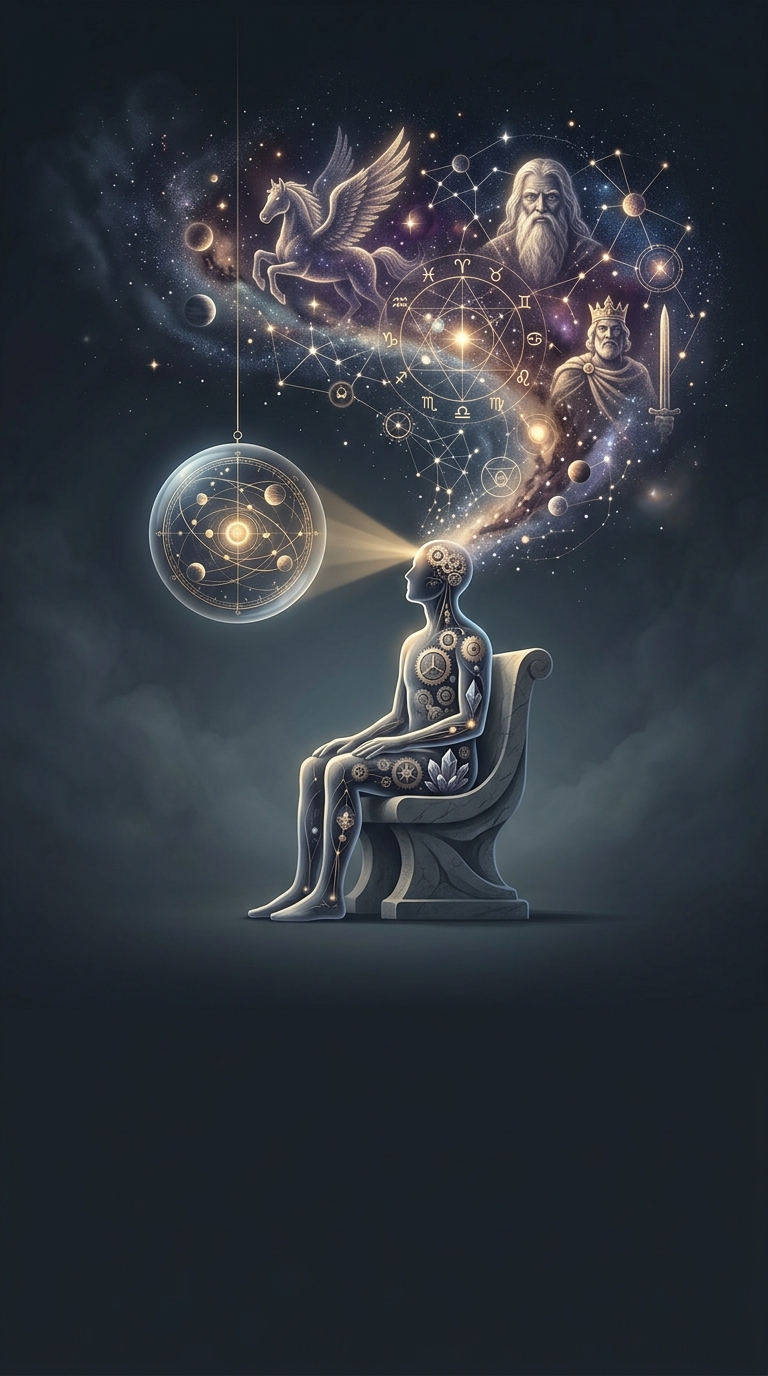
Uranian astrology treats eight hypothetical points—often called the Uranian planets—as additional factors in a birth chart. They are not visible planets with confirmed physical bodies; astrologers assign them positions and interpret those positions symbolically, much as they interpret the positions of familiar planets.
The eight names are Cupido, Hades, Zeus, Kronos, Apollon, Admetos, Vulkanus, and Poseidon. Each is associated with themes within the system. Their purpose is not simply to add eight more personality labels, but to create more combinations among chart factors.
How the combinations work
A central technique is the planetary picture: a relationship among two or more chart points, often involving a midpoint. If a point falls halfway between two others, the astrologer may read the three together as a symbolic pattern. Uranian astrologers also use a 90-degree dial, a circular chart layout that brings together points separated by multiples of 90 degrees, making certain alignments easier to spot.
Adding the eight hypothetical points greatly expands the number of possible patterns. A familiar planet can become part of a combination with one of these points and another planet, producing a more specific interpretation within Uranian practice. The result is a chart read less as a collection of isolated placements and more as an interconnected set of symbolic equations.
That complexity is also the method’s tradeoff: the reading depends on which combinations an astrologer considers meaningful and how the system assigns meaning to each point. The “invisible” points matter because they give practitioners more symbolic links to trace—not because they are hidden objects that astronomy has established in the sky.