A question becomes the chart’s starting point
Horary astrology treats a specific question as the subject of its own chart. The astrologer casts that chart for the moment the question is understood or formally asked, using the sky’s positions at that time—not the client’s birth chart. In the tradition’s logic, the question and its moment are linked, so the chart can be read as a map of the matter at hand.
Houses and planets stand in for people and things
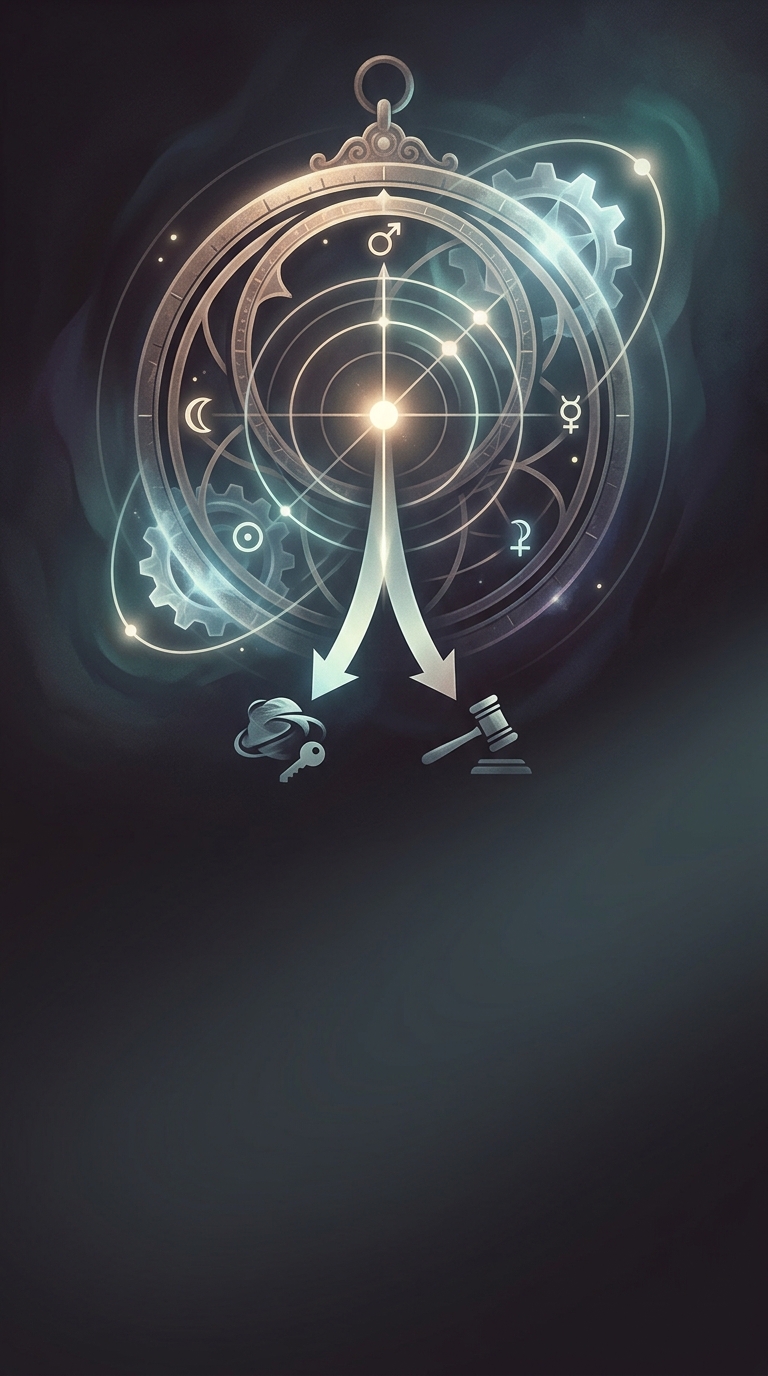
The chart is divided into houses, which astrologers associate with areas of life. The first house represents the person asking; other houses are chosen according to the question. The second house is commonly used for personal possessions, while questions involving a lawsuit may require considering several parties and topics, such as the opponent and the legal process.
Each house has a ruling planet, called its significator. The astrologer examines that planet’s position and its relationships to other planets. In traditional horary, an approaching connection between relevant significators may be read as a matter moving toward resolution; separation or difficulty can suggest obstacles. These are symbolic rules within an astrological system, not a verified way to establish what happened or predict a court’s decision.
Why the exact moment matters
A small change in time can shift the chart’s angles and house boundaries, potentially changing which planet represents a person or object. That makes horary unusually focused: rather than describing someone’s enduring character, it asks whether the chart’s symbols appear to connect the questioner with a missing item, or one side of a dispute with an outcome.
For lost keys, an astrologer might use the relevant house and its ruler to interpret the object’s condition or whereabouts. The result is a structured reading, not a literal coordinate—the chart supplies a framework for judgment, not a guarantee that the keys will turn up.