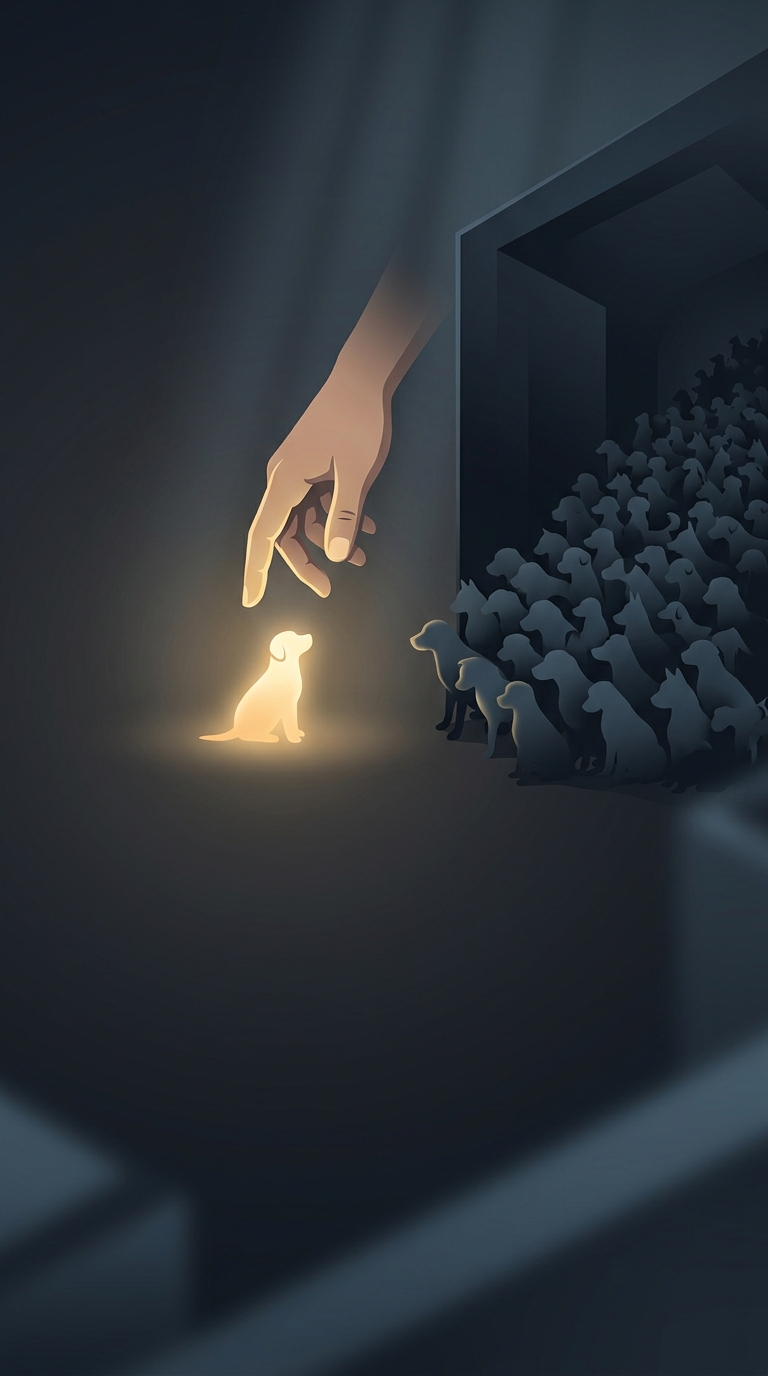
Why One Dog Can Feel More Urgent Than a Shelter Full of Animals
A single dog is easy to picture: a particular face, a visible injury, a clear need. A shelter full of animals is harder to hold in mind. Even when the larger group represents far more suffering, it can register as a statistic rather than as many separate lives. That gap helps explain why an appeal centered on one animal can prompt striking generosity.
A Story Gives Compassion Somewhere to Land
Psychologists often call this the identifiable victim effect: people may feel stronger concern for a specific, recognizable individual than for an unknown group. A photograph or a short account gives the mind a concrete focus. The reader can imagine what help would mean for that dog—food, treatment, a safe place to sleep—and picture a change from danger to relief.
A shelter-wide appeal asks the reader to imagine a broader problem with many possible needs. The scale may be greater, but the outcome of any one donation can feel less visible. The emotional response is not a careful calculation of how much suffering exists; it is often a reaction to a vivid person or animal in need.
Why More Need Does Not Always Mean More Giving
When the number of people or animals at risk grows, concern does not necessarily grow at the same rate. This is sometimes called scope insensitivity: people can struggle to translate a larger tally into a proportionally larger emotional response. Faced with a crowd of needs, they may also feel less certain that their contribution will make a noticeable difference.
That does not mean donors care only about individuals, or that group appeals cannot work. It means the way a need is presented can shape what feels urgent and actionable. A specific rescue story makes the stakes immediate; a shelter-wide appeal can become more compelling when it shows what support will concretely provide across the group. The striking detail is that a larger crisis can be harder to feel—not because it matters less, but because the mind has a clearer grasp on one life than on a total.