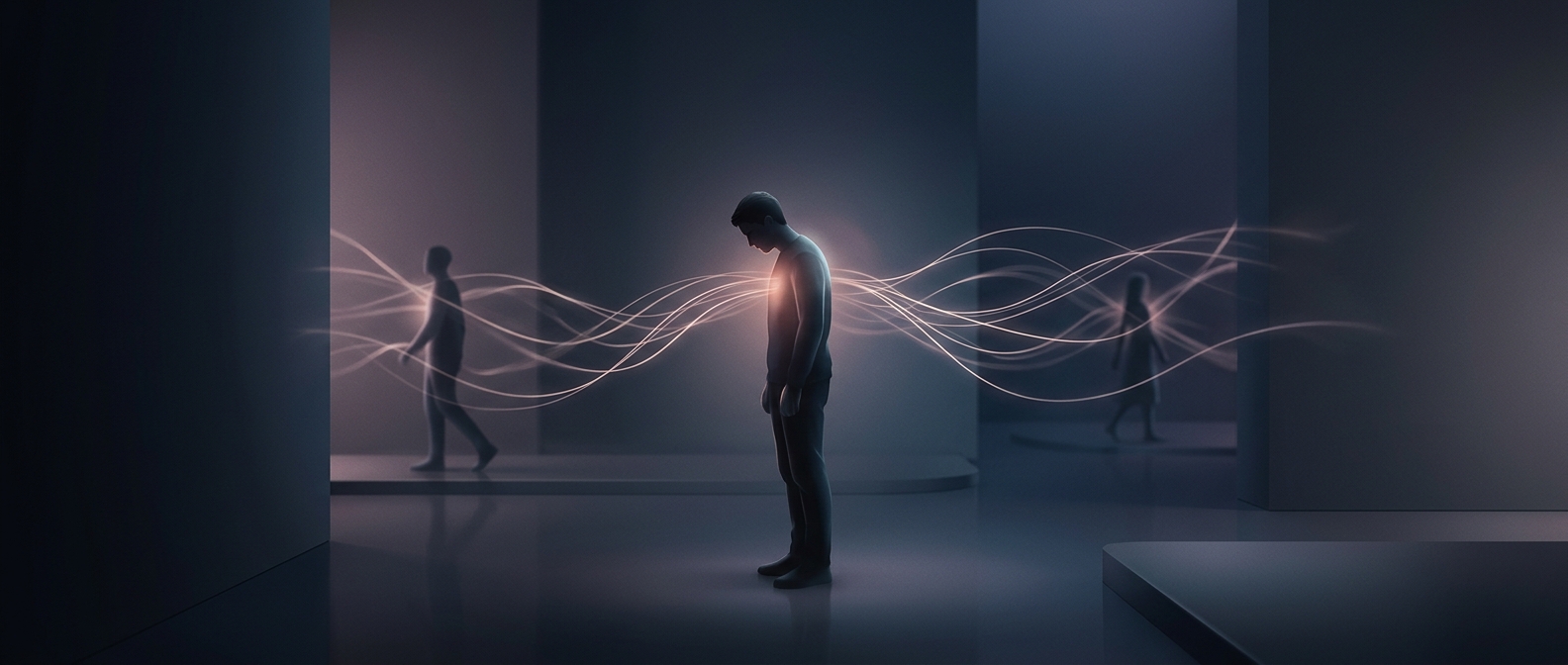
How another person’s distress holds your attention
When someone describes a painful situation, your mind does more than register the facts. You may monitor pauses, facial expressions, and changes in tone to judge how serious the situation is and what response is needed. That ongoing interpretation uses attention—the same limited resource you need for your own tasks and decisions.
Distress can also shift your own emotional state. Empathy helps you understand another person’s feelings, but it does not always keep those feelings neatly separate from your own. A tense story may leave you uneasy even when you know the danger or loss belongs to someone else. You are reacting to their cues, not experiencing their circumstances firsthand.
Why the strain can linger
Stories that feel unresolved are especially hard to set aside. If you are unsure what will happen, whether the person is safe, or whether you should intervene, your attention may keep returning to the problem. Replaying the conversation can feel like preparation: perhaps you will find the right thing to say or spot a way to help. But when there is no new information or useful action, that mental effort may continue without changing the outcome.
The drain does not mean you care too much or that you have taken on the other person’s pain in a literal sense. It can reflect the work of staying alert, interpreting emotion, and trying to respond well. Noticing the difference between being present for someone and being responsible for solving everything can make that work more manageable: listen, offer a specific form of help if you can, and allow yourself to return to your own needs when the conversation ends.