Your mind briefly takes the speaker’s place
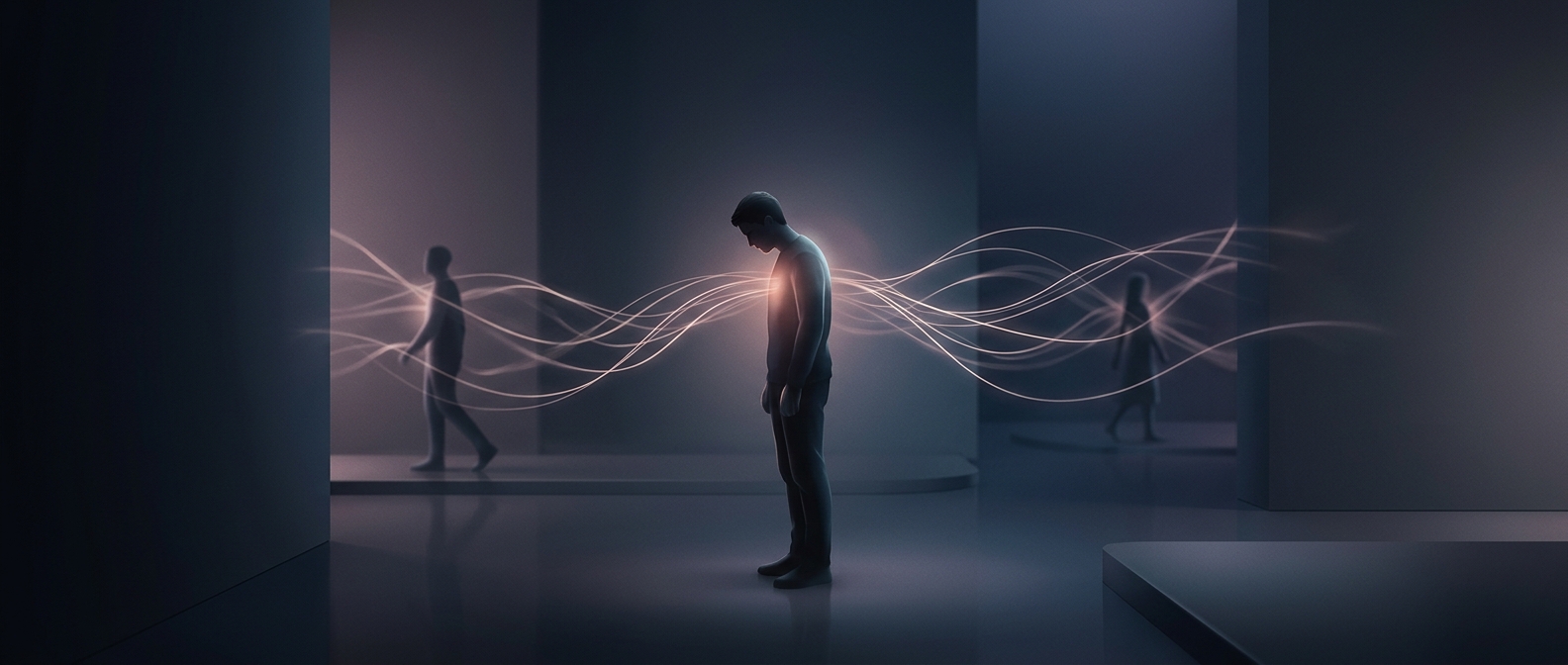
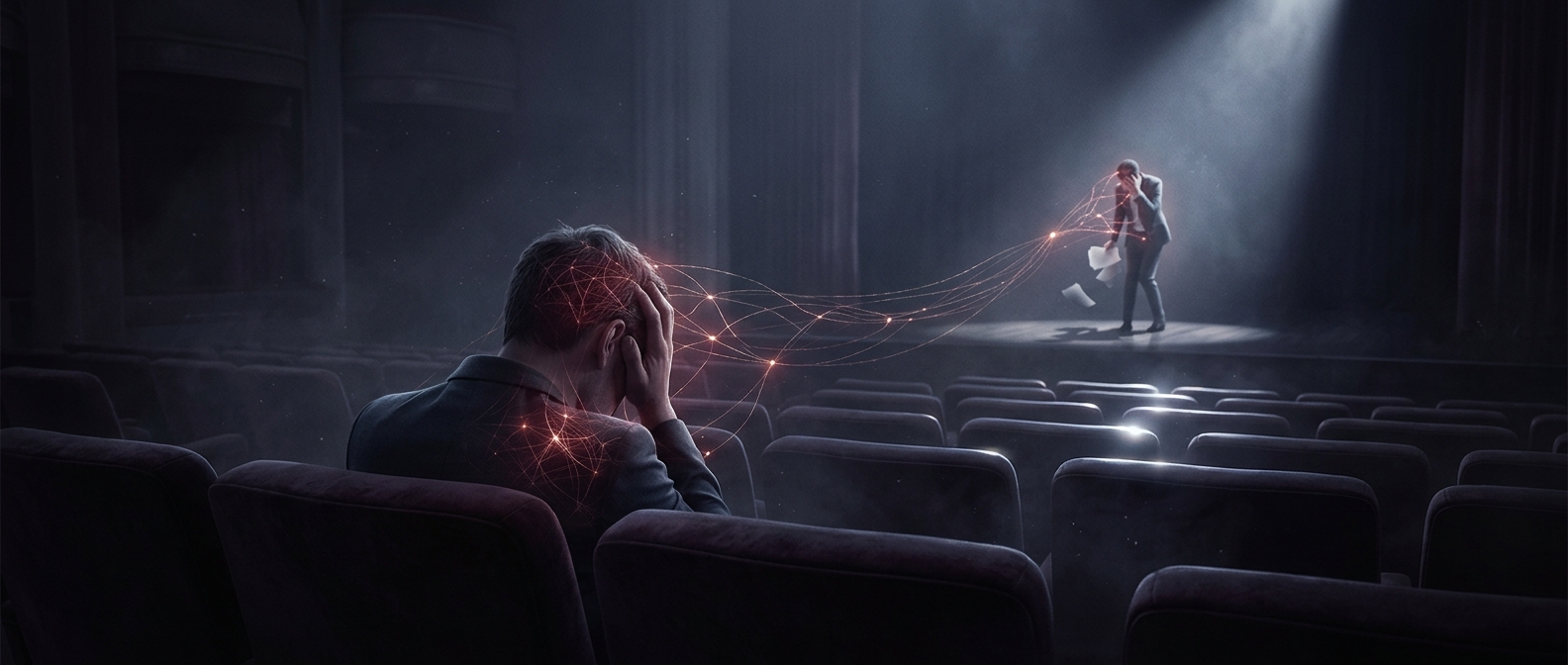
When someone falters in front of an audience, you can imagine the moment from the inside: the pause stretching out, people watching, and the possibility of being judged. This kind of perspective-taking—mentally picturing another person’s situation—helps explain why their discomfort can feel personal. Your body may respond with a flush or a wince even though you are not the one at the microphone.
The social threat is borrowed, not shared
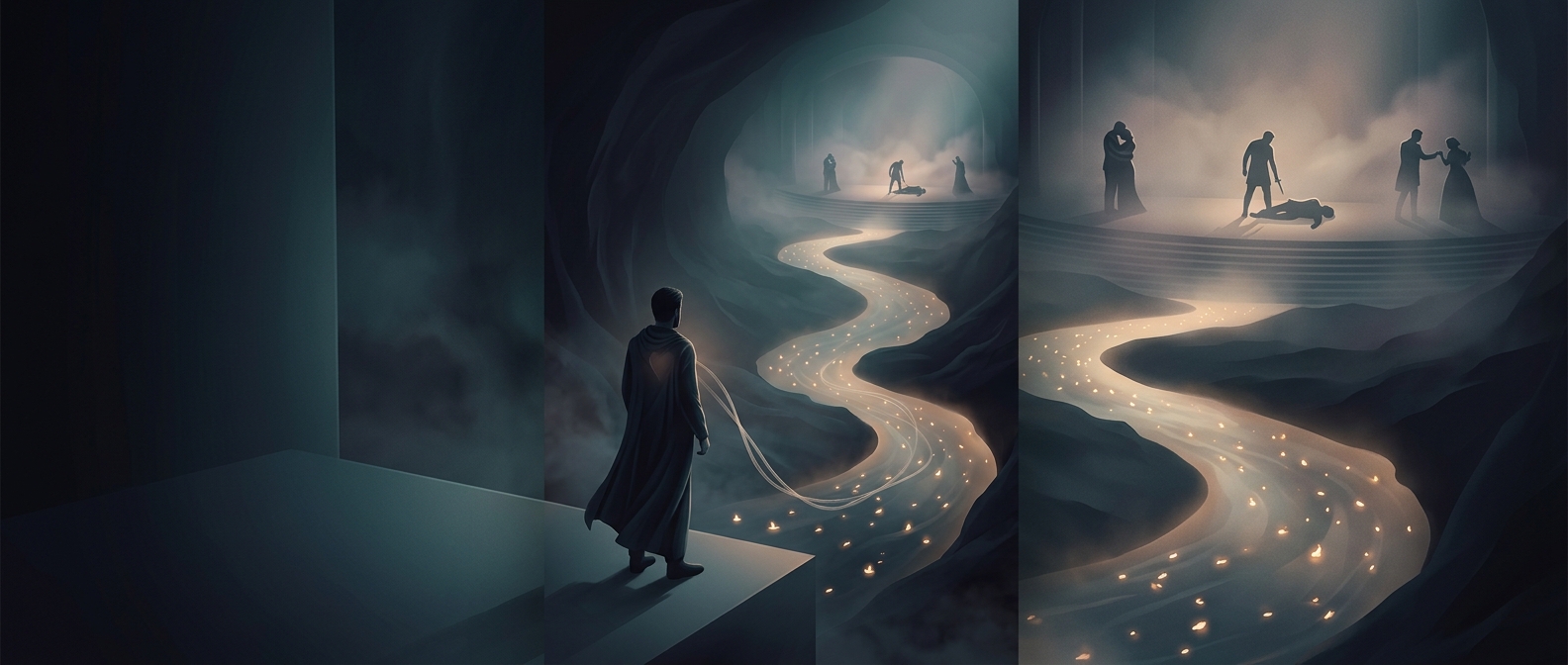
People are highly attuned to signs of embarrassment because social acceptance matters. A stumble or awkward silence can signal that someone’s standing is at risk. By simulating the scene, your mind can treat that possibility as relevant to you, too. The reaction is not proof that the other person is actually distressed; it is your response to what you think the moment might feel like.
That distinction helps explain why the feeling varies. If the speaker seems unaware of the mistake, or you do not identify with them, you may feel little. If you picture yourself in the same spotlight, the imagined judgment can make the scene much harder to watch.
A small rehearsal with a real bodily sting
This response can serve as a kind of social rehearsal: imagining another person’s awkward moment lets you anticipate how such situations might unfold and how they might affect someone. But the simulation can overshoot. You may feel embarrassed on someone’s behalf even when the audience has already moved on—or when the person at the center of the moment is not embarrassed at all.
So the next time a speech goes off track and your face warms, notice the switch your mind has made: it has turned someone else’s public stumble into a brief rehearsal of your own.