How the First Forests Changed the Climate
As tree-sized plants spread across land in the Devonian Period, roughly 385 million years ago, they did more than add shade to the landscape. Their roots worked into rock and soil, helping break minerals down. That process—chemical weathering—can carry carbon from the air into rivers and, eventually, into seafloor sediments.
The result was a long-term shift in Earth’s carbon balance. Plants took in carbon dioxide to grow; weathering and burial helped keep some of that carbon from returning to the atmosphere. With less carbon dioxide trapping heat, the planet could cool. In the later Devonian, cooling and glaciation coincided with major disturbances in the oceans, including low-oxygen conditions that harmed marine life.
A Chain Reaction, Not an Instant Apocalypse
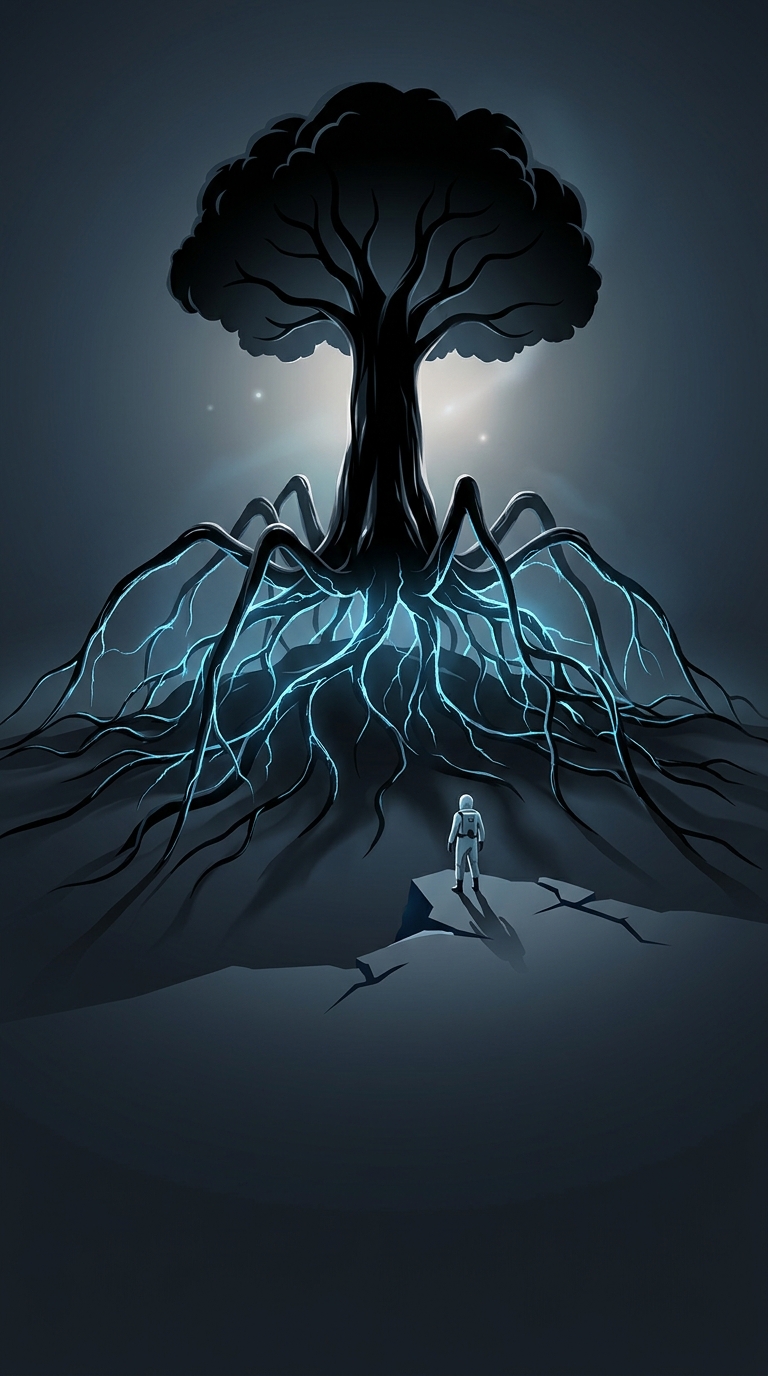
The unsettling possibility is that forests helped set off a planetary chain reaction: more extensive land vegetation altered the carbon cycle, climate shifted, and ocean ecosystems came under stress. This was not a sudden catastrophe caused by a single forest appearing. The changes unfolded over millions of years, and researchers consider several interacting causes rather than attributing the extinctions to trees alone.
Forests also changed the land itself. Roots stabilized soil and created new habitats, while dead plant matter accumulated and became part of the carbon stored in sediments. The same growth that made richer terrestrial ecosystems possible could therefore reshape climate far beyond the woods.
The striking consequence is that early trees were not merely passengers in Earth’s history: by changing how rock weathered and carbon moved, they may have helped alter the conditions in which life everywhere had to survive.