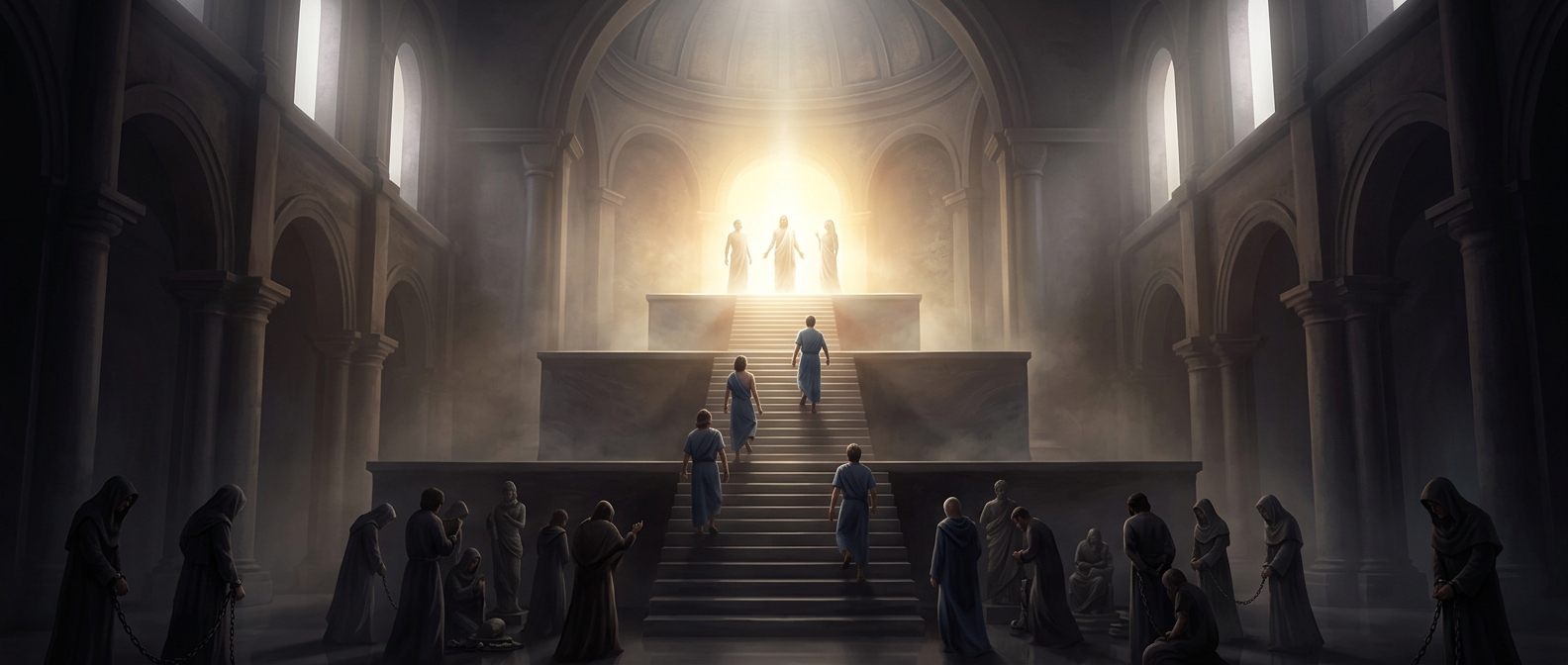
In Poimandres, forgetting is part of the human predicament
Poimandres is the opening treatise in the Corpus Hermeticum, a collection of Greek writings from late antiquity attributed to the legendary sage Hermes Trismegistus. It presents its teaching as a vision: a divine Mind reveals how the world and humanity came to be.
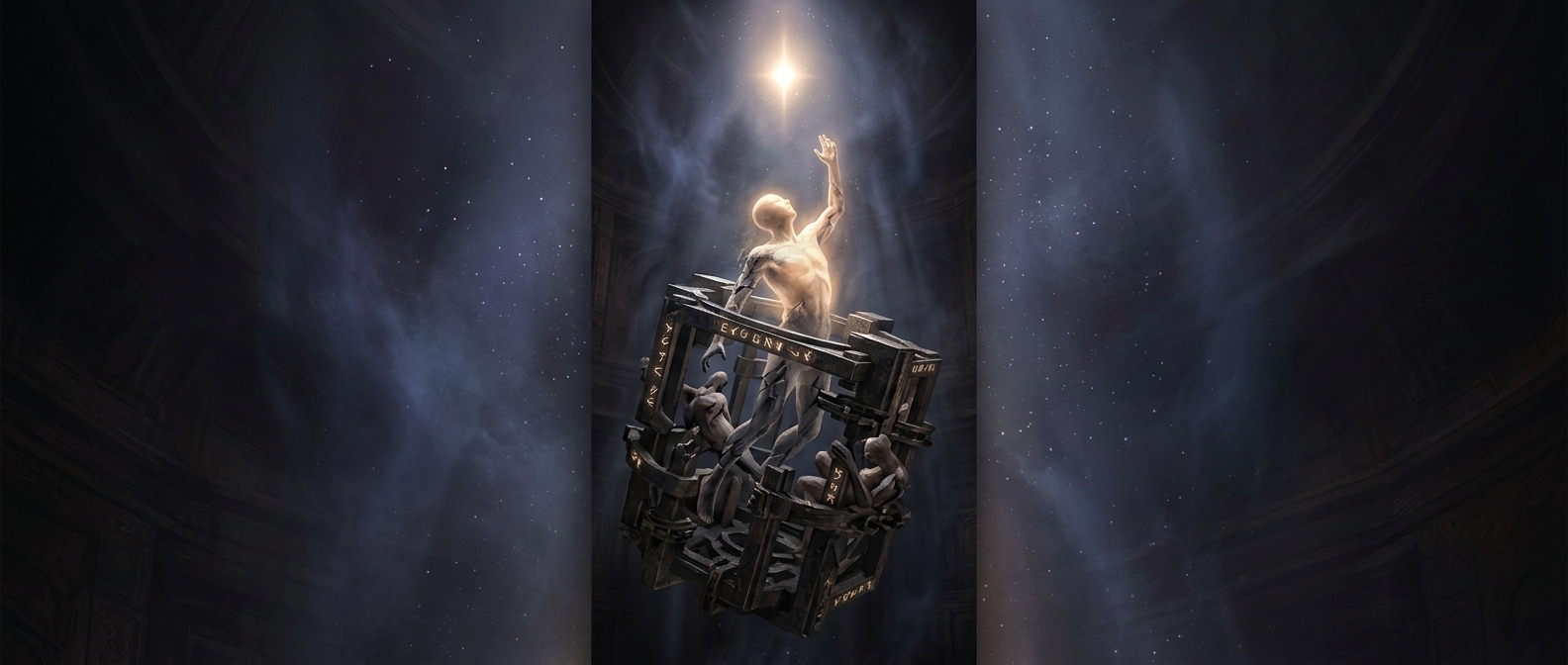
In the vision, the original Human is made in the image of the divine Mind and possesses creative power. Drawn by the beauty of the material world, this figure descends into nature and becomes joined to a mortal body. The result is a being with a double inheritance: a divine origin and a life governed by bodily needs and the visible world.
Knowledge means recovering a lost orientation
The treatise’s problem is not that people lack all traces of divinity, but that they mistake their embodied, changeable lives for the whole of what they are. Its remedy is gnosis—a Greek word meaning knowledge, especially direct spiritual recognition. Through understanding their origin and turning their attention toward divine Mind, people can begin to loosen the hold of ignorance and return toward their source.
That story makes “forgetting” more than a lapse in memory. It describes a misdirected way of seeing: humans live as though they were only physical creatures, despite carrying a divine capacity within them. The text offers this as religious philosophy, not a scientific account of human nature. Its memorable tension is that the way home begins not with becoming divine, but with recognizing what the story says was never entirely lost.