When a trophy becomes an in-game purchase
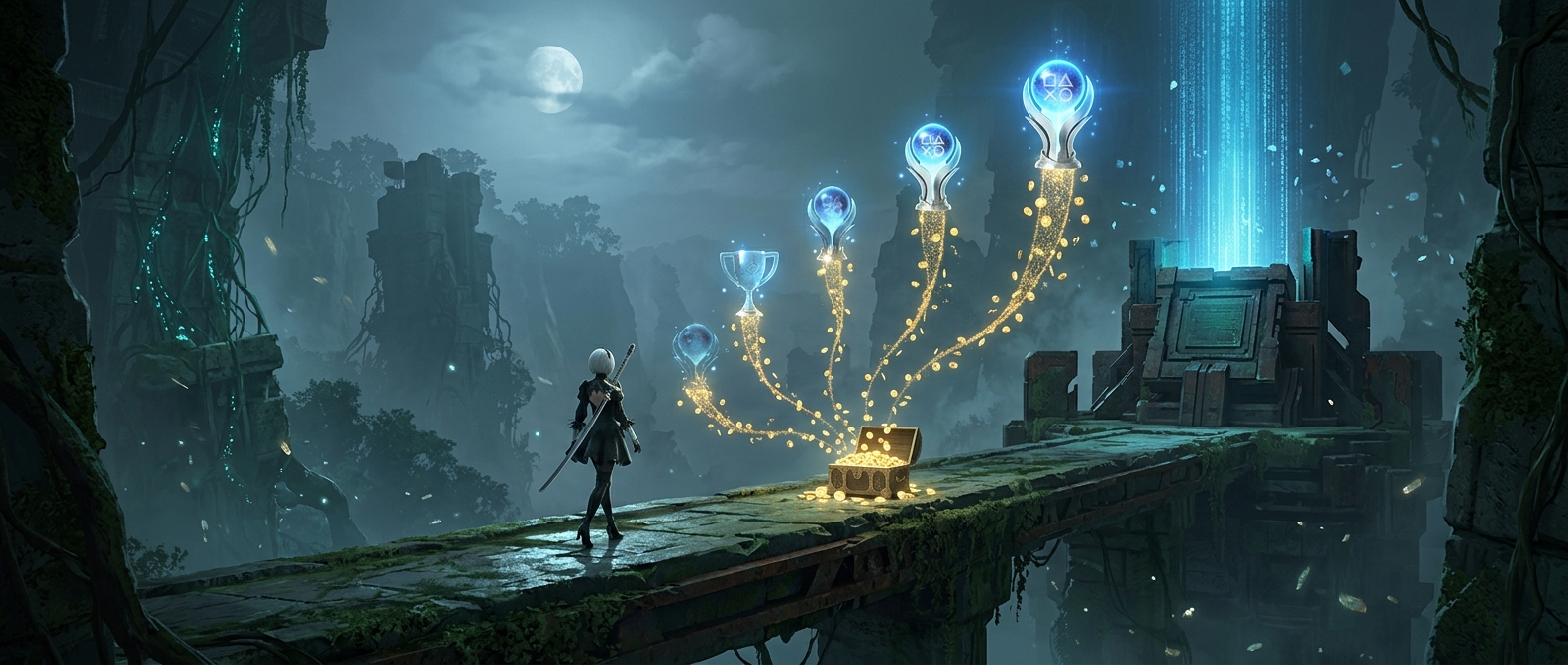
Most games treat trophies as rewards handed out by the console after a player meets a condition: finish a quest, defeat a boss, or collect a set of items. NieR: Automata turns that arrangement inside out. A hidden shop lets players spend ordinary in-game currency to unlock trophies they have not earned through those tasks—including the Platinum trophy, normally the prize for completing the rest of a game’s trophy list.
The trick works because two reward systems overlap. The game’s currency is earned through play, while trophies are usually tracked outside the game by the platform. The shop makes the latter feel like one more purchasable resource inside the world. Players can keep pursuing a difficult or tedious requirement, or earn money and use it to bypass that particular hurdle.
A shortcut that is also a design joke
That option changes what trophy hunting means. A checklist that usually demands specific accomplishments becomes a choice about how to spend time: repeat a challenge, gather currency, or stop chasing a particular trophy altogether. The shortcut is not free—the player still has to pay with resources earned in the game—but it replaces one kind of effort with another.
There is also a playful mismatch at the heart of the feature. Trophies are meant to certify that a player did something; here, the game lets the player buy the certification. Even the top award can be treated as merchandise. The result is a rare case where the game’s own economy can reach beyond its fictional world and alter how a player completes the platform’s achievement list.