A face that doubles as a damage gauge
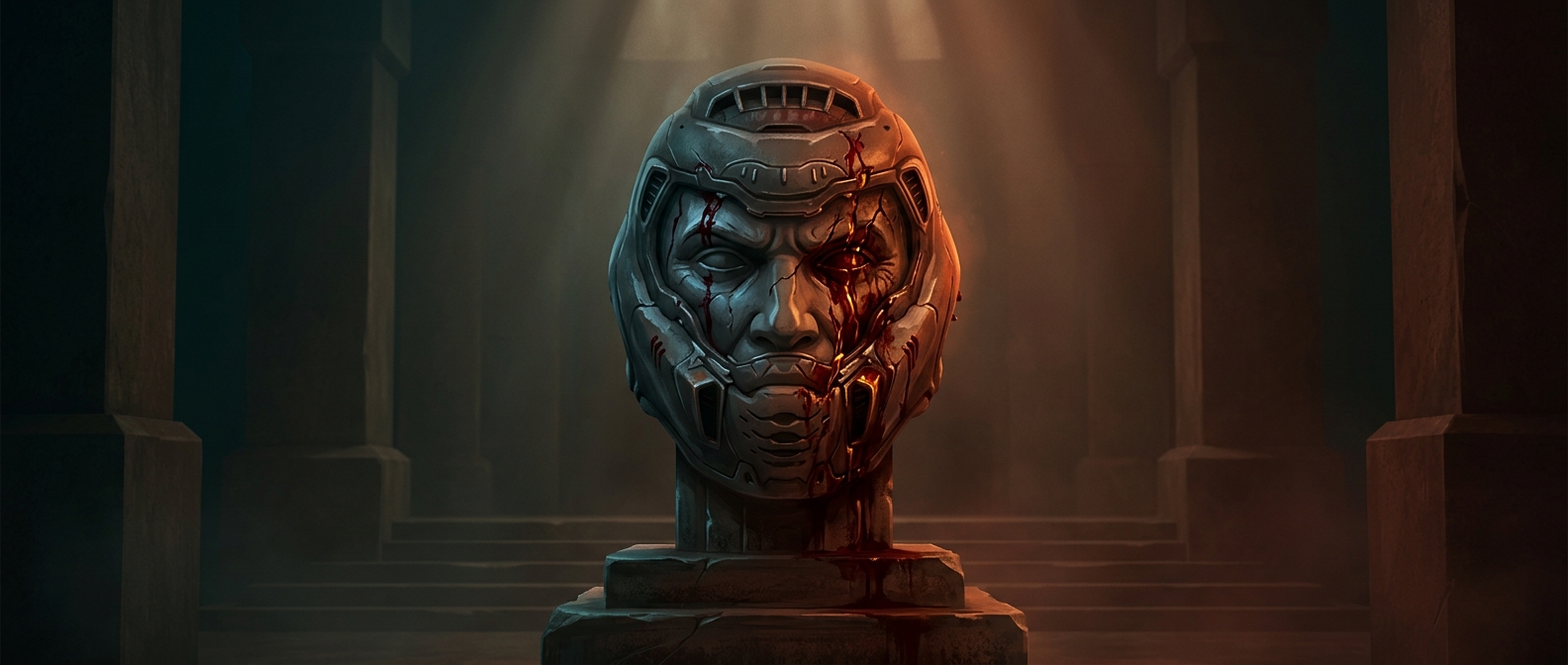
In Doom, the portrait in the status bar is more than decoration. As the marine’s health falls, the face appears increasingly bloodied, giving the player a quick visual sense of how badly the fight is going. The change is tied to health, so the portrait acts as a second readout alongside the health number.
That matters in a game where threats can arrive from several directions and stopping to study the interface is risky. A glance at a damaged face can register instantly, without requiring the player to parse a bar or remember a previous number.
Turning a tiny portrait into feedback
The effect works through a small set of pixel-art expressions rather than a realistic wound simulation. At the scale of the status bar, a few strong shapes—blood, a tense expression, a battered face—must carry the message. The portrait can therefore communicate both the character’s condition and the danger of the moment in a space too small for elaborate animation.
The face also gives the HUD a human focal point amid the game’s weapon icons and ammunition counts. Numbers tell the player exactly how much health remains; the battered portrait makes that number feel like something happening to the character. As the damage accumulates, the interface turns an abstract resource into a visible consequence.