Why the Virtual Boy Interrupted Play
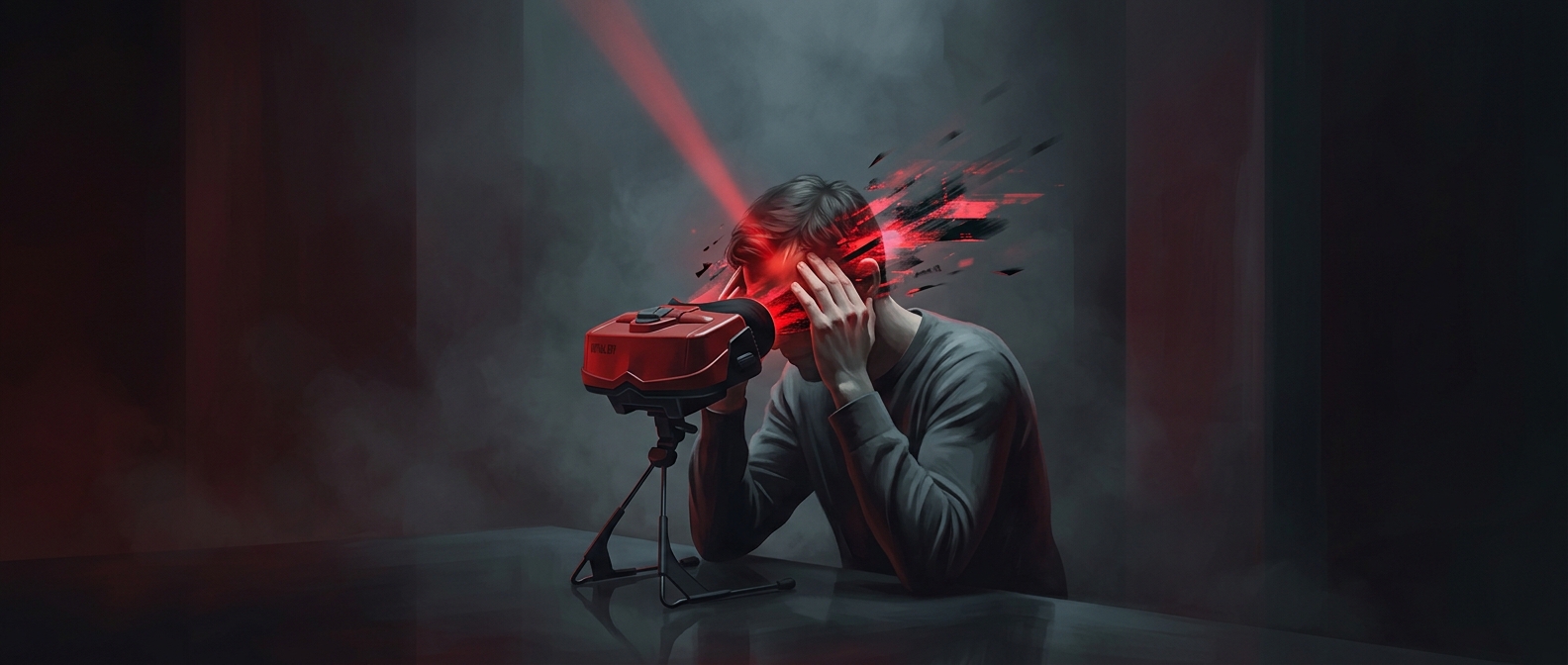
The Virtual Boy created a sense of depth by showing a slightly different image to each eye. The brain combines those views into a single scene that appears three-dimensional—a trick called stereoscopic vision. But the effect was delivered through a close-set viewer, with a red-and-black display and no view of the surrounding room while playing. Keeping attention on that artificial scene could become uncomfortable for some people.
The console’s timer turned a caution into part of the game’s operation: at the interval, play stopped rather than relying on players to notice discomfort and take a break on their own.
A Reminder, Not a Cure
Nausea can arise when visual signals and the body’s sense of movement do not agree. A 3D image may suggest depth or motion even while a player is sitting still; prolonged viewing can also tire the eyes. A pause gives players a chance to look away and reset their attention, though it cannot guarantee that everyone will feel fine afterward.
That interruption reveals a design constraint as much as a health precaution. The Virtual Boy’s immersive effect depended on sustained, close viewing, so its makers built a limit into the experience itself. Unlike a warning printed in a manual, a timed pause could reach players in the middle of a session—right when they might otherwise keep going.