Why a Long Mountain Descent Heats the Brakes
An 8% grade drops about eight feet for every 100 feet traveled horizontally. That may not look dramatic from the driver’s seat, but mile after mile downhill, gravity keeps pulling the vehicle faster. The brakes must turn that forward motion into heat to hold speed.
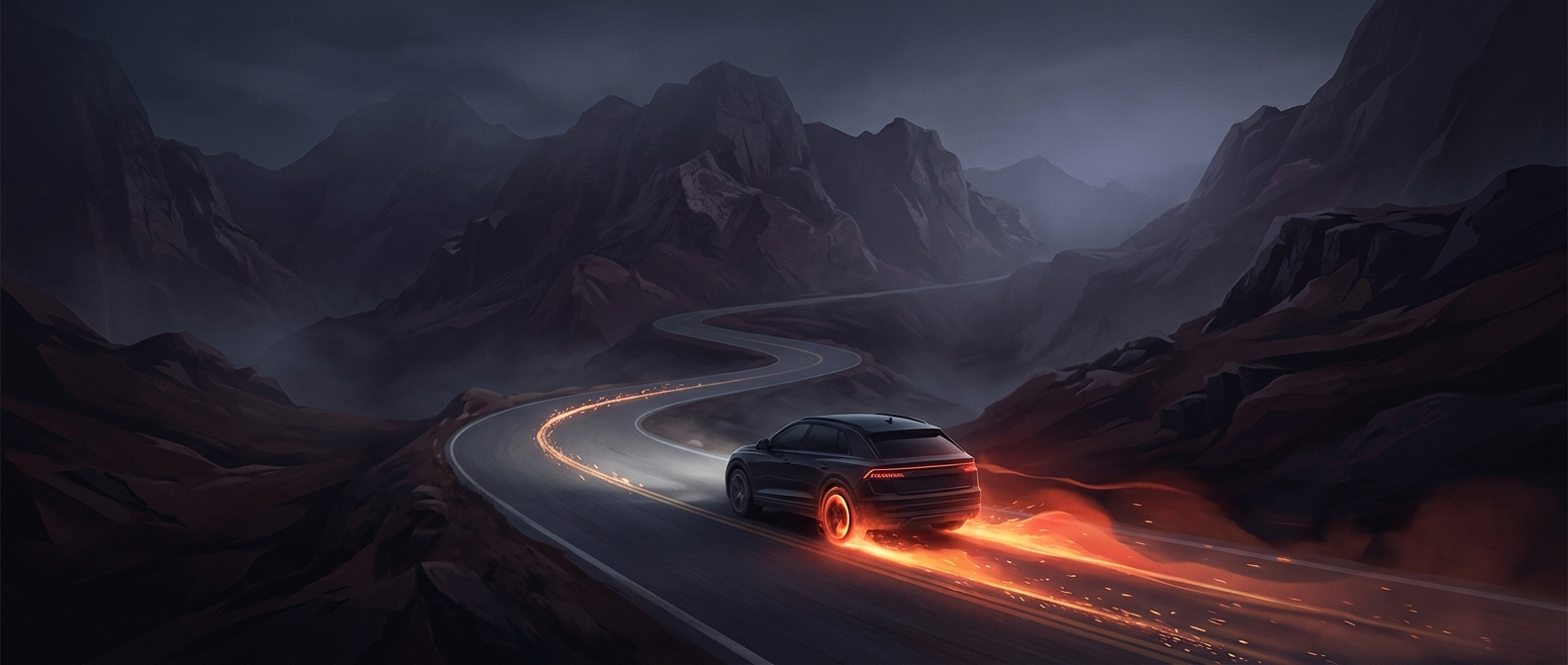
A brief slowdown gives the brakes time between uses. Riding them—keeping steady pressure on the pedal for a long stretch—continually presses the pads against the rotors, so heat builds faster than it can escape. If the system gets too hot, braking can become less effective; extreme heat can also damage components.
Let the Engine Help Control Speed
Downshifting makes the engine resist the vehicle’s motion. This is called engine braking: in a lower gear, the engine turns faster and helps slow the wheels without relying as heavily on the brake pedal. It does not replace the brakes, but it can reduce the amount of heat they have to absorb over a sustained descent.
Choose a lower gear before the slope becomes steep, rather than waiting until the vehicle has already gathered speed. The right gear depends on the vehicle and the road; the aim is a controlled pace, not a fast descent followed by constant braking. On a mountain road, a lower gear can mean less heat accumulating at the wheels—and more braking capacity available when a curve or other hazard demands it.