A hull shaped for water that barely covered the ground
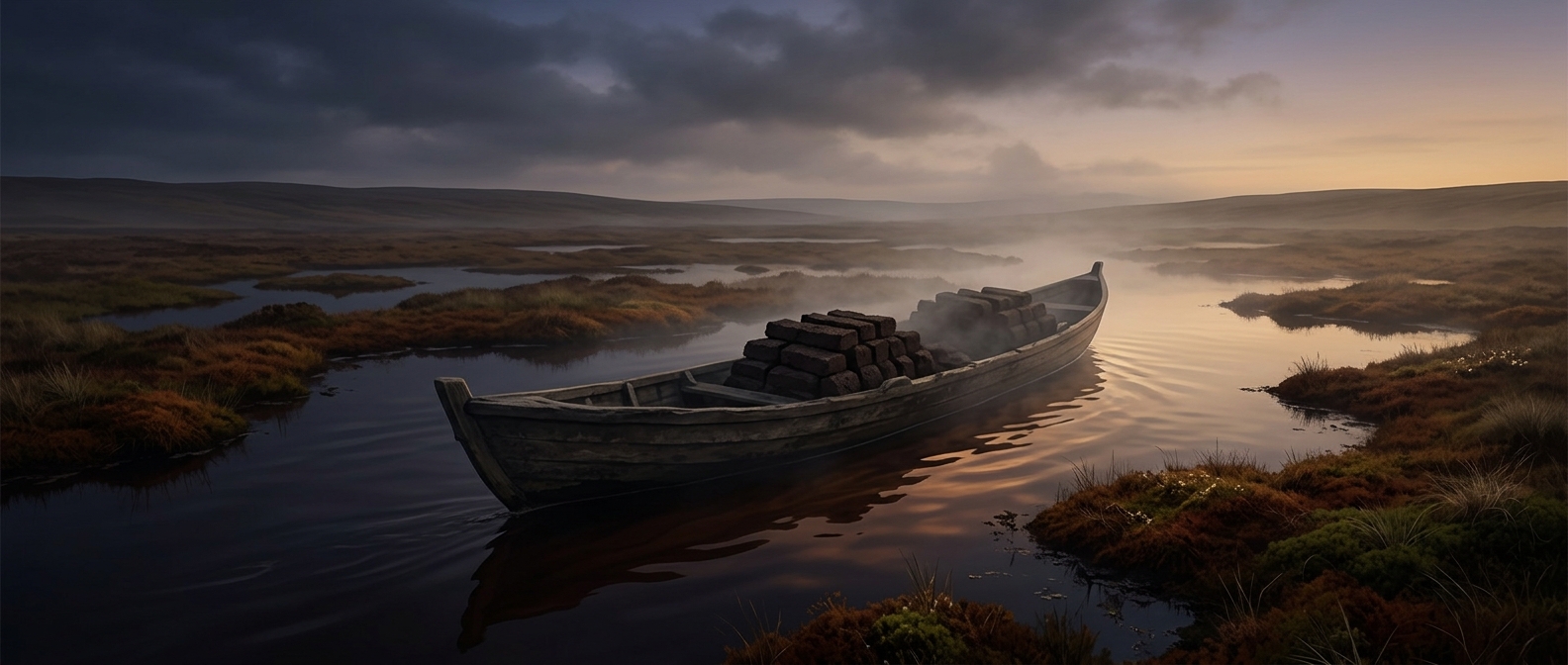
A peat boat had to move through channels where the water could be only a little deeper than the boat’s own hull. The key measurement was draft: how far the boat extended below the waterline. Keeping that distance small let the craft pass over shallow spots instead of grounding on the bog beneath.
A broad, flat bottom also suited water that was sluggish and close to the soft peat. It spread the boat’s weight across a wider area and avoided sending a narrow projection down into the bog. That mattered because peat is compressed plant matter, not firm riverbed; a hull that pressed or scraped into it could lose momentum quickly.
Why a keel would work against the job
A deep keel—a ridge running beneath a boat to help it track through deeper water—would have created a new obstacle. Even if the hull itself cleared a shallow channel, the keel could snag or plow into the bottom. The result would be extra resistance precisely where the boat needed to glide with little clearance.
That is the tradeoff in the design: a deep keel can help a boat hold its course in open water, but peat channels called for access and a shallow footprint instead. The boat was not built to conquer deep water; it was built to reach through the bog without turning the bog itself into something it had to push aside.