A comic character built to travel beyond the page
A newspaper comic reaches readers in a few small panels, but a licensed character has to work in very different places: on a lunchbox, a greeting card, or a plush toy. Garfield’s design made that transition easier. His rounded body, bold stripes, and simple face remain recognizable when reduced to a small image or adapted into a three-dimensional object.
That visual clarity served a commercial purpose, but it also fit the demands of the comic strip. A small set of legible expressions can carry a joke quickly, even when readers encounter a single panel out of context. Garfield’s familiar signals—especially his appetite and reluctance to exert himself—make the character easy to understand without a long explanation.
Relatability made the character reusable
Broad appeal comes from traits that can be recognized across many situations. Garfield’s grumbling about food, work, and unwanted interruptions gives creators repeatable comic material, while leaving room to place him in new settings. The character does not depend on a detailed backstory or a narrow specialty to make sense. That flexibility helps a comic remain accessible to casual readers and gives merchandise makers a character that can be shown in many moods and poses.
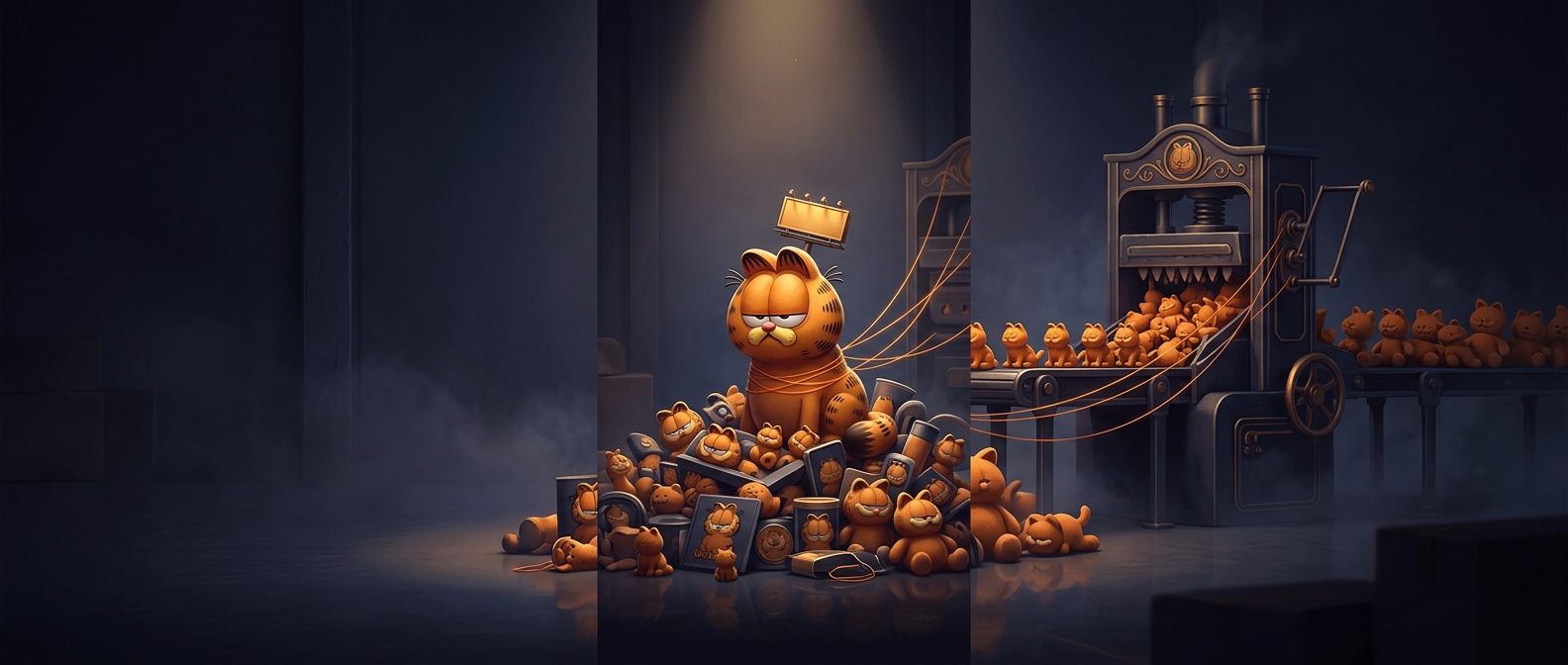
The result is a feedback loop: a clear design helps people recognize Garfield on products, and that visibility can bring more people to the strip. Merchandise was not simply an afterlife for a popular comic; it was one of the uses the character was shaped to serve from the beginning.