What the label changes—and what it doesn’t
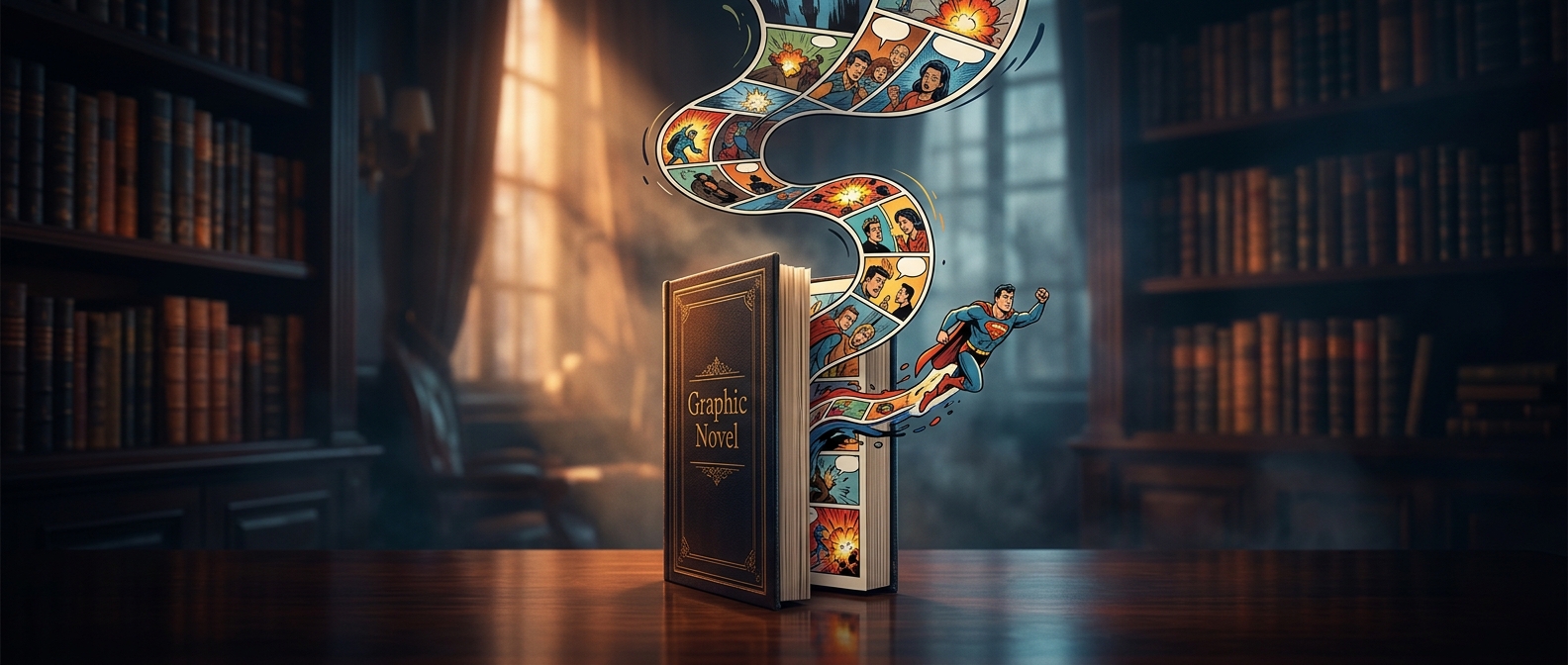
“Graphic novel” describes how a comic is packaged and presented, not a different way of telling a story. Whether the pages arrive in a monthly issue or between hard covers, the basic tools remain the same: drawn images, words, and the reader’s movement from one panel to the next.
The label is useful because it sets expectations. A book called a graphic novel may be a long, self-contained story, or it may collect chapters that first appeared separately. Either way, the phrase can suggest a substantial book rather than a short, ongoing installment—an association that helped comics reach readers who might not have picked up a periodical comic.
A format with room for different stories
Length and binding can shape how a story is made and read. A creator working toward one complete volume can plan its opening, turning points, and ending as a single arc. A collected series, by contrast, may preserve the breaks where readers once had to wait for the next issue. Neither structure is inherently more serious; each offers different pacing and possibilities.
The distinction also matters in bookstores and libraries, where books are shelved, cataloged, and recommended. “Graphic novel” gives retailers and readers a handy category, including for memoir, history, and other nonfiction told through comics. But the category doesn’t guarantee a particular subject, audience, or level of literary ambition.
The label can change where a comic sits and who expects to find it; the panels still do the storytelling.