The sketch could stay under the ink
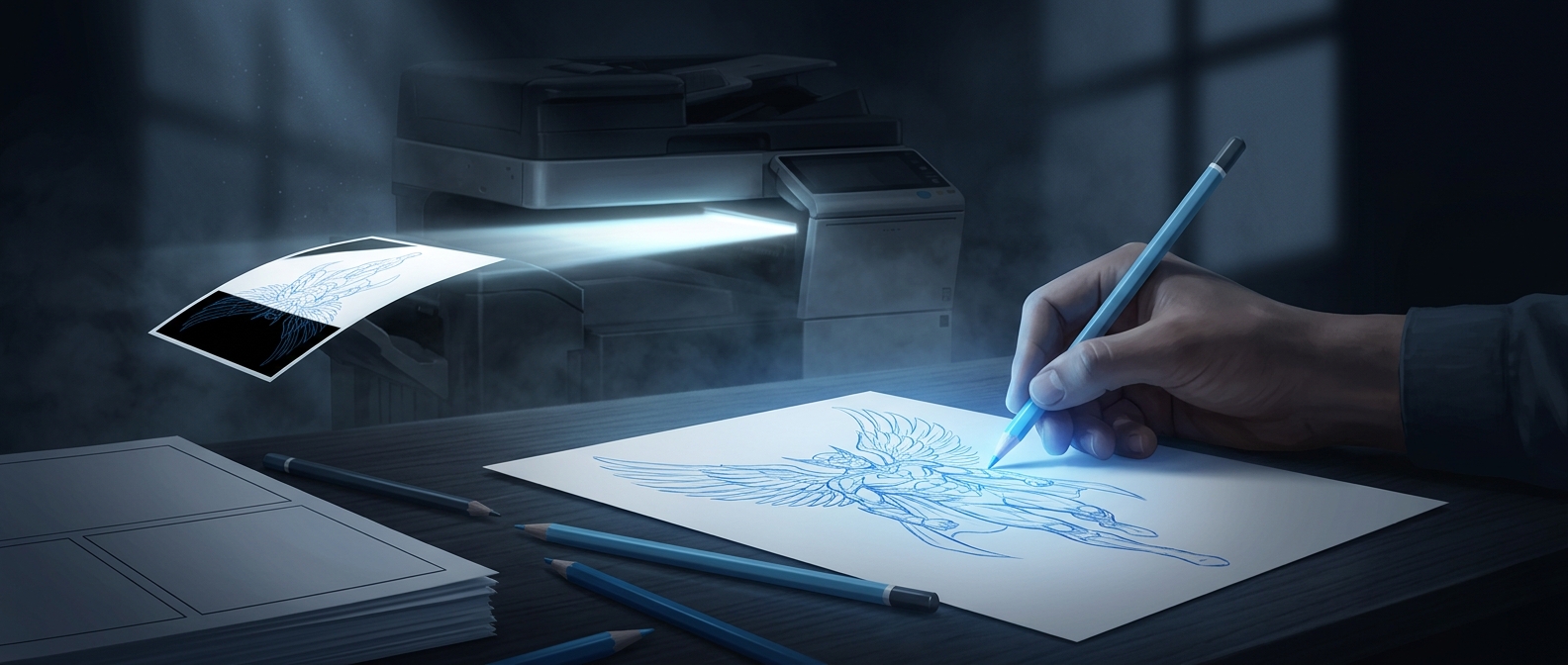
Comic pages often began as rough drawings in non-photo blue pencil. The artist could use those pale lines to plan poses, faces, and panel details, then draw the finished outlines in black ink over them. Because the blue guides were meant to disappear during reproduction, there was no need to scrub them off the original page—a useful shortcut when a deadline meant moving straight from drawing to production.
Why the blue vanished
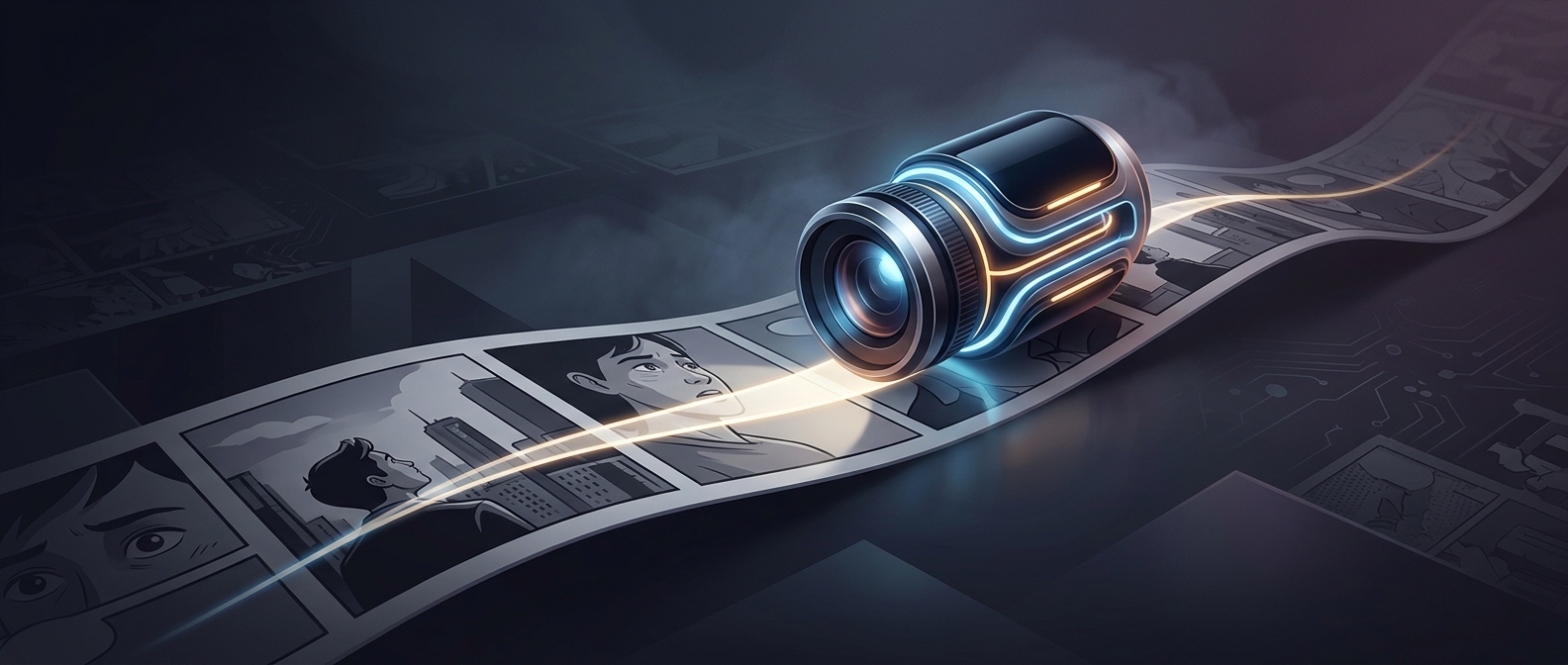
In traditional comic production, a finished page was photographed and converted into printing material. The camera and film used for this work did not register certain light-blue marks strongly, so those marks barely appeared—or did not appear at all—in the resulting image, while the dark ink reproduced clearly. “Non-photo blue” described a pencil color selected for this production process, not a special kind of paper or a mark that was invisible to the human eye.
The result depended on the materials and reproduction setup. A blue that disappeared in one workflow might show up in another, so artists and publishers used particular pencils and tested their process rather than assuming any blue would do.
A production shortcut with a long afterlife
The method separated two jobs on one sheet: blue for construction, black for the finished drawing. It saved the artist an erasing step and reduced the chance of smudging or damaging delicate ink lines. Even as comics moved to scanning and digital cleanup, non-photo blue remained a familiar tool; a modern scanner may capture it, but software can remove the color afterward. The pencil’s appeal is the same either way: keep the planning visible while drawing, then make it disappear at reproduction.