How comic shops became dependent on one weekly pipeline
The comic-book “direct market” was built around a simple tradeoff: publishers sent comics through specialized distributors to comic shops, which ordered copies in advance. Unlike many bookstore sales, these orders were generally not returnable. A shop had to guess what readers would buy, then pay for the copies it had ordered whether they sold or not.
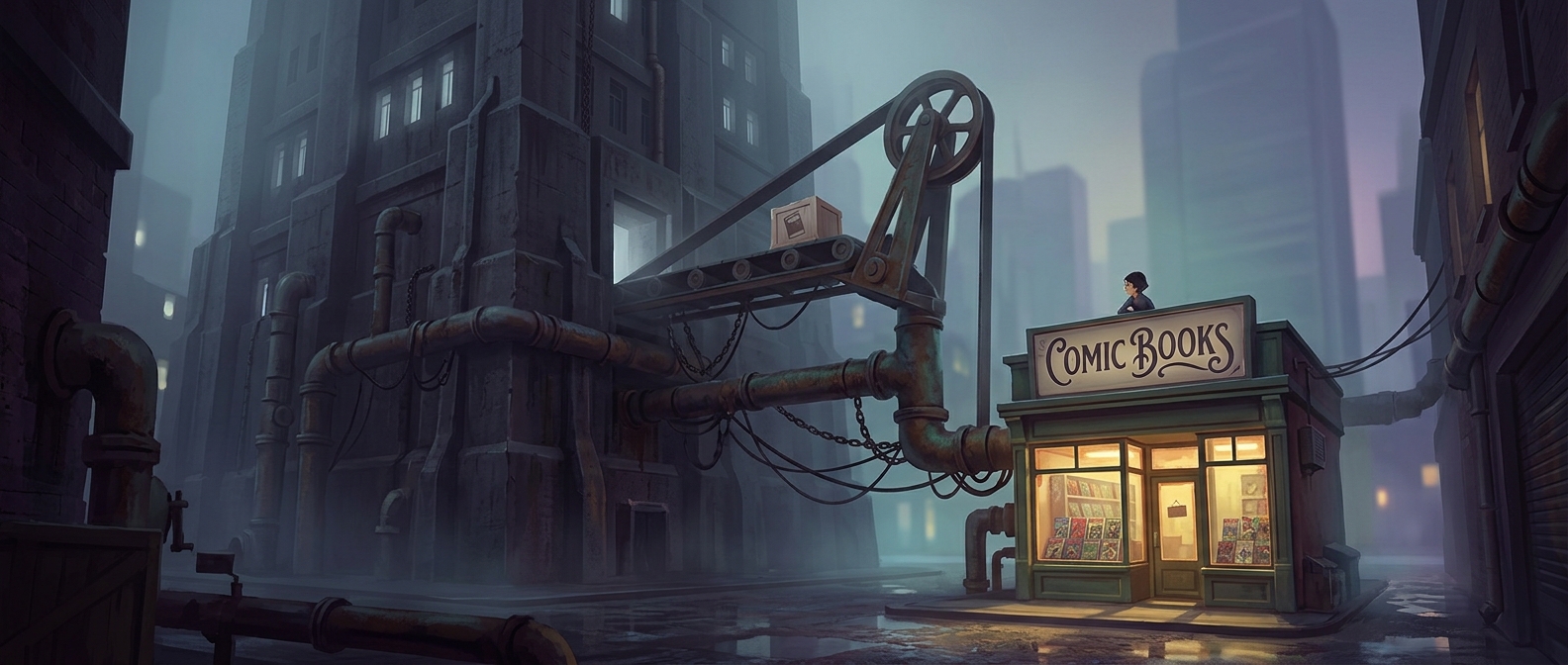
That system made the distributor more than a delivery service. It was the link between publishers’ release schedules and thousands of independent retailers. As distribution consolidated, a dominant distributor handled most of the major publishers’ comics for long stretches. Shops could have few practical alternatives if that pipeline faltered.
Why one failure could reach far beyond one store
Comics arrive on a calendar: a missed delivery can mean missing the week’s new issues, not simply receiving them a day later. Readers who reserve particular titles may show up expecting their copies; a shop that has paid for an order cannot sell what never arrived. The lost sale can also mean a lost visit—and a customer may turn to another shop or stop following a series.
The vulnerability was shared. If a distributor’s ordering, packing, or transportation system failed, many shops relying on it could be affected at once. A shipment problem could therefore look local at the counter while having a common cause upstream. Stores had limited ability to replace the missing books quickly because the distributor was also the route through which publishers’ new releases flowed.
Centralized distribution made a complicated market efficient to serve, but it concentrated risk. For a comic shop, one absent box could mean an empty new-release rack; for readers across a region, it could turn the same Wednesday into a week with no new comics to pick up.