Space Gives Each Painting a Visual Boundary
A painting does not meet the eye in isolation. When another bright or strongly colored work hangs close by, both enter the viewer’s field of view at once. The eye can focus on only a small area sharply; outside it, vision is less precise, and nearby shapes and colors can blur together or tug attention in different directions.
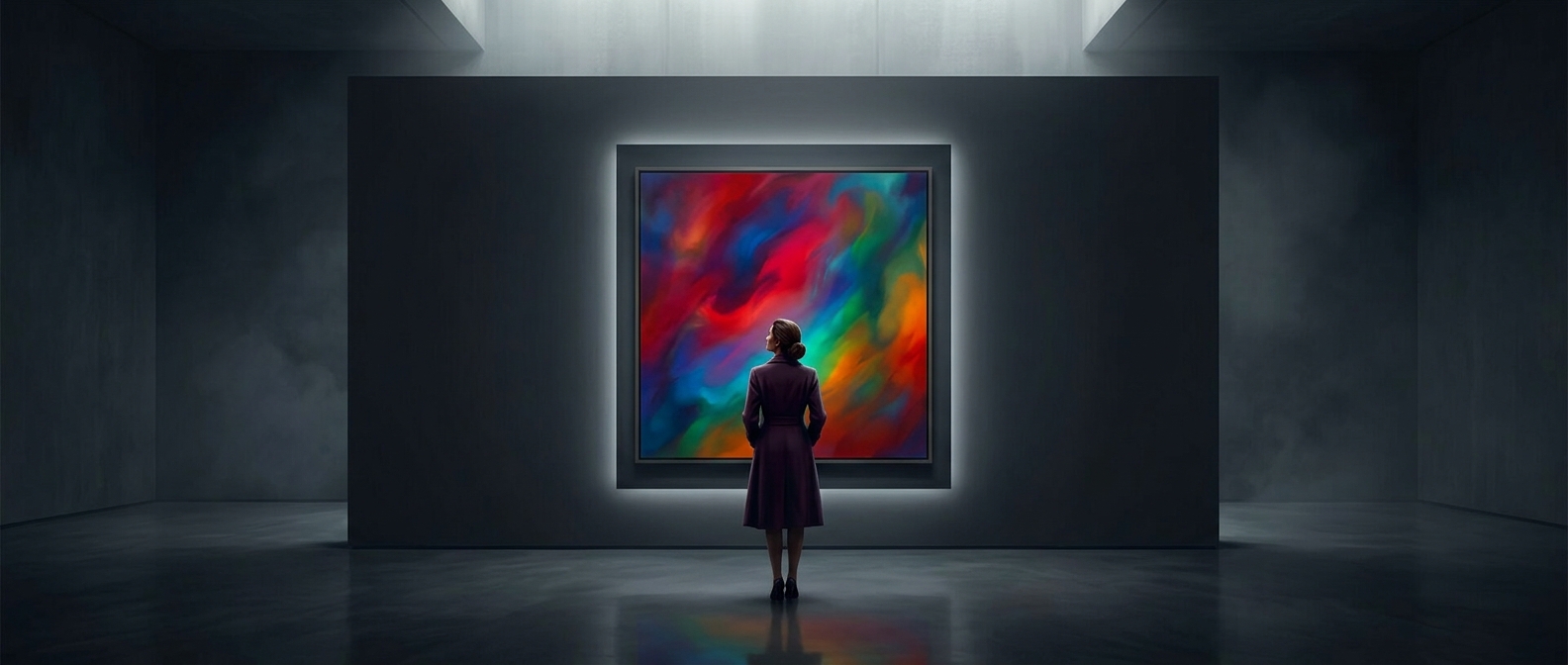
Leaving a broad stretch of wall between works creates a quieter visual boundary. It gives the eye room to settle on one composition before the next painting asserts itself. The gap can also make a frame, a dark passage, or a vivid patch of paint easier to register against the wall rather than against another artwork’s competing colors.
The Wall Is Part of the Display
That space is not simply unused real estate. It shapes the pace of looking: a dense cluster encourages quick comparisons, while separated works invite viewers to pause and take in each one on its own terms. Curators still have to balance that effect with the size of the room, the number of works, and the relationships they want visitors to notice.
The result is a subtle design choice with a practical consequence: the next painting can wait its turn in the viewer’s attention, instead of intruding at the edge of the first.