When a Difficult Work Becomes a Cue to Move On
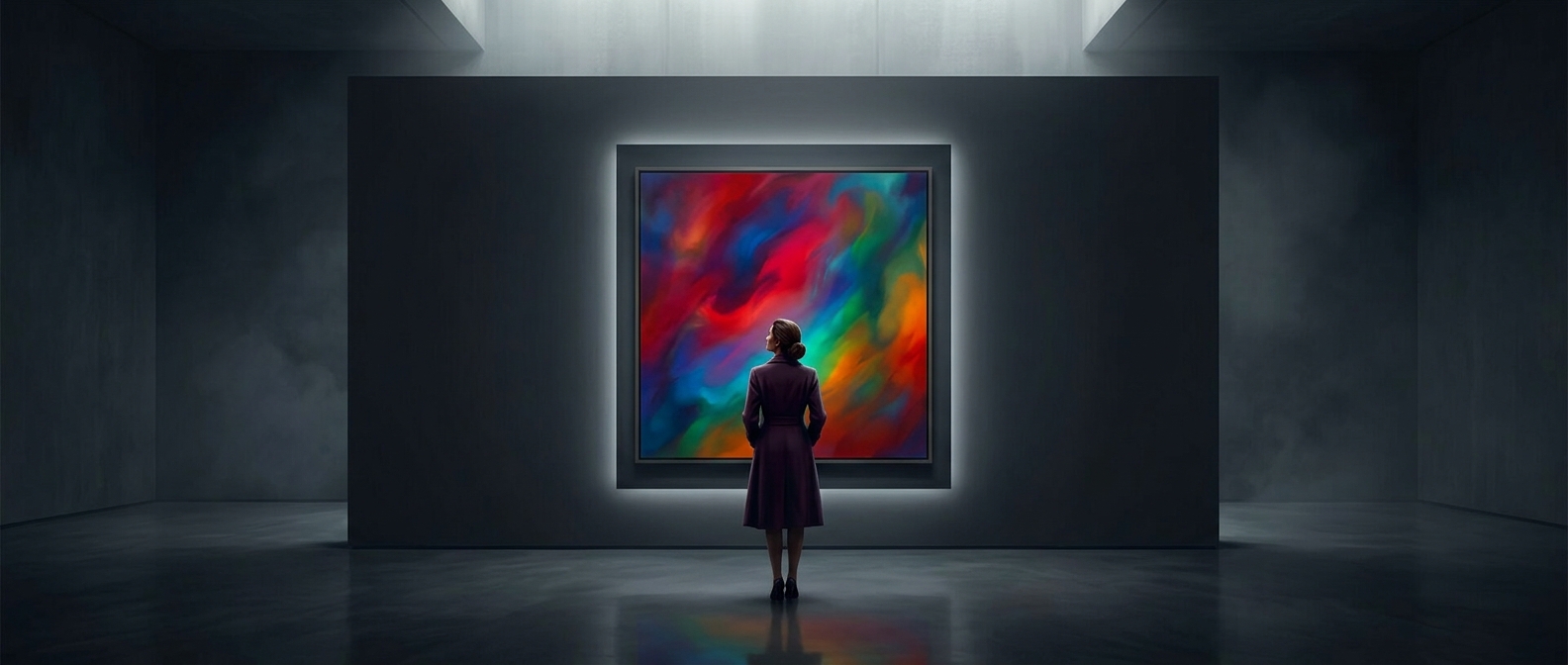
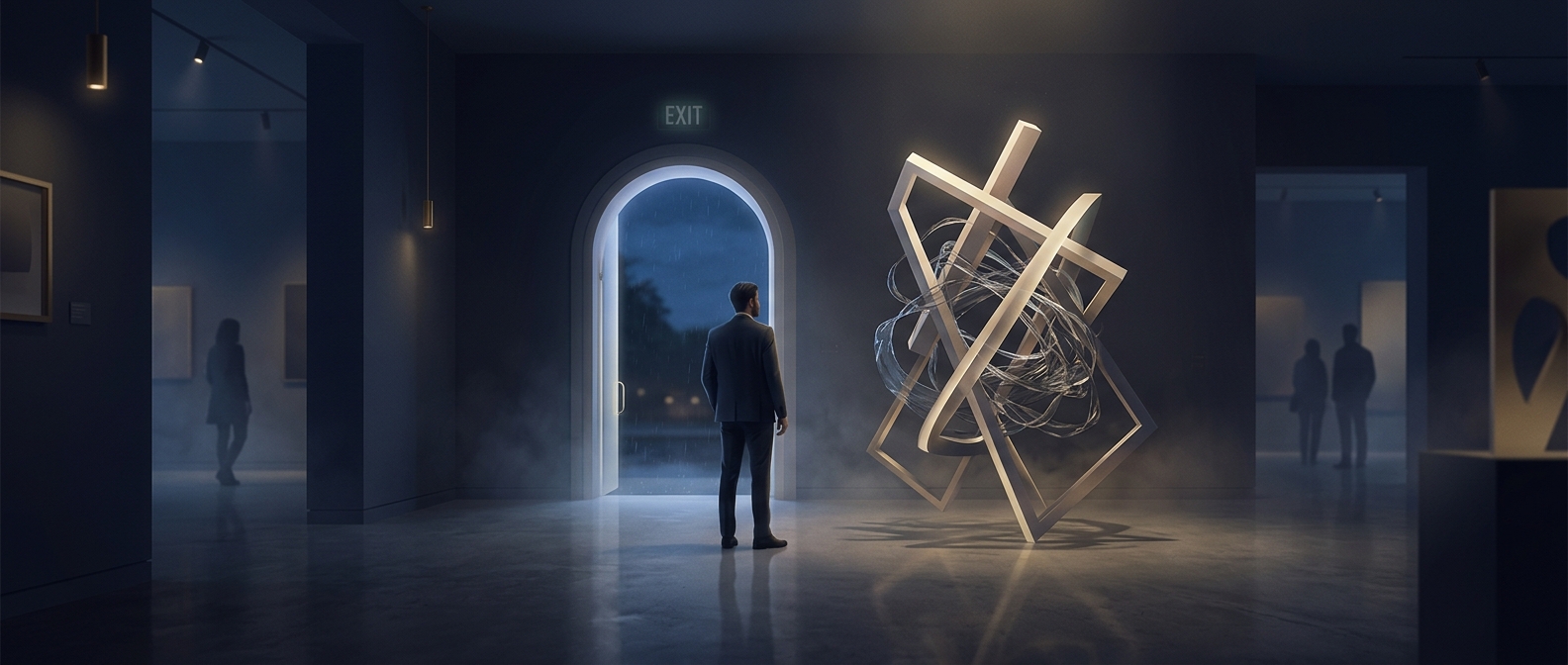
A puzzling artwork can hold attention—but it can also leave visitors unsure what to do next. Near the end of a gallery route, that uncertainty may work in the opposite direction: instead of inviting a long, satisfying examination, the piece can feel like a final pause before the visit is over.
Placement helps create that effect. By the time visitors reach the exit, they have often spent considerable time looking, reading, and navigating. A work that offers no obvious visual entry point or clear interpretation may be less likely to draw them into another extended stop. The nearby doorway supplies the next legible action: keep walking.
The Gallery Is Part of the Message
Museums shape movement through room layouts, sightlines, signs, and the order in which works appear. An artwork near a threshold can act as a transition between exhibition and everyday life, even when no label announces that role. For someone lingering, the exit’s proximity—and the sense that the route is reaching its end—can matter as much as the artwork itself.
This is a curatorial option, not a reliable trick. Visitors respond differently, and a baffling work may just as easily prompt a conversation or send someone back into the gallery to reconsider what they saw. But positioning can influence whether a challenging encounter feels like an invitation to stay or a natural point to leave. In that sense, the last artwork can help set the pace of the visit as well as its final impression.