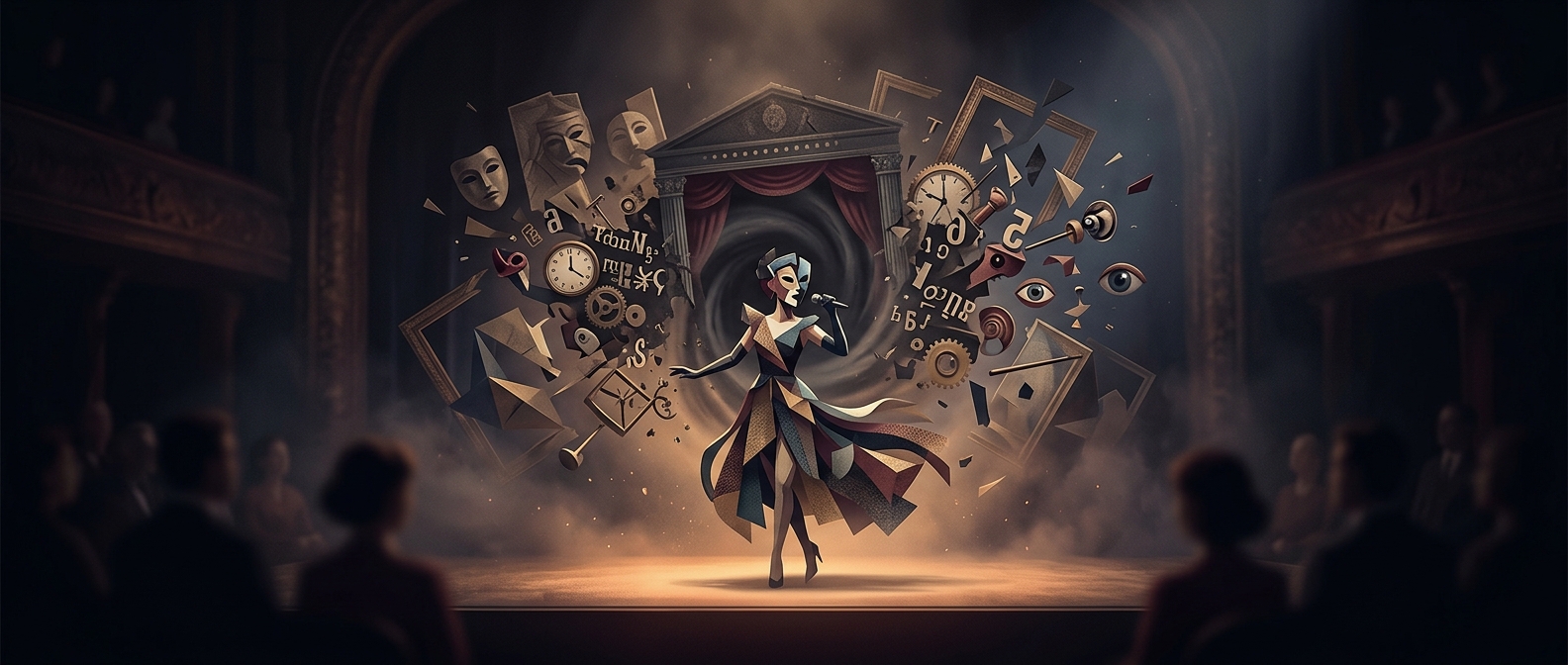
A stage built to unsettle
In wartime Zurich, a small venue called Cabaret Voltaire gave artists a place to test what performance could be when familiar rules seemed inadequate. Hugo Ball and Emmy Hennings helped launch it in 1916, drawing in writers and artists living in the Swiss city, including people displaced by the conflict.
The evenings mixed forms rather than presenting a single, orderly work. A performer might chant invented syllables; others could make noise, read texts, or appear in costumes that turned the body into a startling visual object. The point was not to deliver a clear, polished message. It was to disrupt the audience’s expectations about what counted as art—and to make that disruption felt in the room.
From one venue to a movement
That unruly mix became a method. Dada artists used chance, collage, absurdity, and deliberate clashes of sound and image to challenge the idea that art had to be beautiful, logical, or expertly crafted. Their experiments also pushed against the culture that had produced a devastating war: instead of treating conventional order as inherently admirable, they exposed how easily it could coexist with catastrophe.
Cabaret Voltaire did not contain all of Dada, which soon took shape in other cities and media. But the club’s live performances made the movement’s challenge immediate. An audience could not simply inspect a finished object; it had to confront a performance that might refuse to make sense. Dada’s first stage turned confusion itself into an artistic tool.