A Sculpture Built to Be Entered
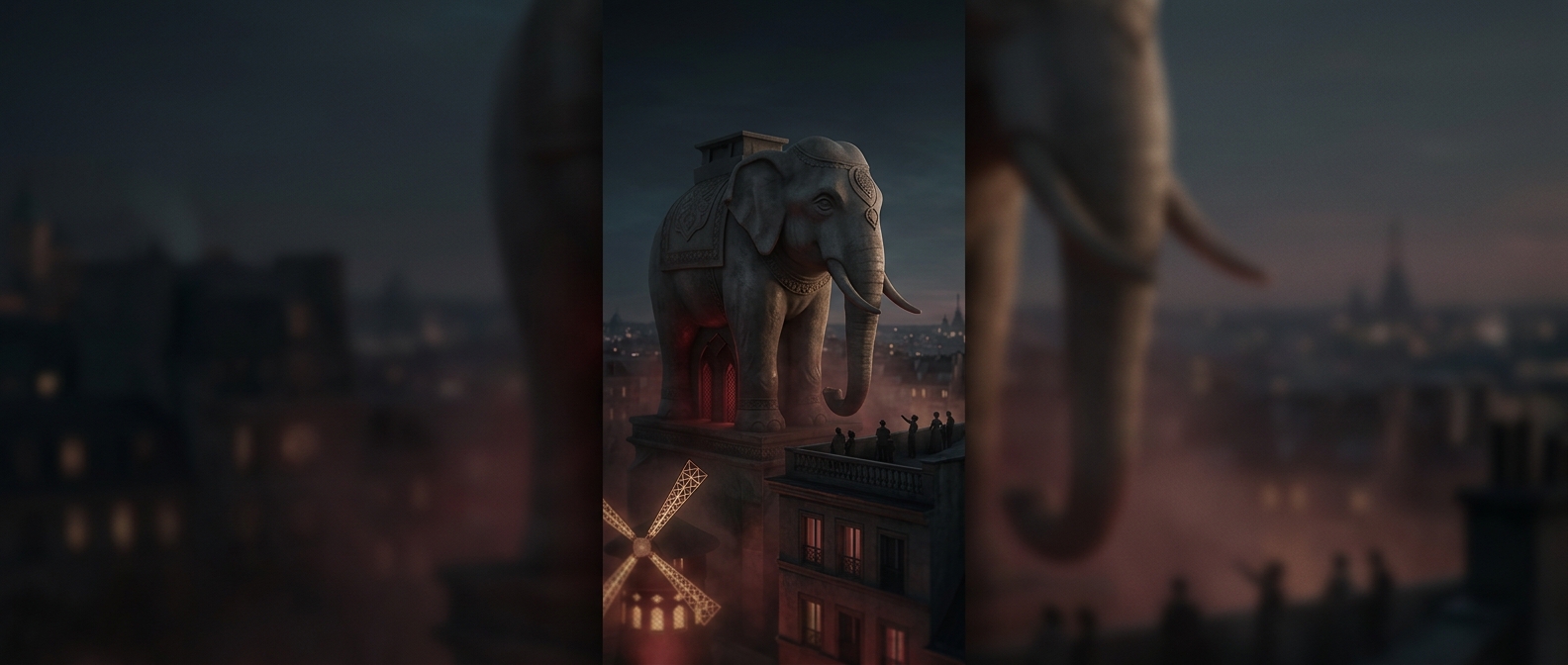
The elephant in the Moulin Rouge courtyard was more than an oversized ornament. Its hollow body made the sculpture usable space: a spiral staircase wound up through one leg, carrying visitors into a performance room inside the animal’s belly. Stucco—a molded plaster-like finish—gave the structure the appearance of a solid, sculpted creature while concealing that interior.
That arrangement made the building itself part of the show. Instead of approaching a stage through an ordinary doorway, visitors climbed into an elephant and arrived at a room where belly dancers performed. The route turned the walk to the entertainment into a small spectacle of its own.
Architecture as Entertainment
The design blurred the line between decoration and venue. A giant elephant could catch attention from the courtyard; the staircase and hidden room then rewarded curiosity with a performance. Its memorable trick was practical as well as visual: the animal was both the attraction and the container for the attraction.
That combination helps explain why the structure sticks in memory. At the Moulin Rouge, theatricality did not have to begin when performers took the stage. It could begin with the building—and continue, step by step, inside an elephant.