Why a Movie Can Feel Different at 4,000 Meters
The air at high altitude still contains about the same proportion of oxygen as air near sea level. The difference is air pressure: it is lower, so each breath delivers fewer oxygen molecules into the lungs. The body compensates by breathing faster and, in time, adjusting how it transports oxygen. Before that adjustment has happened, some people may notice a headache, light-headedness, fatigue, or shortness of breath.
The Body Doesn’t Pause for the Plot
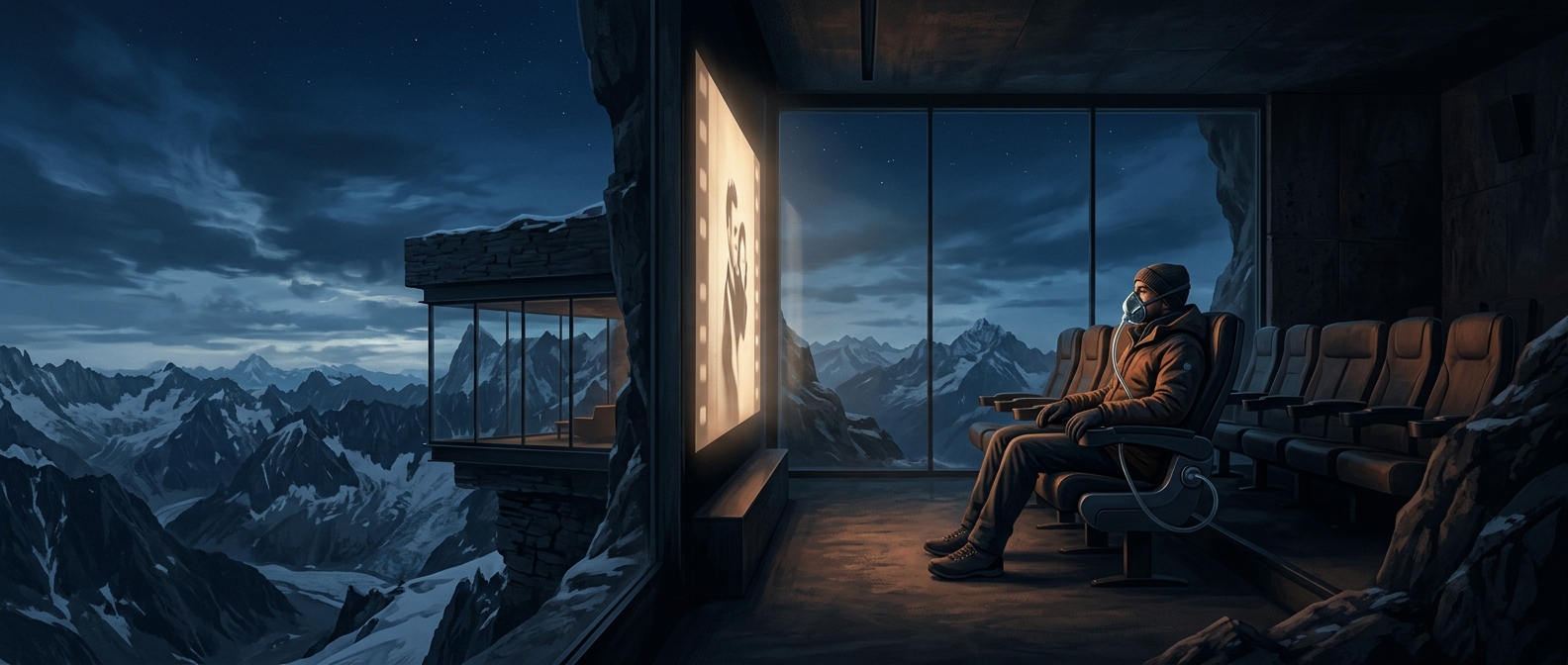
Sitting quietly takes less effort than climbing a mountain, but it does not switch off the body’s response to thin air. A viewer may feel unusually winded simply walking to a seat, then notice a faster heartbeat or breathing during the film. How strongly someone feels the altitude varies, especially with how recently they arrived and how their body responds.
That makes the cinema’s setting part of the experience in a way that has nothing to do with the screen: even an ordinary night at the movies can remind the audience that their bodies are working in a low-pressure environment.