A cinema built around a different posture
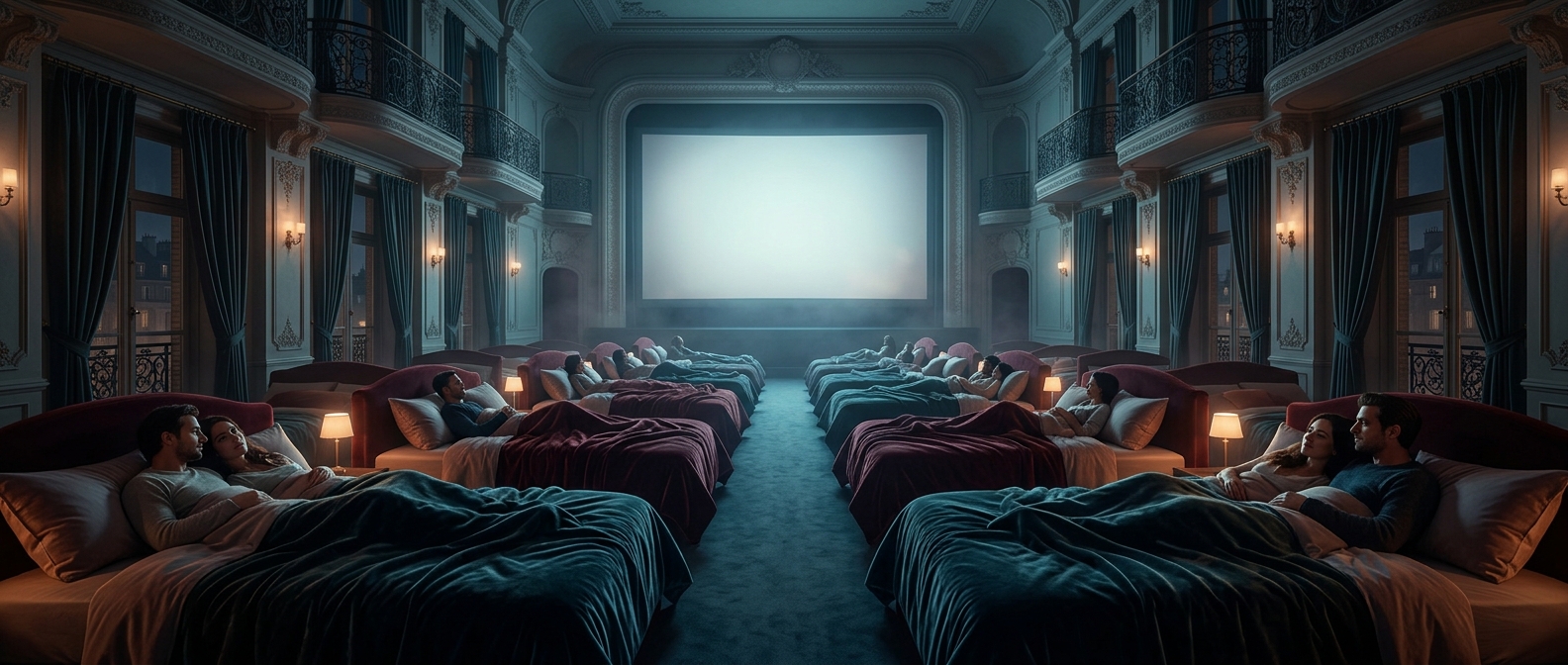
In a conventional theater, the room organizes attention with rows of upright seats, all aimed toward the screen. Replacing those seats with double beds changes more than comfort: it makes watching a film a reclining, shared activity. Viewers can stretch out beside someone rather than sit shoulder to shoulder in separate chairs, bringing the feel of a private living room into a public screening.
Comfort becomes part of the gamble
The same design that makes the experience distinctive also changes the audience’s relationship to the movie. Lying down removes the usual cues of a formal night out—upright posture, a seat edge, and the sense of being assembled in rows. That can make a screening feel relaxed and intimate, but it also makes staying alert harder. The room turns comfort into part of the attraction, with the risk that a soothing film night ends in sleep before the credits.