A theater built for a quick visit
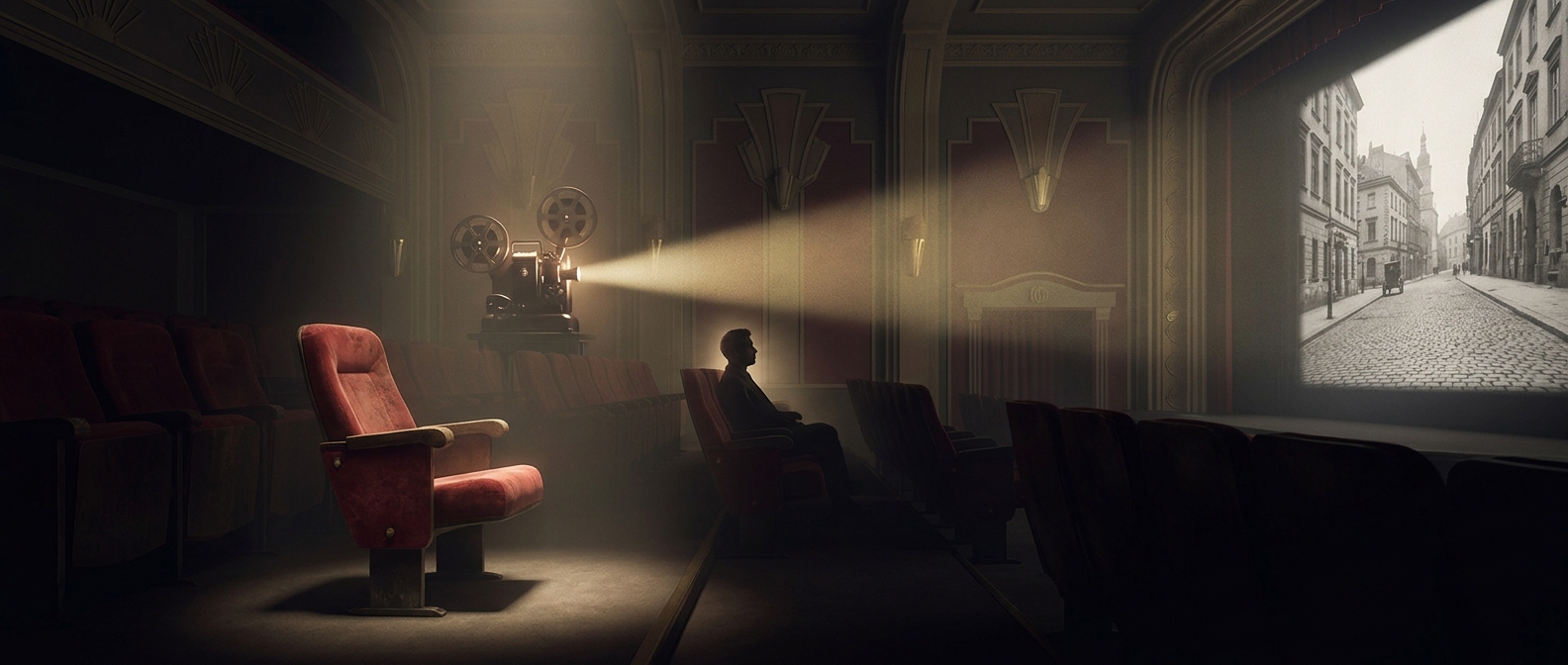
Early moviegoing did not require a grand auditorium or a formal evening out. Nickelodeons often occupied converted storefronts: compact rooms where an audience could watch a short program for a small payment. Their modest scale helped make exhibition possible in ordinary commercial neighborhoods, rather than only in large theaters.
That setup changed the rhythm of entertainment. A customer could drop in, watch what was playing, and leave without committing to an expensive night at the theater. Low admission made the experience accessible to people with limited leisure budgets, while frequent turnover helped a small venue serve many visitors.
The name described the business model
The label joined the price to the promise: a nickel bought entry to a place for watching performances. “Odeon,” an old Greek term associated with a performance venue, gave the new storefront cinema a more theatrical ring. The name was memorable because it explained the bargain before a customer even stepped inside.
As the format spread, “nickelodeon” became closely associated with this early, inexpensive kind of movie theater. The word captured more than a ticket price: it stood for a new way of encountering moving pictures—nearby, affordable, and easy to fit into everyday life.