A movie becomes a shared performance
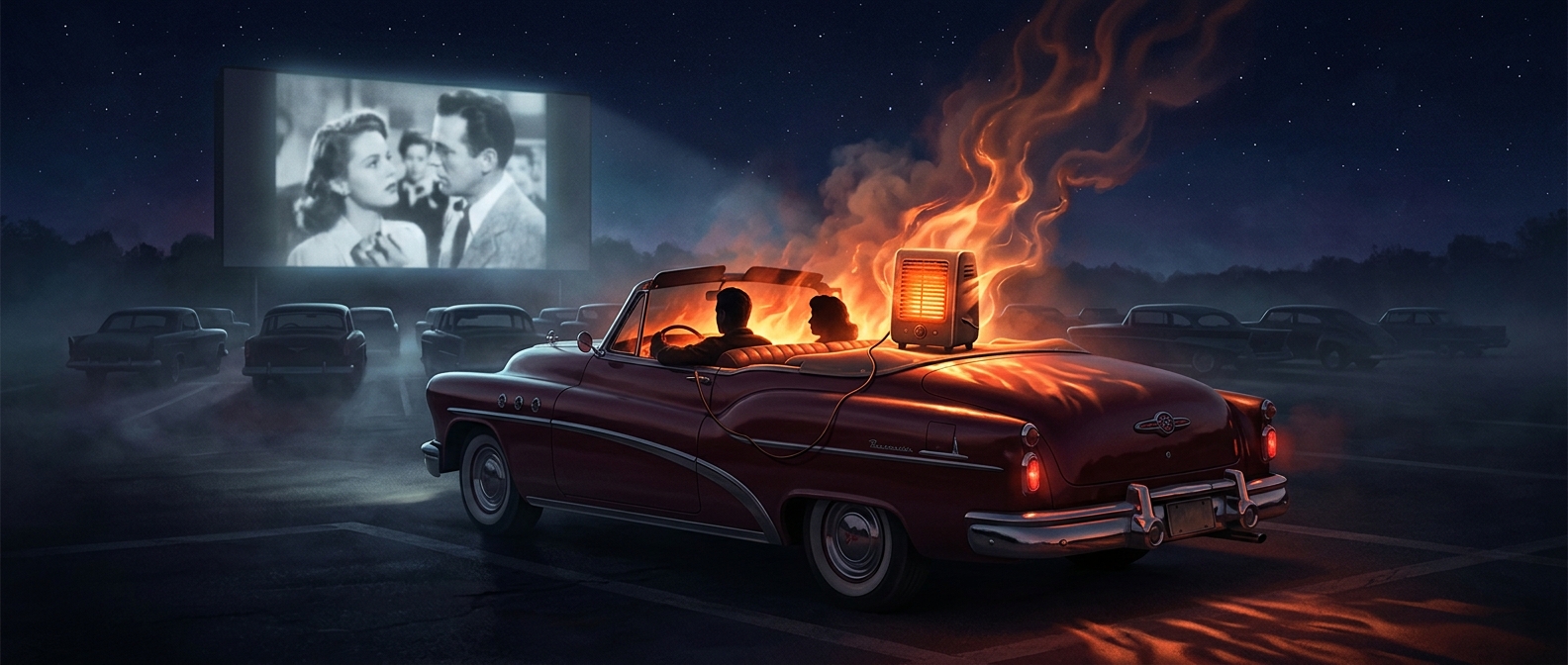
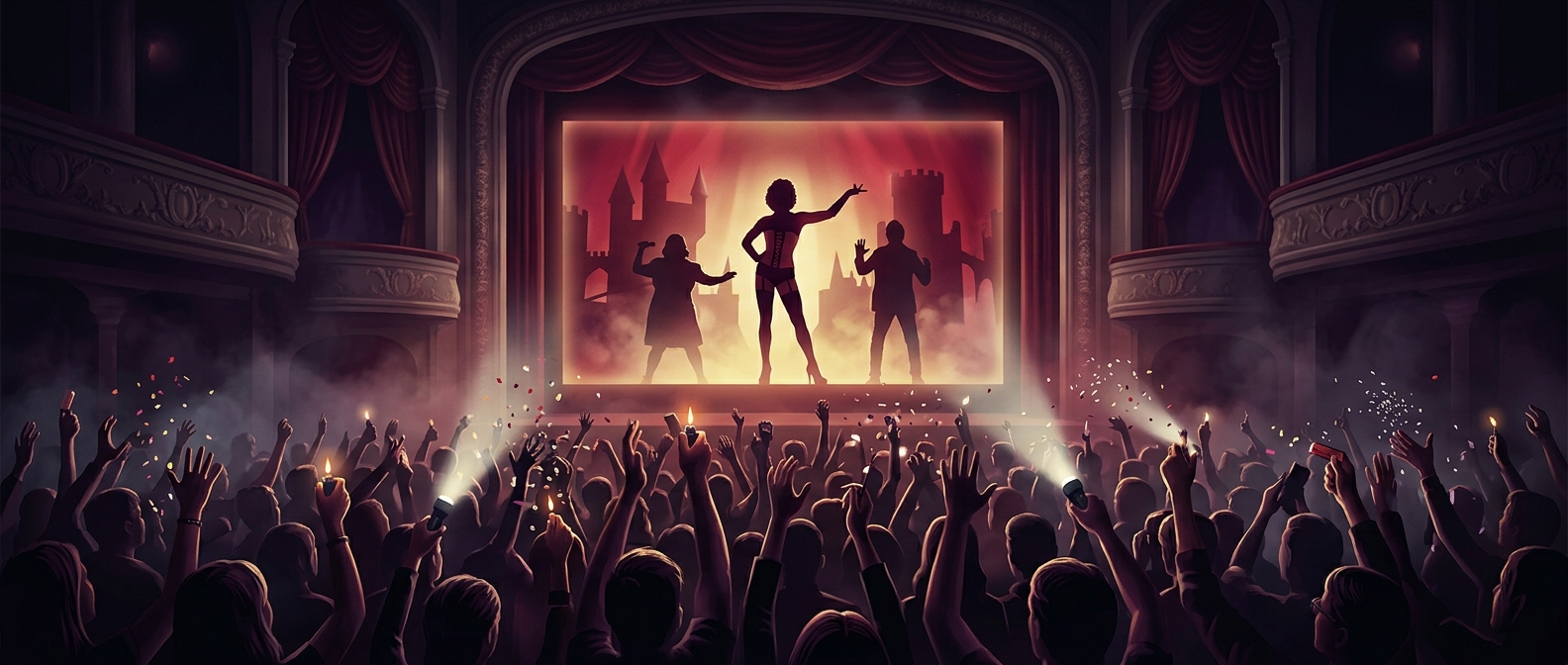
At an ordinary screening, the audience is expected to stay quiet and follow the film. The Rocky Horror Picture Show reverses that arrangement: familiar moments invite viewers to answer back, gesture, and use props. The film remains on screen, but the crowd supplies a second layer of performance around it.
That changes the reason to return. A repeat viewer is not only revisiting the story; they can anticipate the cues, join in, and watch how a particular crowd delivers them. The fun depends partly on timing and collective recognition—like being in on a joke whose punchline is also a signal to the room.
The audience keeps the screening alive
This participatory format makes a screening feel less like a replay and more like a recurring event. Some theaters add a “shadow cast”—performers who act out scenes in front of the screen—giving returning fans another live element to see. The film provides a stable script; the people in the room make each gathering feel social and immediate.
That helps explain why the movie can keep finding a place in theaters long after a conventional run would end. Its appeal is not limited to what happens in the story. It also lies in knowing that, at the right moment, a roomful of strangers may respond together—and that the next crowd will bring its own energy to the same cues.