How a Mirror Ball Turned One Light Into a Roomful
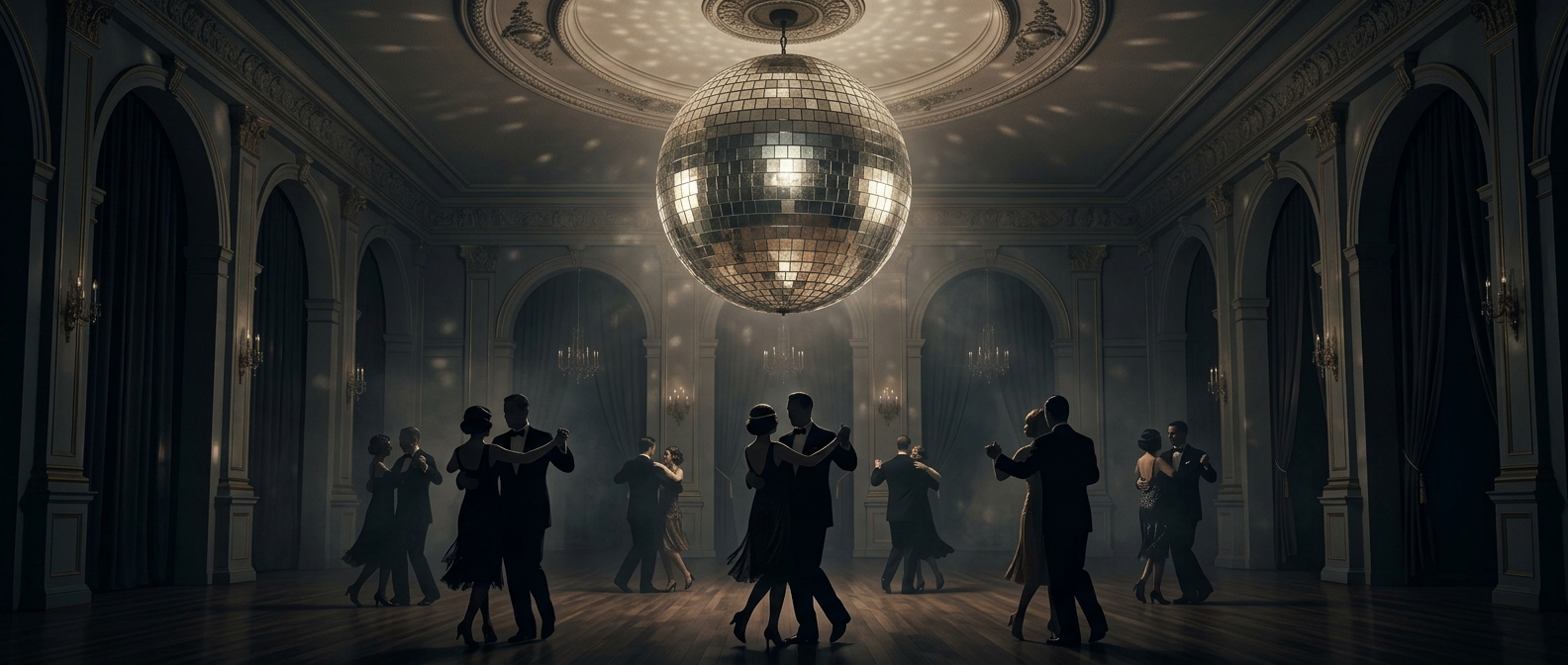
A mirror ball does not make light; it redirects it. Its small mirrored squares face different directions, so each catches a beam from a spotlight and sends it across the room as a separate glint. When the ball turns, those reflections travel over walls, ceilings, and moving dancers, making a fixed light source feel expansive and alive.
That effect suited 1920s jazz-age ballrooms and nightclubs, where a single bright beam could become part of the room’s atmosphere rather than simply illuminate the floor. The scattered points of light gave dancers a shifting, star-like backdrop—an optical effect that depended on darkness, a directed spotlight, and the ball’s rotation.
Disco Inherited the Effect, Not the Invention
The mirror ball’s later association with disco can make it seem like a product of the 1970s. But the basic visual trick was already in use decades earlier. Disco made the revolving reflections an emblem of its own nightlife; it did not create the device or the spectacle.
Its staying power comes from a simple tradeoff: instead of needing a separate moving light for every patch of the room, one rotating sphere can scatter a spotlight into many moving flashes. A small object above the dance floor can therefore make the whole room seem to sparkle.