A concert became a recording studio
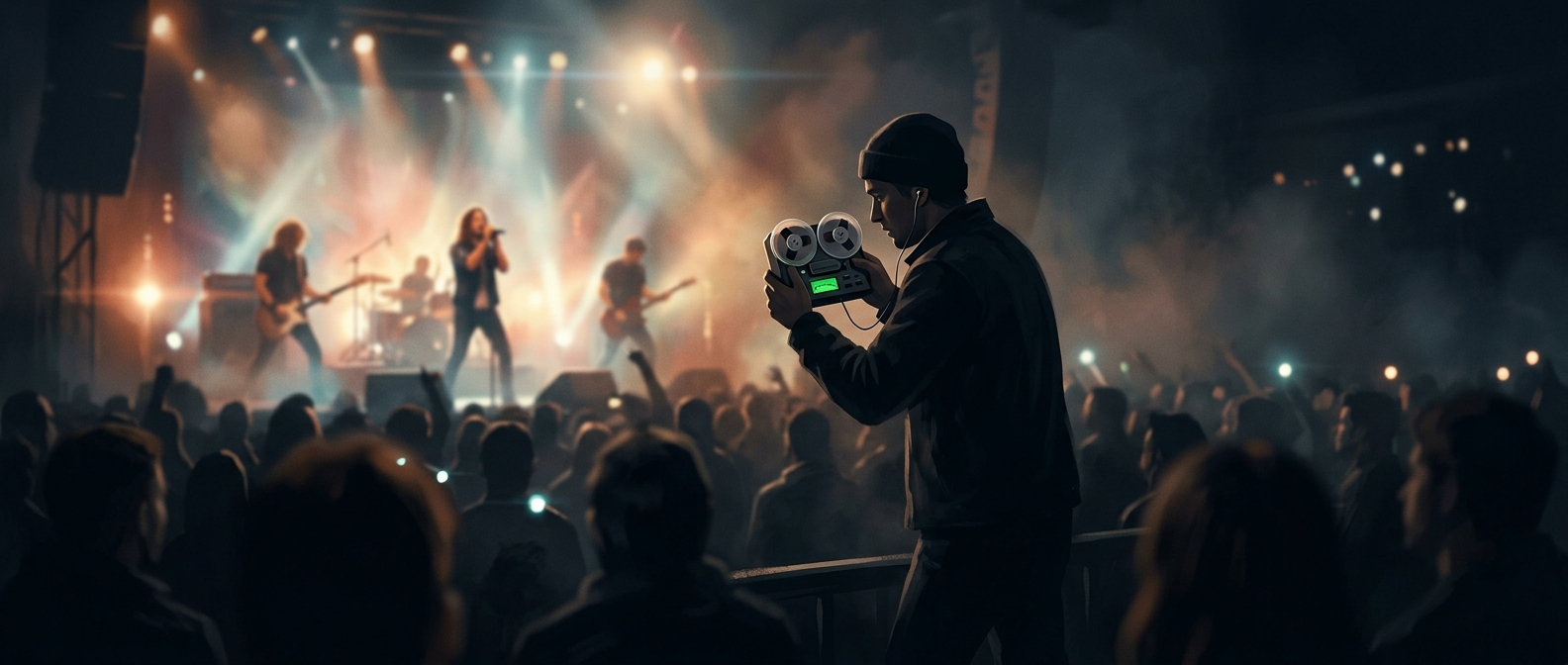
A live performance was usually a one-time event: once the musicians left the stage, an audience member could remember it, but there was no official album to replay. A small tape recorder changed that. A fan could bring a microphone into the room, capture the sound as it happened, and preserve versions of songs that might differ from the studio releases.
The result was not a clean substitute for a professionally recorded album. The microphone picked up the whole room—crowd noise, distance, and the venue’s acoustics along with the music. Yet that roughness was part of the appeal: the tape preserved an improvised solo or an altered arrangement that an official release might never include.
From a tape to an underground release
A recording could be copied onto other tapes and passed between listeners. That made it possible for a performance to travel well beyond the people who had attended it. Some recordings took another step: someone transferred the audio to a disc and produced unofficial vinyl copies for wider circulation.
Each stage involved a tradeoff. Tape was comparatively easy to copy and share, but copies could lose sound quality. Making a vinyl pressing required more effort and equipment, yet turned an ephemeral recording into an object that could be collected and resold. Because the recording had not been authorized, it circulated outside the official channels used by artists and record companies.
What the bootleg preserved
These recordings offered listeners a way to hear the parts of a show that records often left out: extended playing, different song sequences, and performances that were never formally issued. They also shifted some control over what counted as a lasting version of a concert from the performers and their labels to the audience members holding the tapes.
A fan with a recorder could turn a single night’s performance into something other fans might hear years later—sometimes complete with the room’s cheers and flaws still on the tape.