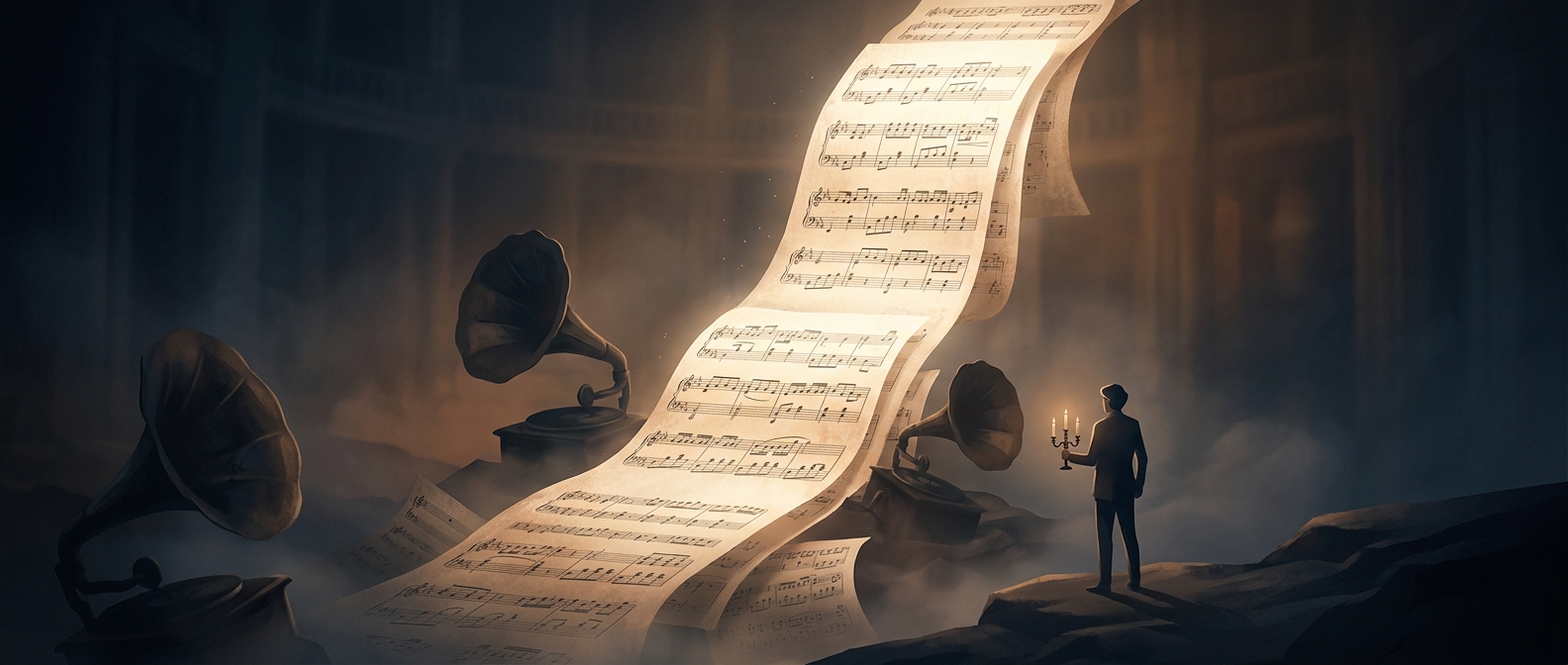
A song had to reach the parlor
Before recorded music could be played at home, a popular song usually arrived as printed pages. Publishers put songs into notation, printed copies in large quantities, and sold them through music shops and other retailers. The buyer needed more than the paper: someone in the household had to read music and play an instrument, most often a piano.
That made the home a kind of small performance venue. Families and friends could learn a new song, sing along, and play it again for visitors. Sheet music turned a tune heard in a theater or elsewhere into something people could perform for themselves.
Sales measured a song’s reach
For publishers, copies sold offered a tangible way to judge which songs were catching on. A song that traveled from a stage or performer into many homes could generate repeated sales, while a catchy melody alone was not enough: people had to want, and be able, to play it.
This model also shaped what the business sold. The product was not simply the sound of a performance; it was a playable version of the song. Publishers therefore depended on distribution and on households with instruments and musicians—conditions that limited who could take part.
Recordings changed what buyers received
Phonographs loosened that link between music and musical skill. Instead of buying notation and making the sound themselves, listeners could buy a recording and hear performers play it. The center of the business began to shift from selling songs for people to perform toward selling performances for people to replay.
That change made music at home less dependent on a piano and a practiced player. The printed song had brought a hit into the parlor; the recording could bring the performance itself.