A translation timed to the music
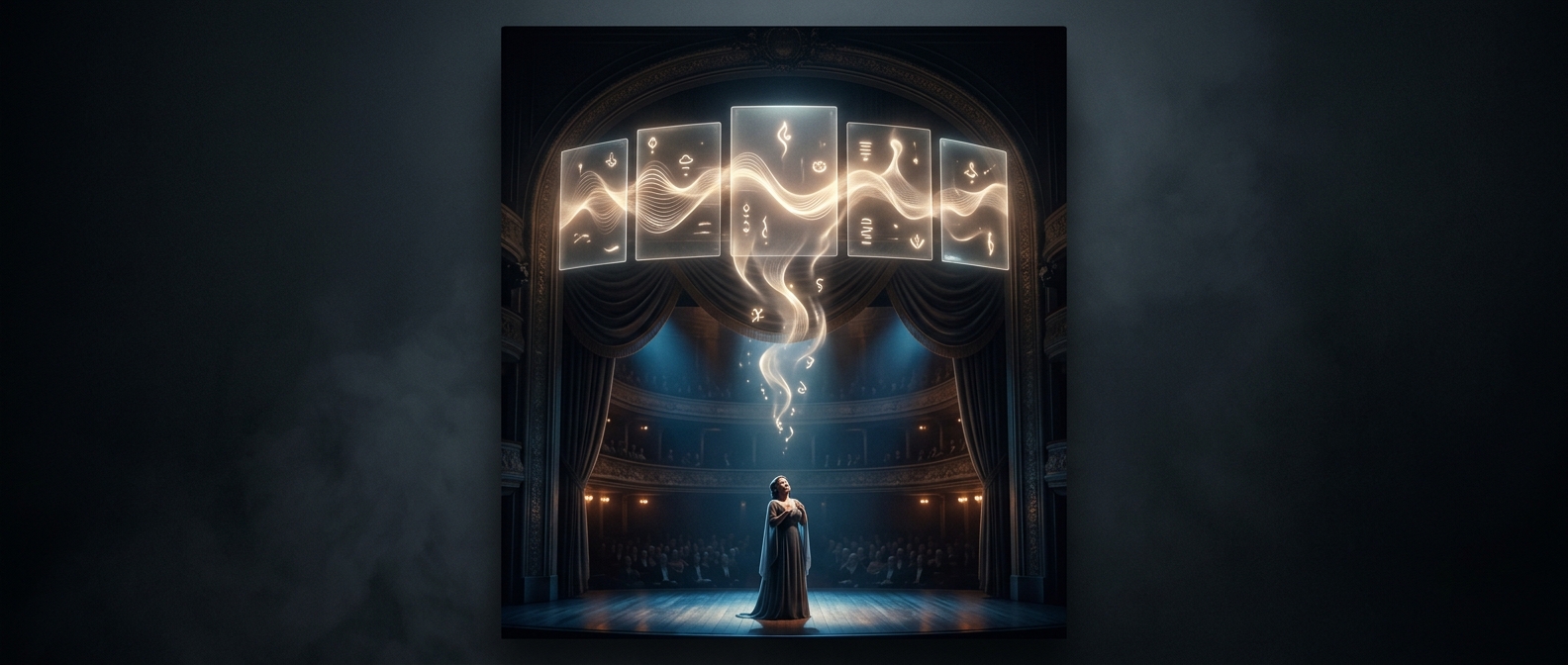
An opera’s words can be hard to follow even when they are sung clearly: the audience may not know the language, and musical phrasing can stretch or repeat a line. Surtitles—also called supertitles—put a translation where spectators can read it while watching the performance, usually on a narrow screen above the stage.
The text is prepared in short, readable units rather than shown as a continuous page. During the performance, an operator advances it in step with the singers and the music. That timing matters: a line that appears too early can give away a plot turn, while one that lags can leave the audience trying to catch up.
A small screen changes the experience
Before projected titles, audiences might rely on a printed synopsis or simply accept that they would miss some of the words. A synopsis can explain the story in advance, but it cannot clarify a character’s particular line at the moment it is sung. Titles provide that immediate link between the sound and the action.
They also impose a design tradeoff. The translation must be concise enough to read quickly, and the screen must be placed so it does not obscure the stage. Spectators shift their gaze between text and performers, so the best title is not a word-for-word transcript; it conveys the essential meaning in the time available.
Opera houses began using surtitles in the 1980s. The innovation did not change what singers performed, but it changed what audiences could follow: a foreign-language lyric could remain part of the music while its meaning reached the audience in real time.