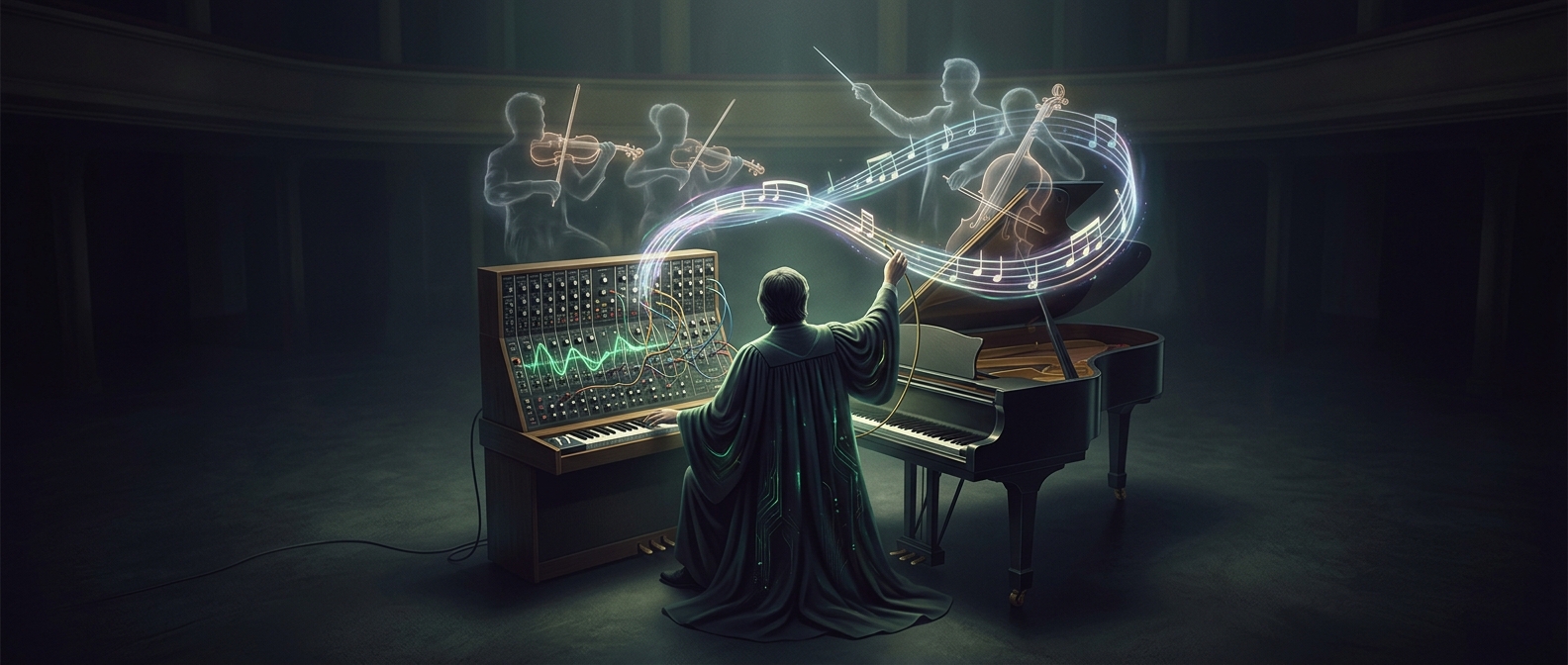
A synthesizer built one note at a time
The early Moog was not a keyboard that could reproduce a whole orchestra at the press of a button. Its sound came from electronic circuits patched together to shape pitch and tone, and the instrument could play only one note at a time. To perform Bach’s interlocking lines, Wendy Carlos recorded them separately, layering each part onto tape until the voices sounded together.
That process made every note a small engineering task. The synthesizer had to be tuned and adjusted between takes, and its tone could change with the settings. Carlos could not simply select a finished “Bach” sound: she shaped the instrument’s electronic timbres herself, then controlled the phrasing and balance through careful performance and recording.
Why Bach fit the machine
Bach’s music offered a useful structure for this painstaking method. In a fugue, a musical idea passes among independent lines, so recording each voice in turn could preserve the sense of a conversation—even when the instrument could not play those voices simultaneously. The layered result also made the synthesizer’s limits part of its character: its clear, sustained tones gave familiar counterpoint an unfamiliar edge.
The album’s success helped change what listeners expected from electronic instruments. They could be more than novelty effects or laboratory curiosities; in skilled hands, they could carry melody, phrasing, and intricate musical structure. The futuristic sound was assembled patiently, one tuned line at a time.