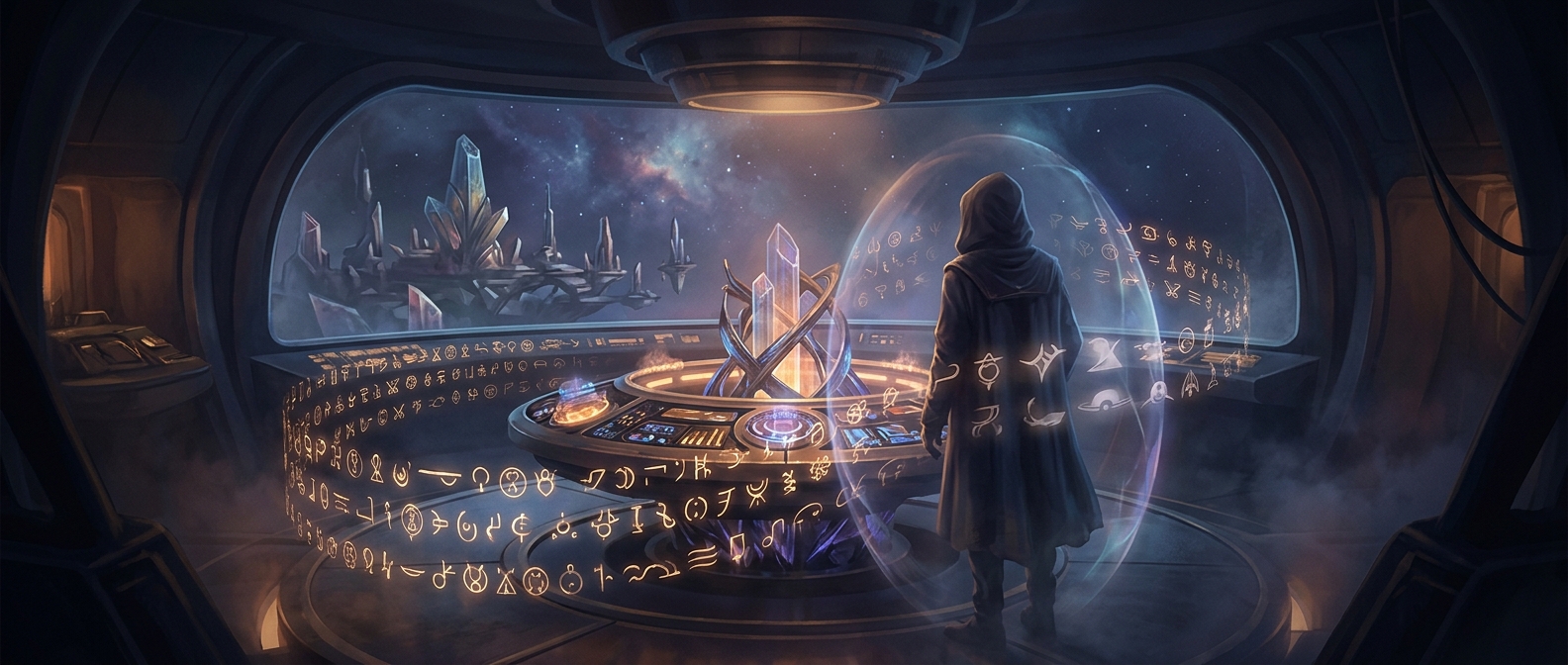
The TARDIS turns language into part of the adventure
The Doctor and companions can step into a conversation on an unfamiliar world without first spending the episode learning its language. The TARDIS—the Doctor’s time-and-space-traveling ship—makes alien speech understandable to its passengers, so a story can move straight to what people are saying and why it matters.
Translation as a storytelling device
The effect is usually described as telepathic: the ship somehow conveys a speaker’s meaning to the travelers, rather than teaching them vocabulary or making them fluent. It lets the show keep its focus on encounters, mysteries, and dangers instead of repeatedly pausing for interpreters, subtitles, or explanations of grammar.
That convenience also leaves room for language to matter when the story needs it to. A character may still misunderstand a message, face a communication barrier, or encounter a language the translation does not handle. The device is not a detailed model of real-time translation; it is a flexible piece of science fiction that makes ordinary conversation possible across the universe.
A useful limit on the universe’s strangeness
Without the TARDIS’s help, every alien meeting could begin with the same practical problem: how do the travelers understand one another? By taking that obstacle off the table most of the time, the show can make its worlds feel immediately accessible while reserving language barriers for moments when they change the stakes. The ship does more than carry the characters between planets—it quietly carries the audience into the conversation, too.