Real Speech Gave the Ewoks’ Voices Their Shape
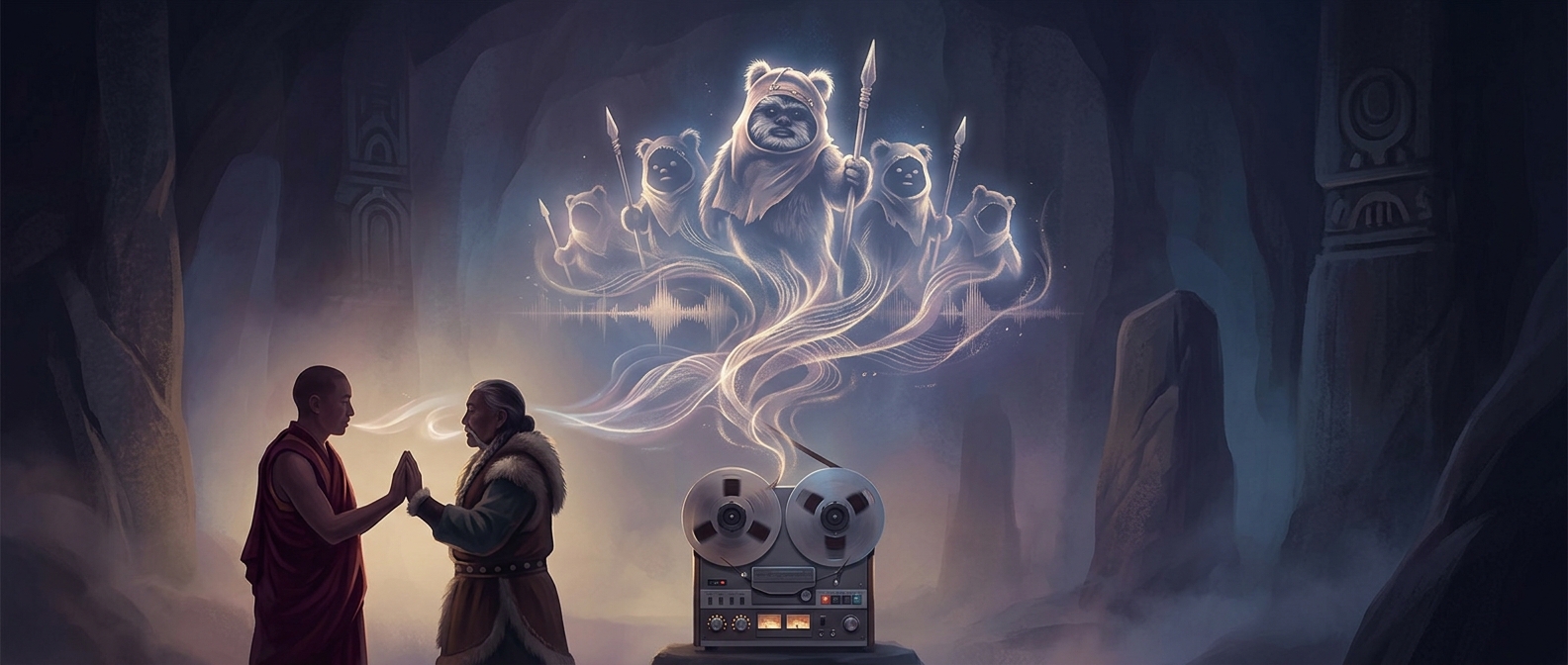
For Return of the Jedi, sound designer Ben Burtt built the Ewoks’ speech from patterns he heard in recordings of a Tibetan woman and an elderly Kalmyk woman. Rather than inventing every sound from scratch, he drew on the rhythm and texture of human speech, then altered the recordings by pitching them up.
That combination did two jobs. The source voices gave the speech the irregular cadence of people talking, while the higher pitch helped make it sound as if it came from small, fictional creatures. The result could feel lively and expressive without being ordinary dialogue in English.
Why Borrow Real Speech for an Imaginary Language?
A made-up language still needs cues that listeners can recognize as communication: shifts in pitch, pauses, and changing rhythms. Real speech supplies those cues even when viewers do not understand the words. Pitching a recording upward then changes its character without erasing the sense that someone is speaking.
The distinction matters: the Ewoks’ voices were not simply random noises, but neither were they a direct portrayal of the languages that inspired their sound. Burtt used real speech as material for a fictional one. That let the Ewoks sound socially expressive on screen while keeping their speech unfamiliar—and, to many viewers, like cheerful gibberish.