Room tone keeps an edit from sounding like a mute button
A microphone in an apparently empty room still hears something: ventilation, distant traffic, electrical buzz, and the room’s own faint reverberation. Together, these sounds form room tone—the background sound that makes a location feel acoustically consistent.
When an editor removes a stumble, tightens a pause, or joins two lines recorded at different moments, the cut can leave a tiny patch of digital silence. That gap may be more noticeable than the words around it. If the editor fills it with room tone recorded on set, the background continues smoothly, so the cut is less likely to call attention to itself.
Why everyone has to stop moving
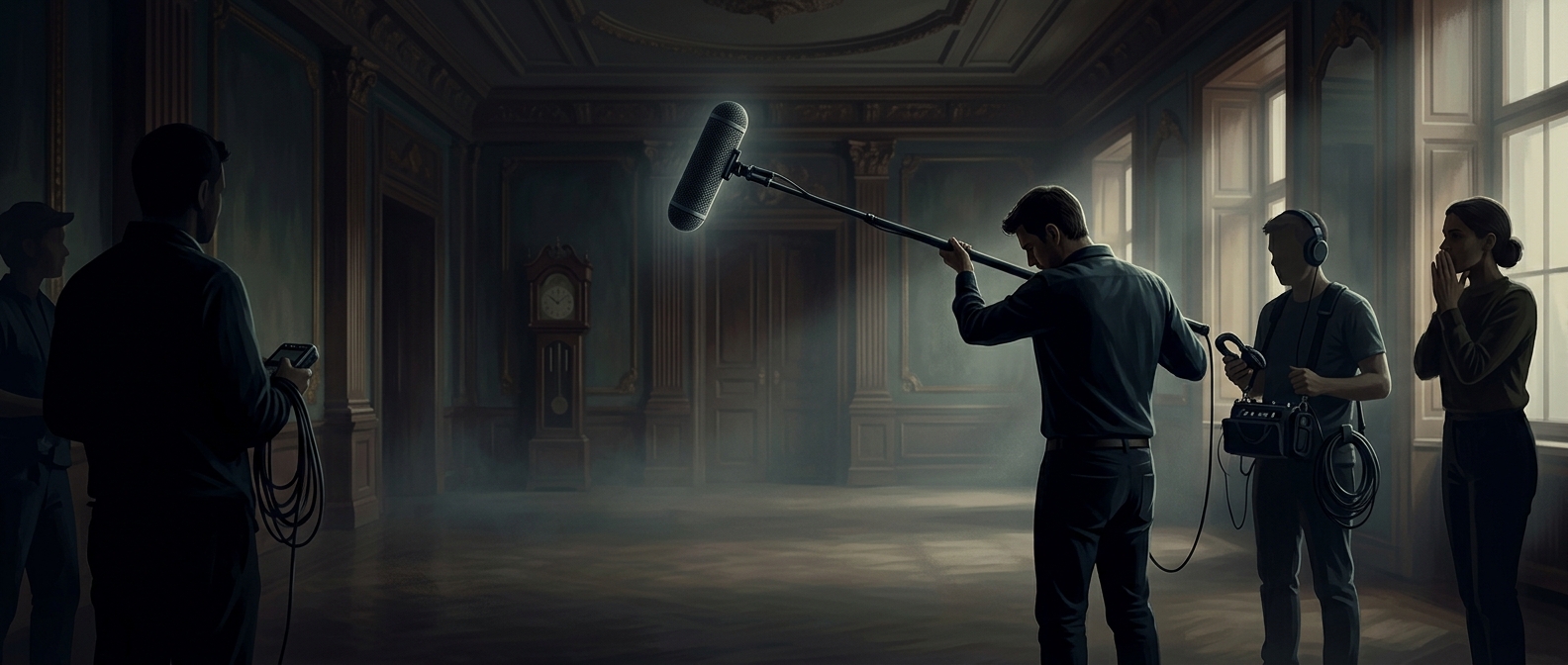
The recording only helps if it captures the location rather than the crew. A rustling jacket, a shifting foot, or a whispered instruction can become an unwanted sound that repeats whenever the editor uses the recording. The crew’s stillness gives the microphone a clean sample of the room’s steady acoustic character.
That sample is not interchangeable with generic silence or ambience from another place. Different rooms have different hums and echoes; a mismatched background can make a scene feel subtly patched together. A minute of quiet on set can therefore give an editor a practical way to hide cuts without making the soundtrack feel unnaturally dead.