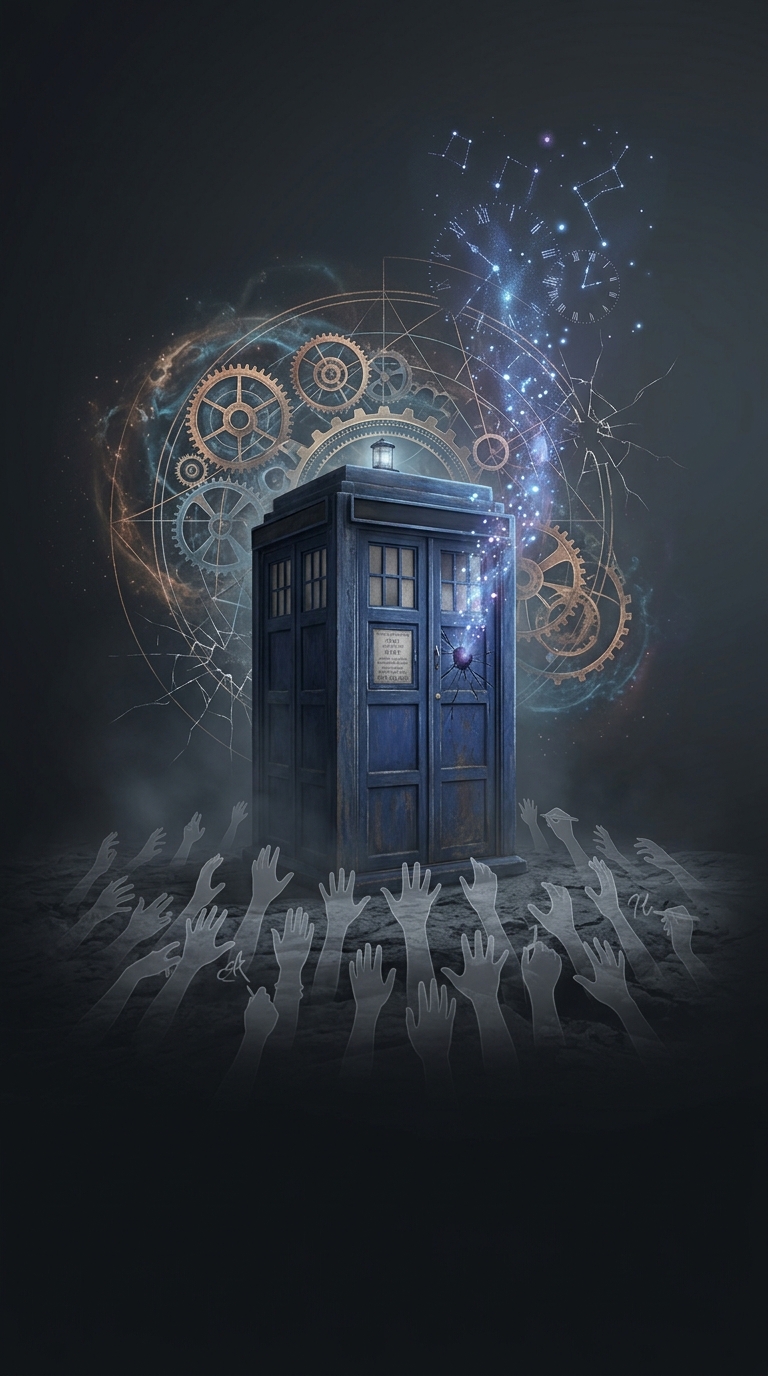
A piano scrape became the TARDIS’s signature sound
When Doctor Who began in 1963, its time machine needed to sound unlike any ordinary vehicle. The BBC Radiophonic Workshop, a team that made electronic and recorded effects for radio and television, built the TARDIS noise from a surprisingly physical source: a house key dragged across the exposed bass strings of a dismantled piano.
The scrape supplied the raw sound, but it did not yet suggest a ship arriving from somewhere beyond the visible world. Brian Hodgson, the Workshop engineer who created it, shaped the recording with echo and reverb—effects that make a sound seem to linger and occupy a larger space. A small, rough scrape could thereby feel expansive and uncanny.
Turning a sound into a journey
The effect works because it is more than a single burst of noise. Heard around a TARDIS arrival or departure, its sustained, wavering quality gives the audience a sense of transformation taking place: the machine is appearing or vanishing, not simply switching on. The studio treatment stretched the key’s scrape into something that seemed to exceed its humble source.
That contrast helped make the sound memorable. Viewers heard an otherworldly event, while its starting point was a metal key vibrating piano strings. The TARDIS’s sonic identity came from altering an everyday sound, not from recording a futuristic machine. The piano was dismantled; the effect that emerged would become one of the series’ most recognizable audio signatures.