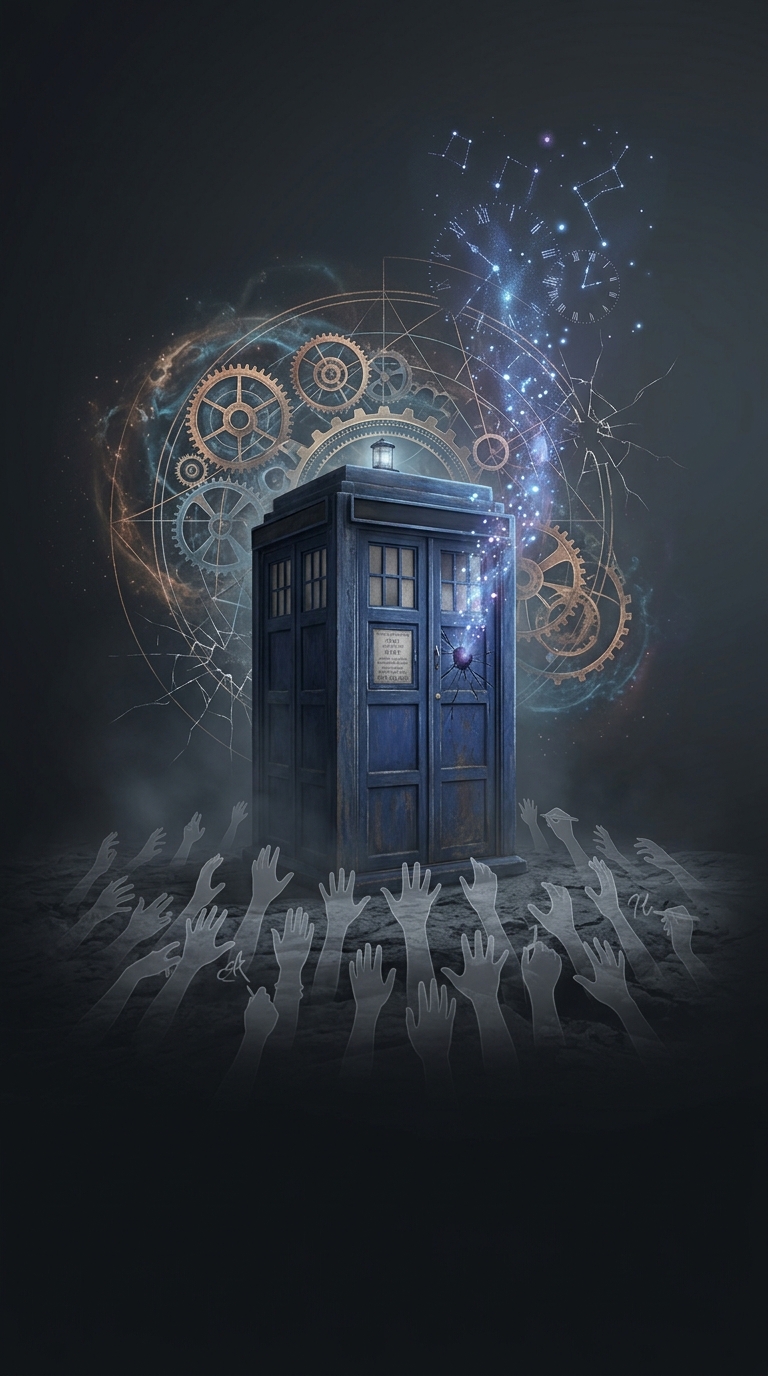
A practical prop became the TARDIS’s permanent look
When Doctor Who began in 1963, its production team needed a recognizable way to show that the Doctor’s time machine could land anywhere. A British police box was a useful answer: it was familiar to viewers, could be built as a manageable exterior prop, and gave the crew a consistent object to place in different settings. A craft that visibly changed shape for every landing would have meant extra designs and props—an awkward expense for a television production working with limited resources.
The tradeoff was that the TARDIS could look conspicuously out of place. A police box in an ancient landscape or on an alien world is hardly an effective disguise. The show eventually gave that production constraint an explanation within its fictional world: the chameleon circuit, the system meant to make the ship resemble its surroundings, is broken. The machine keeps arriving in the same shape because it cannot change it.
A limitation turned into a story engine
That mismatch does more than excuse a repeated prop. It makes the TARDIS easy to spot for viewers while giving characters a reason to react to it. The box becomes a fixed point in a series built around constant changes of era, planet, and cast. Its familiar exterior also gives the crew a practical visual anchor: wherever the story goes, the audience can recognize the Doctor’s ship.
So a production economy became part of the show’s world. The TARDIS’s inability to blend in is both a fictional malfunction and a reminder of how a television constraint can become one of a program’s most durable design choices.