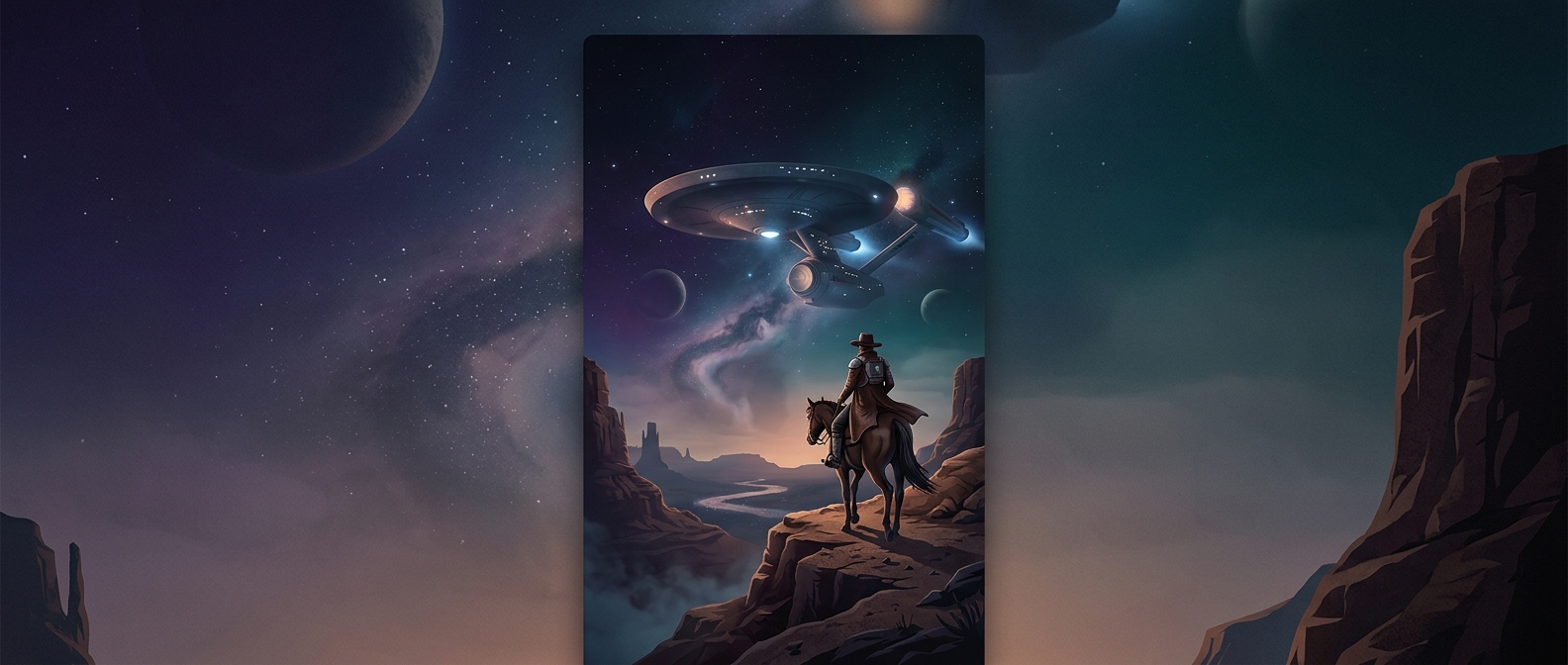
A frontier story made space travel legible
A television executive did not need to imagine an entirely new kind of series to understand a crew traveling from place to place. The western had already made that structure familiar: a group crosses a vast frontier, encounters unfamiliar communities, and faces a fresh conflict along the way. By translating that pattern into space, Gene Roddenberry could present a science-fiction series in the shape of an established adventure show.
That structure also solved a practical storytelling problem. A ship that keeps moving can reach a different world each episode, giving the writers a new setting and dilemma without abandoning the central crew. The frontier was not just scenery; it was a repeatable engine for plots.
The familiar frame made room for harder questions
The western comparison could reassure executives that audiences would recognize the basic appeal—travel, danger, and encounters with the unknown. Inside that familiar frame, however, stories could examine issues on a larger scale than a conventional frontier town allowed. An alien society could make questions about power, prejudice, or cooperation feel strange enough to see afresh, while the crew’s varied backgrounds made difference part of the ship’s ordinary life.
The contrast was the point: the series could look like a recognizable adventure while asking viewers to consider what kind of society its travelers carried with them. A pitch built around a spacefaring wagon train turned an unfamiliar future into a weekly journey—and made each new world an opportunity to test the assumptions of the people arriving there.