A theater’s sound system became a temporary church
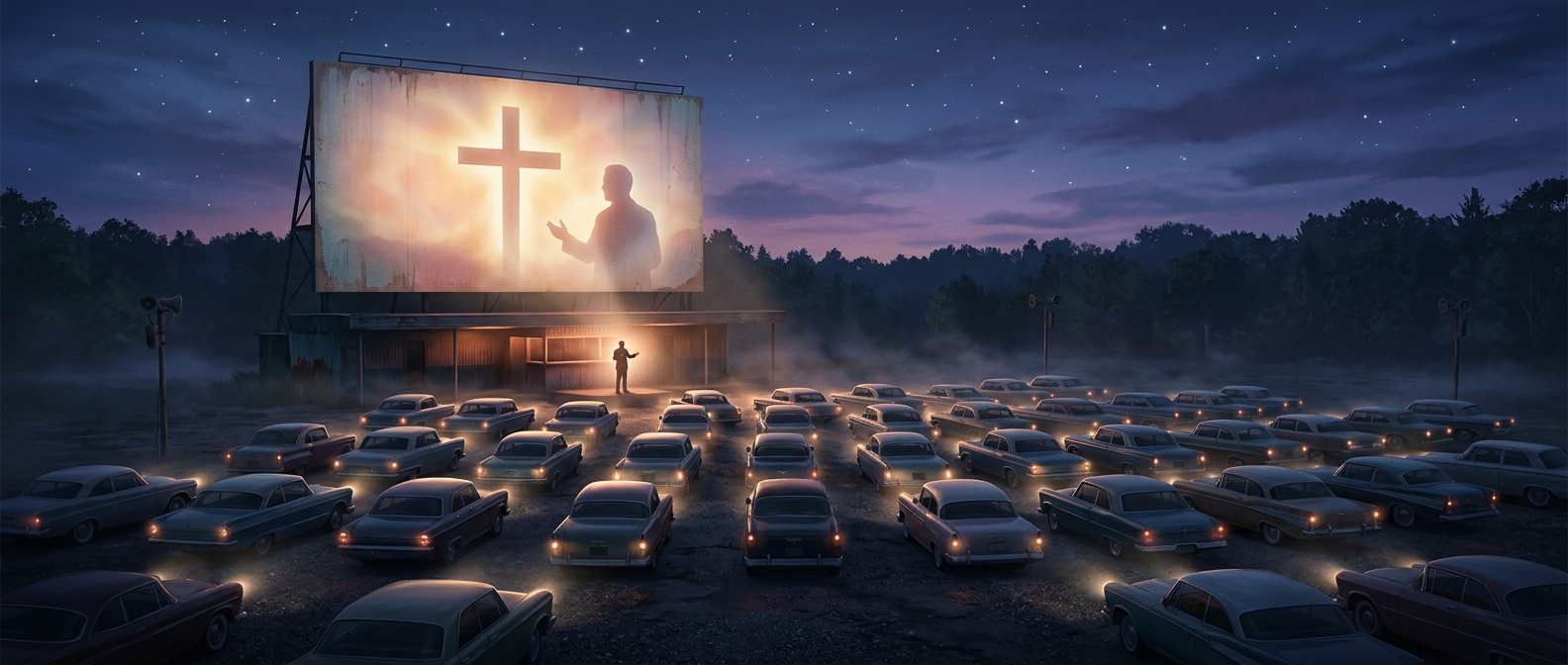
A drive-in already solved one awkward problem for an outdoor gathering: how to send the same program to hundreds of parked cars without building a hall. Each parking space had a small speaker that could be hooked over a lowered window. A minister could speak to the lot, while worshippers heard the service at close range inside their own cars.
The arrangement also made use of a venue designed for crowds but not necessarily occupied every hour of the week. Renting it let a congregation hold a service without owning a large building or installing its own sound equipment. The theater’s screen and projection area could serve as a focal point, though the exact setup depended on the venue and minister.
The car changed the shape of worship
Instead of sitting shoulder to shoulder in pews, families stayed together in their vehicles. That offered shelter from weather and a measure of privacy, and it made arrival and departure simple. But the same convenience kept people physically apart: conversation, shared singing, and the small exchanges before and after a service were harder across rows of cars.
The format was therefore more than a sermon moved outdoors. It adapted worship to a setting built around individual vehicles—using each car as a seat, a shelter, and a listening space. For a congregation short on room, that practical tradeoff could turn a parking lot into a usable Sunday gathering place.