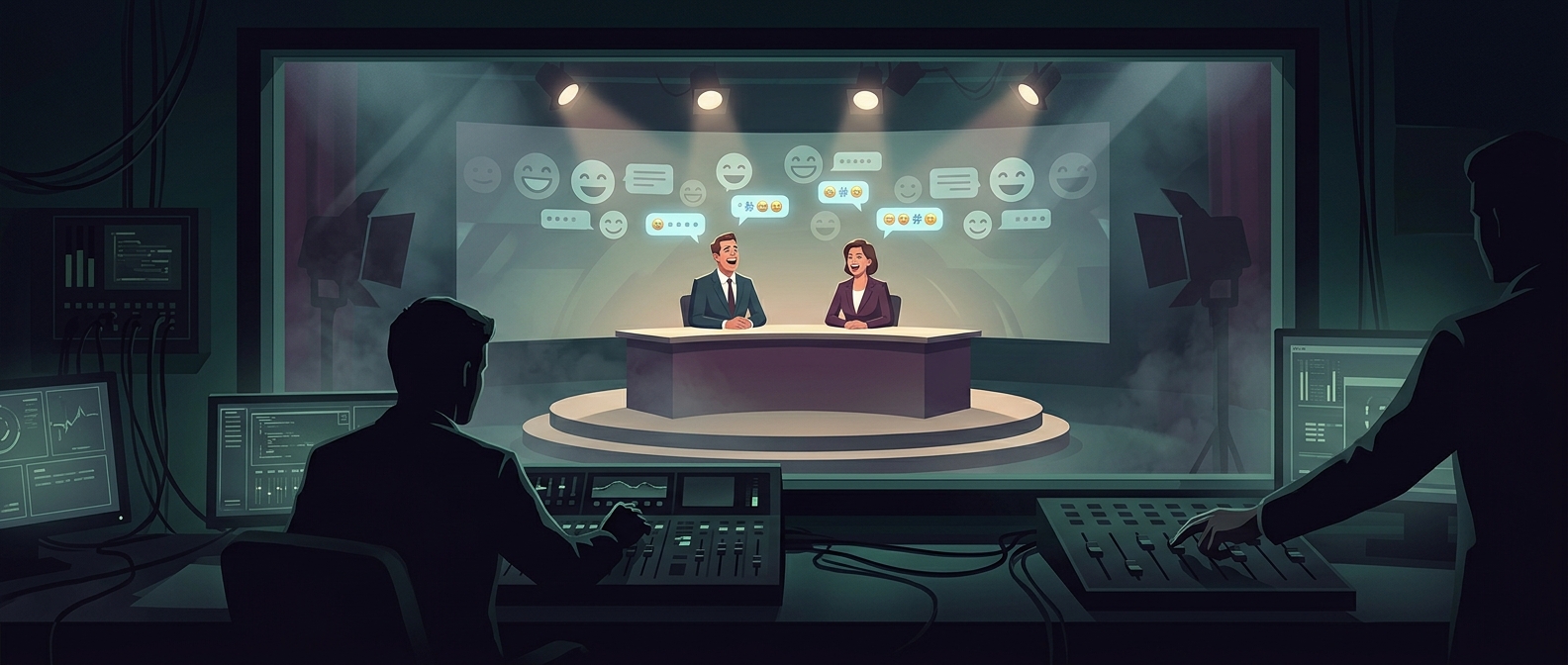
How Morning TV Makes Banter Fit the Clock
A lighthearted exchange on a morning show may look like a detour from the news, but it often has a precise job: fill a small, fixed space in the program. Producers build a rundown—the ordered plan for the broadcast—around segments, commercial breaks, and scheduled transitions. A 30-second banter beat can give a show a softer landing after a serious report or an easy bridge into the next topic.
That timing is why the exchange may be planned even when it sounds casual. A segment that runs long can push later material toward a break; one that ends early can leave an awkward gap. A short scripted bit gives the control room and hosts a predictable way to keep the show moving.
A Script Can Set the Shape, Not Every Word
“Scripted” does not necessarily mean that every laugh or reaction is written out. The plan might specify a topic, a setup, or a line that gets the conversation started, while leaving room for the hosts to phrase the rest naturally. The goal is less to reproduce a private conversation than to create the impression of one within the limits of live television.
That can be useful when colleagues are tired or have little time to prepare: a prompt provides something to play off instead of requiring them to invent a fresh exchange on the spot. But the performance still depends on delivery. A line that sounds easygoing on air may be there because the show needs a brief, dependable moment of warmth before the next item begins.