A bench sets the viewing distance
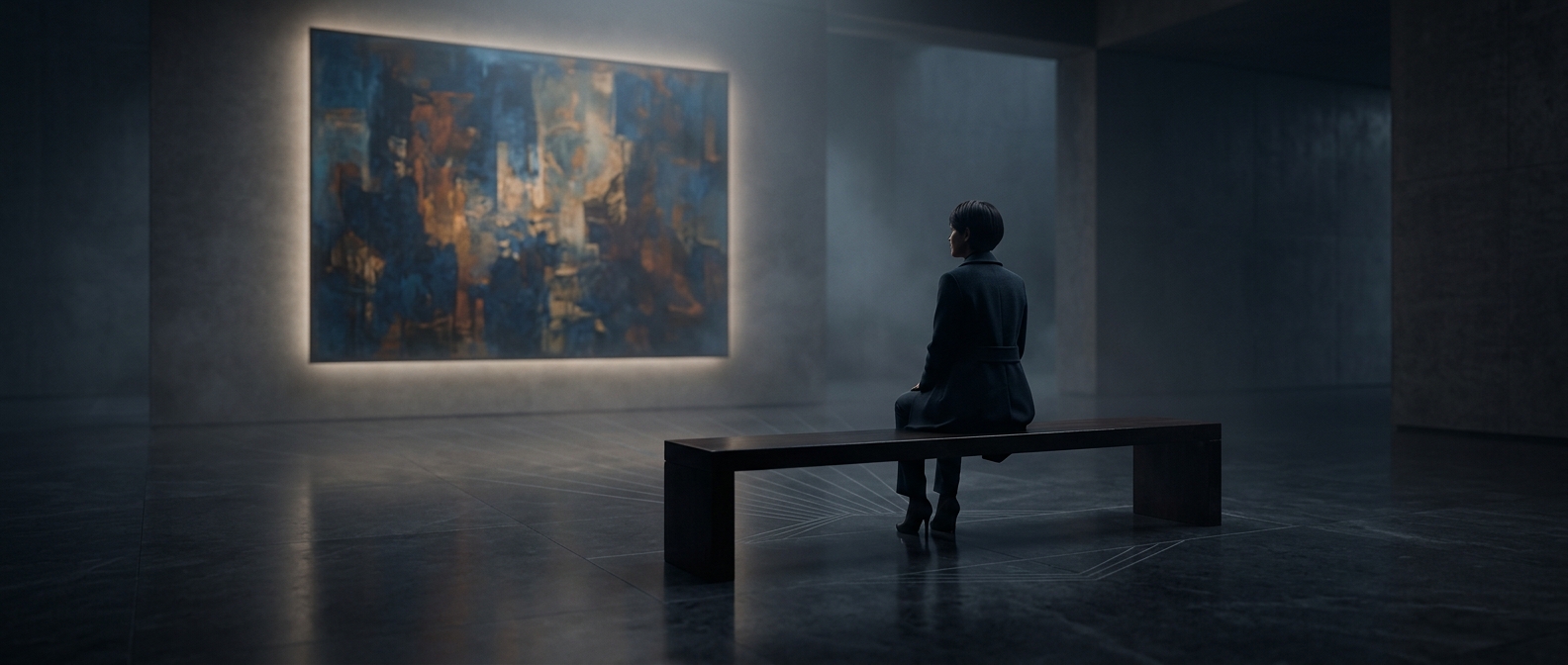
A bench does more than offer a place to rest: its position quietly establishes where a visitor is likely to stop and look. For a large painting or other centerpiece, that distance affects how much fits in the field of view. Stand too close and the eye may take in only part of the work; step farther back and its overall composition becomes easier to read.
Curators and exhibition designers consider that relationship when arranging a gallery. They also have to account for the room’s sightlines—what can be seen from a particular position—as well as doorways, neighboring works, and the space visitors need to move through. A fixed bench makes one viewing spot especially legible without requiring signs or instructions.
The view is also a compromise
There is rarely one perfect distance for every visitor. People differ in height, eyesight, mobility, and how they prefer to look. A bench’s placement therefore guides attention rather than dictating it: visitors can sit for the intended broad view, then move closer to notice details, if the gallery allows.
That small piece of furniture can also help protect the artwork. By inviting people to pause at a measured remove, it can reduce the chance that a crowded viewing area presses right up against the work. The bench turns curatorial judgment into something practical: a place to rest that also frames the first view.