A Face Cast Could Become Political Evidence
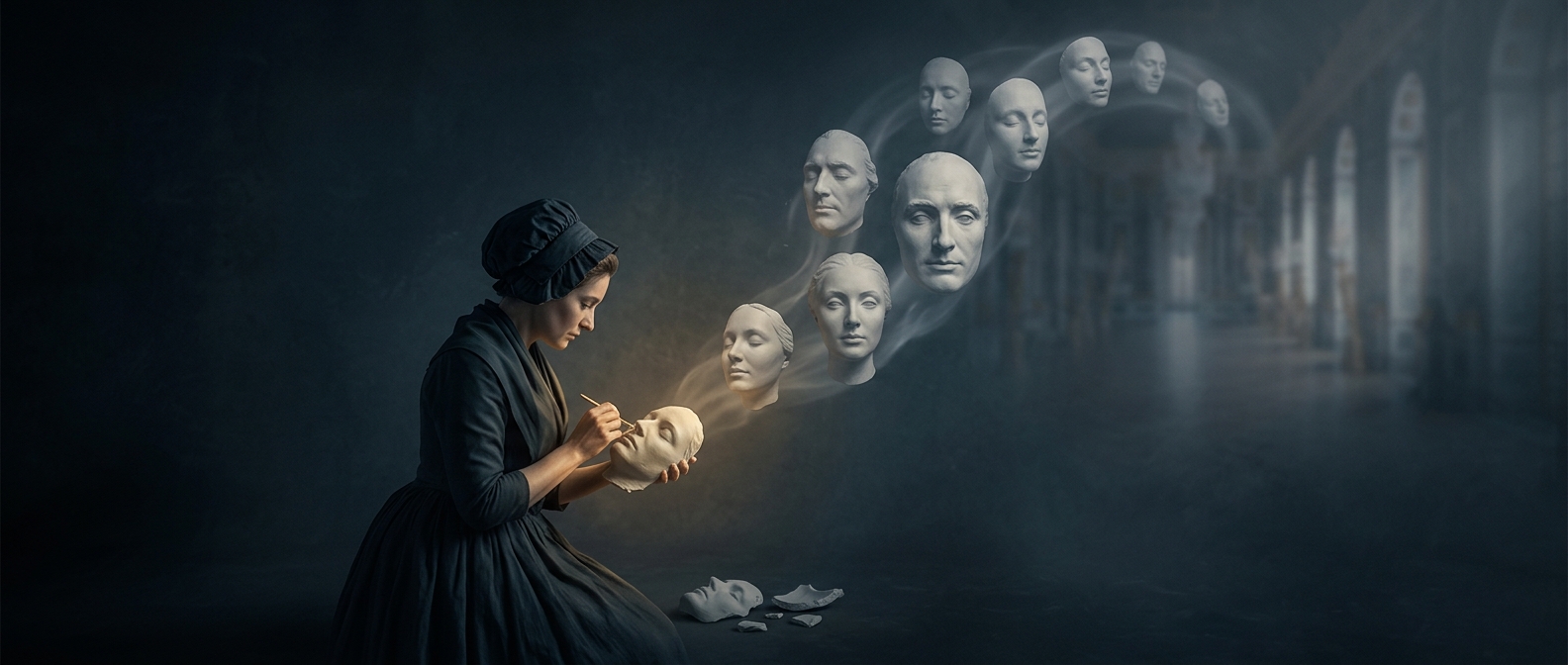
A death mask is a cast made from a dead person’s face, preserving its features in three dimensions. During the French Revolution, Marie Tussaud made such casts of people executed by the new regime, including members of the royal family. The work had an immediate political meaning: producing likenesses of the condemned could demonstrate that she was serving the authorities rather than supporting their enemies.
The danger was not simply that Tussaud might offend the wrong audience. In a period of arrests and executions, suspicion of disloyalty could put a person’s life at risk. Making the masks offered a visible way to show compliance—and a practical means of surviving a volatile moment.
From Evidence to Exhibit
A cast could outlast the execution it recorded. Wax likenesses made the dead recognizable to people who had never seen them in life, turning a private encounter with death into a portable public image. That gave the masks a second purpose: they could be displayed and viewed long after the political event itself.
The same object therefore carried two meanings. At the moment it was made, it could signal allegiance to those in power; later, it could help build a public exhibition around famous faces. Tussaud’s survival and her future career in wax were linked by the same skill: making political events visible in human form.