A knockout is Tintin’s shortcut into the next danger
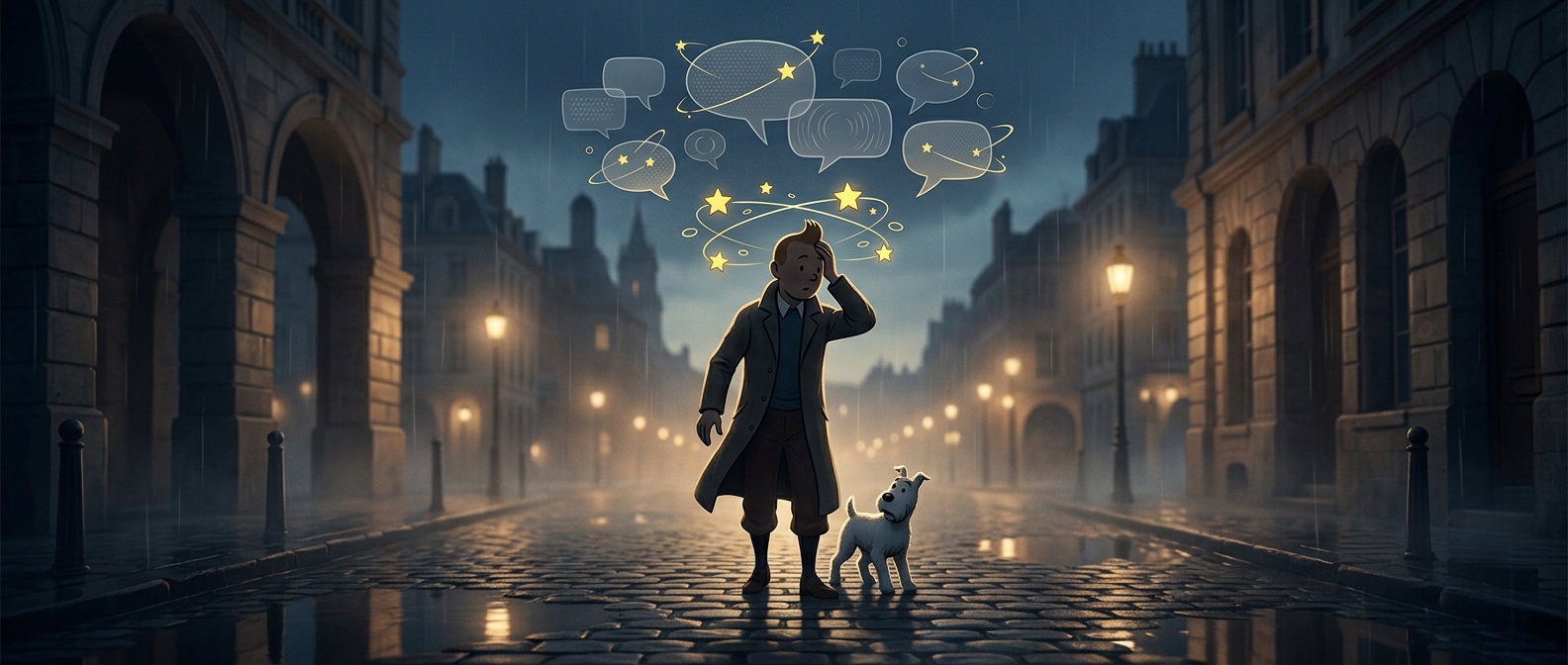
In an adventure comic, a blow to the head can do more than hurt the hero: it can move the story across a gap. Tintin may be overwhelmed, lose consciousness, and wake somewhere he could not have reached freely—inside a hideout, aboard a ship, or in the hands of people who control the next part of the plot.
That makes the knockout a compact storytelling device. Instead of spending pages on a struggle, a journey, or a capture, the comic can show the impact and then reveal the new predicament. The reader is carried along with Tintin, discovering the danger when he does.
Cartoon peril, not a medical timeline
The device works because the comics treat injury with the elasticity of adventure fiction. A knockout is dramatic enough to make Tintin vulnerable, but temporary enough for him to resume investigating once he comes around. Its consequences are measured mainly in suspense and lost time, not in a realistic accumulation of symptoms.
That contrast helps explain why the scenes can feel both alarming and brisk. The story borrows the visual force of a sudden blow, then uses the familiar rhythm of a brief blackout and a new predicament to keep the adventure moving. The knockouts are less a portrait of recovery than a way to change Tintin’s circumstances in a single transition.