Peanuts Ran on a Floating Calendar
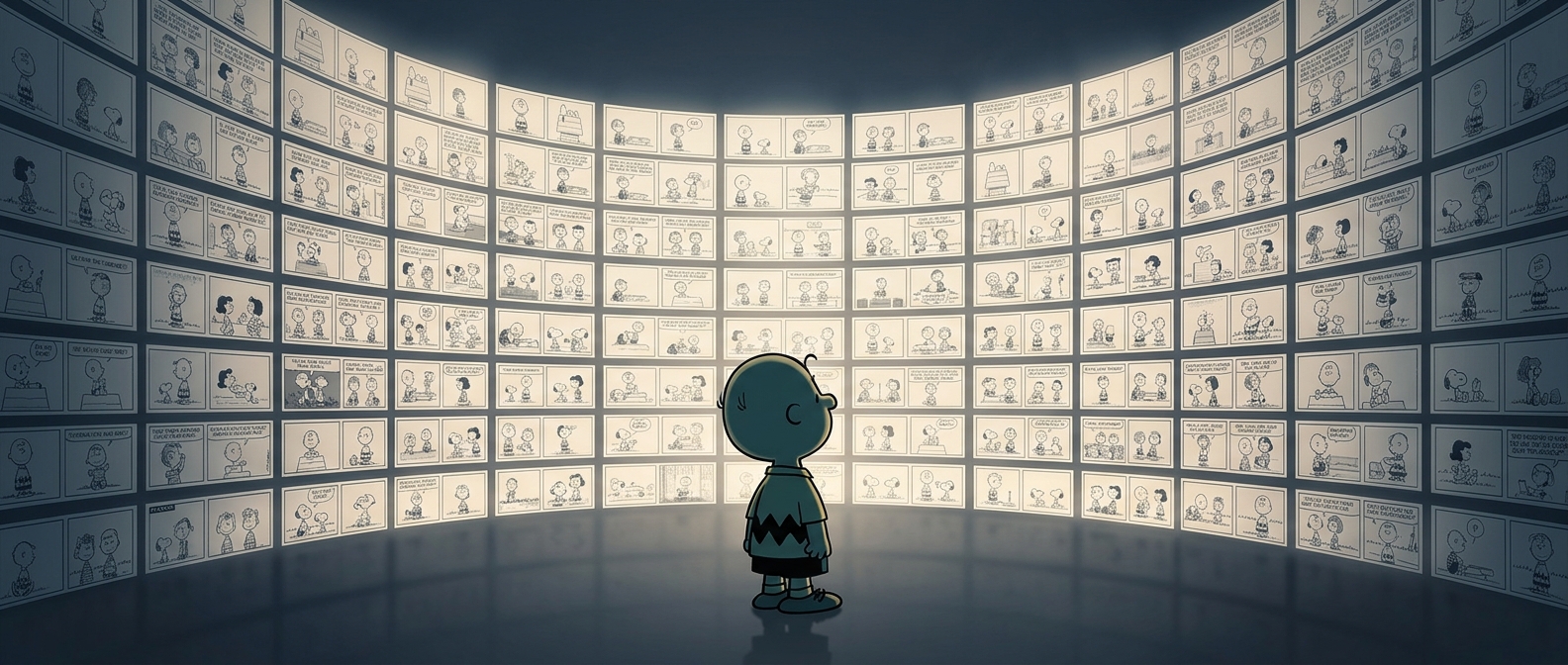
For five decades, Peanuts could respond to the world around it without moving its children through time. Charlie Brown and his friends might mention a current fad or encounter new technology, but those details updated the strip’s setting—not its characters’ ages. The kids stayed in elementary school, and the familiar rhythms of school, sports, holidays, and neighborhood life kept returning.
That made the strip’s timeline elastic: individual days could feel current, while the cast remained in a kind of permanent childhood. Seasonal events such as Christmas could come around again without requiring the characters to advance a year. Readers were not following a continuous story in which each episode had to fit neatly after the last; they were returning to a stable world that could accommodate new jokes and references.
Stability Was Part of the Design
Aging the characters would have changed the basic comic setup. Charlie Brown’s anxieties, Lucy’s confident interruptions, and Linus’s earnestness all depended on children facing familiar problems at child-sized stakes. If the cast moved into new grades and life stages, the strip would have needed to follow different concerns—or explain why its original situations kept recurring.
Instead, creator Charles Schulz could make the world feel contemporary at its edges while leaving its center untouched. A pop-culture reference might date a particular joke, but the characters’ unchanging schoolyard made the strip easy to enter again the next day. The result was a rare combination: Peanuts kept pace with the present without asking its children to grow up.