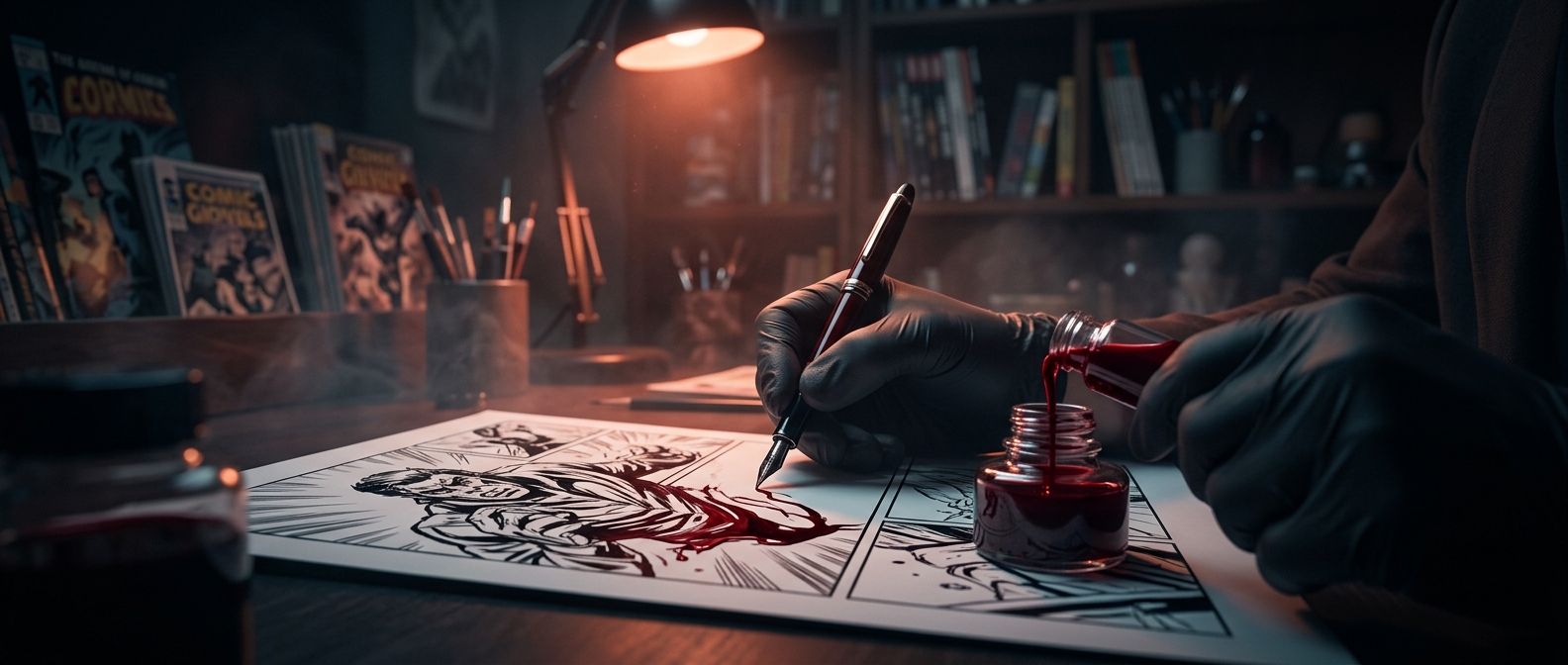
When a rock spectacle entered the printing press
KISS’s blood-ink comic blurred the line between a printed story and a rock-performance stunt. Instead of relying only on the band’s familiar stage makeup and horror imagery, the special edition made the musicians’ bodies part of the object being sold. The gesture turned “authenticity” into something readers could imagine holding in their hands.
How blood became part of a comic
Comic pages are printed with ink, including red ink for colored artwork. For this edition, the band members’ blood was mixed into the red ink used in production. That matters: the material was incorporated into printing ink, not placed as a separate drop on each copy. The press could then reproduce the artwork across the edition, carrying the unusual ingredient into a mass-produced collectible.
The choice also matched KISS’s visual language. The band built its image around theatrical makeup, monsters, and exaggerated danger; blood made that imagery feel startlingly literal. A comic was an especially apt format because fans could keep it, display it, or treat it as memorabilia rather than experience the gesture only at a concert.
The collectible’s unusual afterlife
The blood gave the comic a story beyond its plot: ownership meant possessing an artifact with a direct physical connection to the performers. It also made the object sound more alarming than an ordinary printed page. Calling the comic a potential biohazard points to the source material, but does not by itself establish that a finished, decades-old copy is infectious. The enduring provocation is simpler: KISS made the ink itself part of the performance.