Stealth guards follow rules, not human eyesight
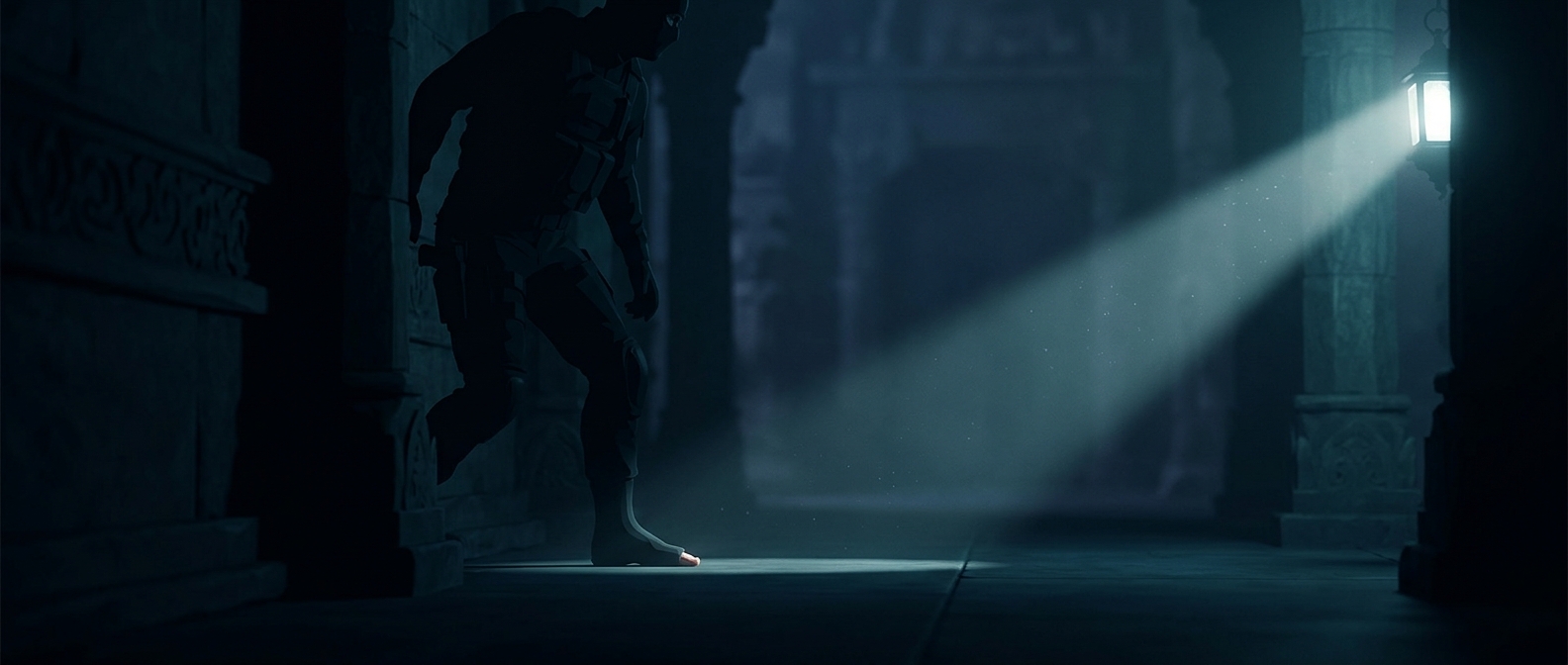
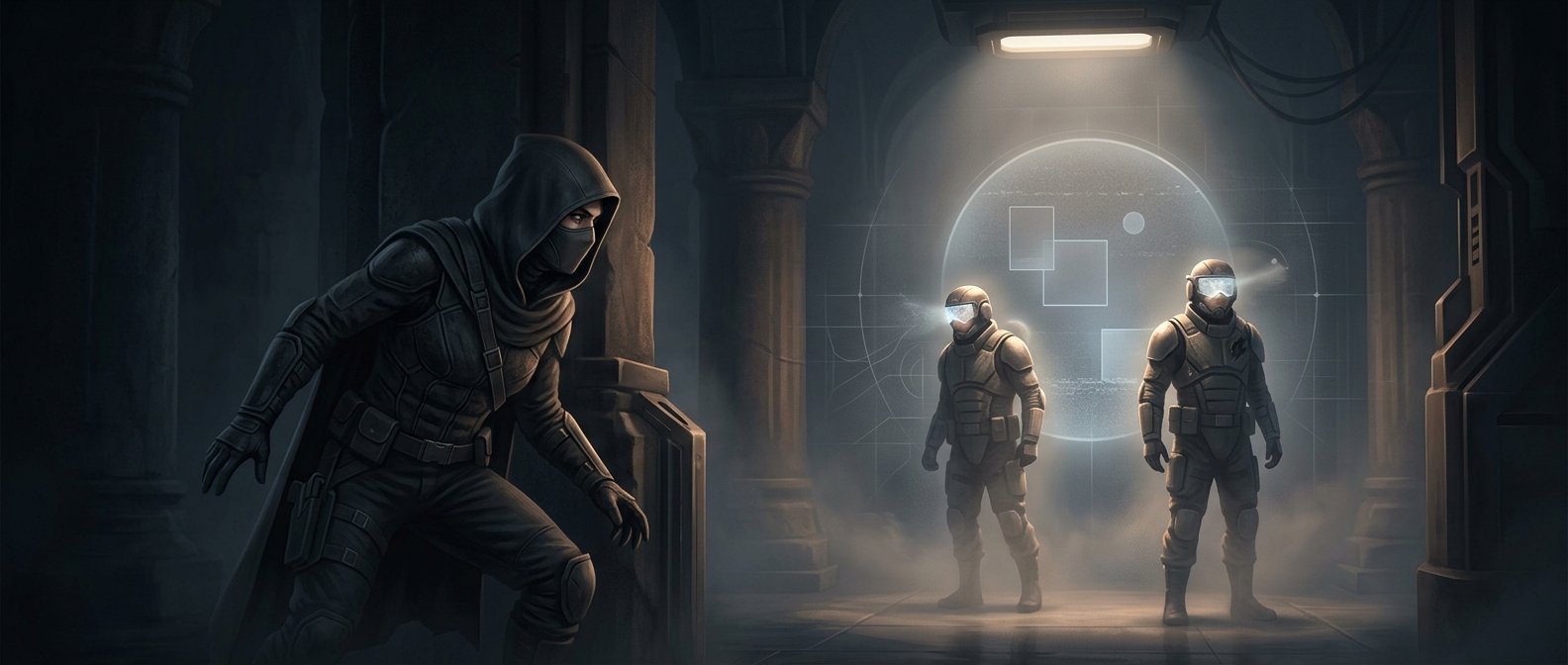
A game guard’s “vision” is usually a designed detection system, not a simulation of how a person’s eyes and attention work. The game checks things such as whether the player is inside a viewing area, how far away they are, whether they are moving, and whether an obstacle blocks the view. Crouching may lower the player’s visibility score enough to keep it below the guard’s detection threshold—even when the character is plainly visible to you.
That threshold gives designers control over how quickly danger builds. A guard might notice a moving player sooner than a still one, or become suspicious before fully sounding an alarm. These rules can make stealth feel like a readable sequence: approach, take cover, wait, then move when the guard looks away.
Why the guard needs a little blindness
If guards reacted to every visible detail as a person might, stealth could collapse into trial and error. A player might be spotted by a guard’s peripheral glance, or lose a carefully planned route because the game treated a small movement as unmistakable. Predictable limits let players learn what actions are risky and make success feel earned rather than arbitrary.
The tradeoff is that the guard can seem foolish when the rules are too generous or poorly signaled. Designers can soften that effect with animations, warning indicators, or intermediate suspicion states, showing that the guard is beginning to notice something before the alarm begins. The result is not perfect realism but a legible contest: the player learns how the game defines “hidden,” even when that definition lets them crouch only a few feet away.