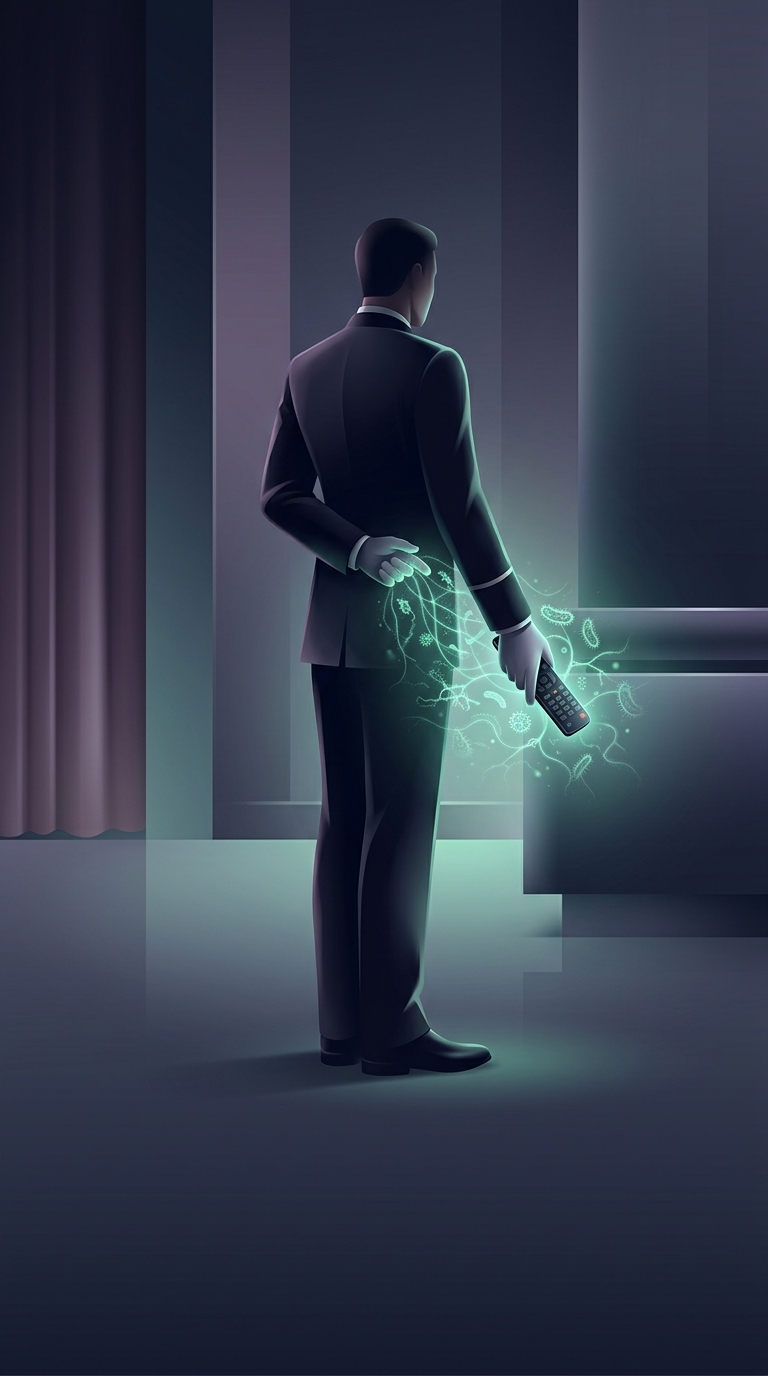
The TV remote topped the hotel-room germ list
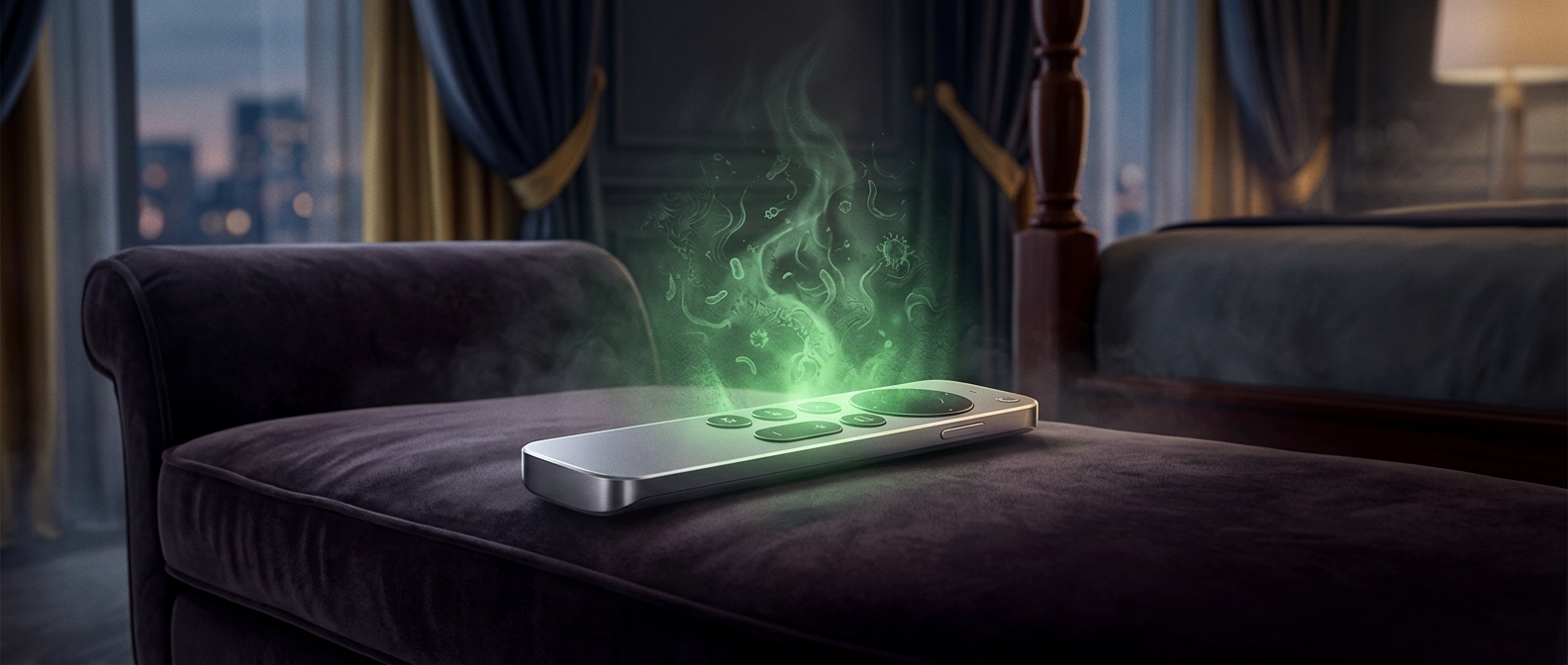
The object microbiologists most often singled out was the television remote control. It passes from guest to guest, is handled repeatedly, and can be easy for housekeeping to miss while changing linens and cleaning larger surfaces.
That combination matters: a remote’s buttons and seams give hands plenty of small places to leave microbes, while its electronics make it less straightforward to wipe down than a countertop. A quick touch transfers some of what is on a person’s hands to the remote; the next person can pick it up in turn.
“Dirtiest” means most contaminated—not visibly filthy
Microbiologists look for microorganisms on sampled surfaces, including bacteria. A high count indicates that a surface has accumulated more detectable microbes than others in the rooms tested. It does not mean every organism found is dangerous, or that touching the remote will make a guest sick. Many microbes are harmless, and risk depends on the organism, how much is present, and whether it gets from a hand to a person’s mouth, eyes, or nose.
The finding points to a practical blind spot in room cleaning: objects guests touch constantly may receive less attention than surfaces that look dirty. The remote’s small buttons are a reminder that a room can appear freshly made while its most frequently handled object still needs a careful wipe.