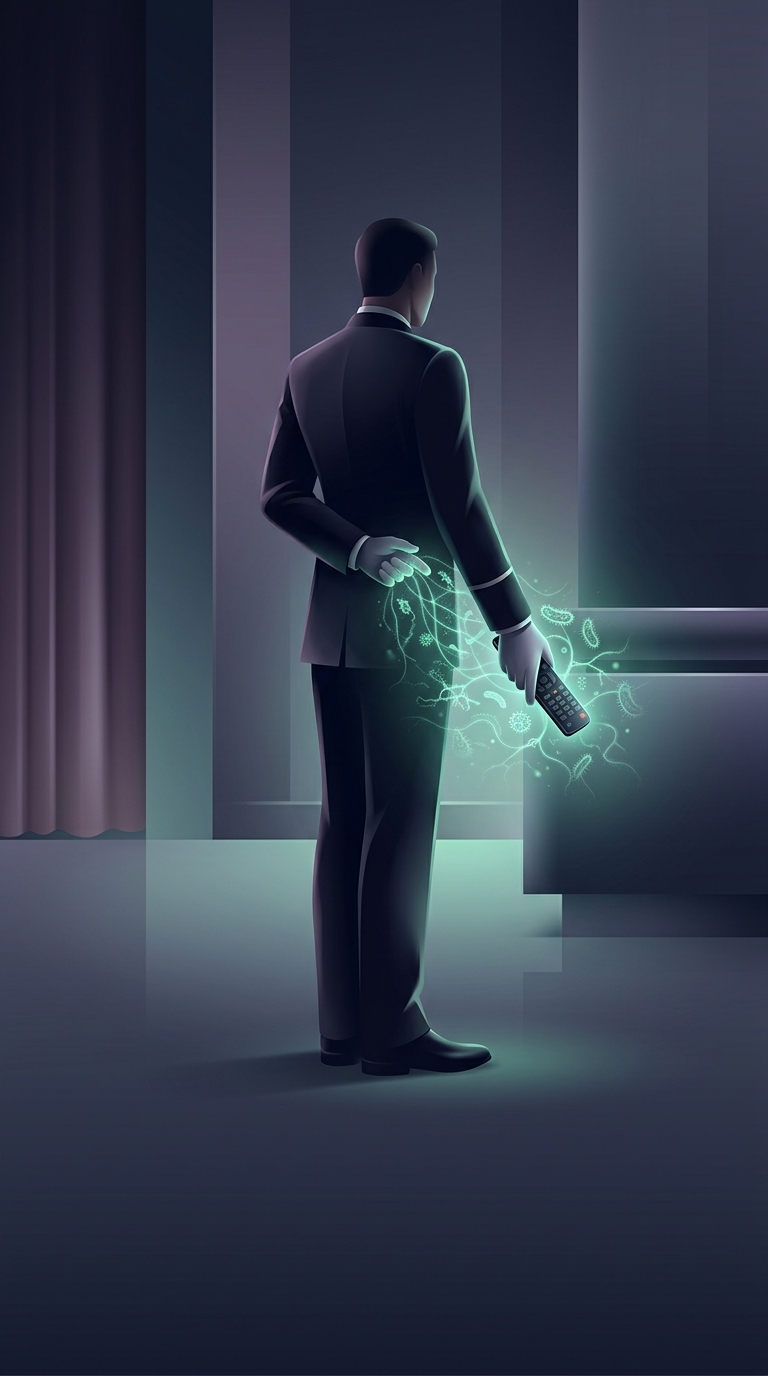
Why the TV remote is a likely culprit
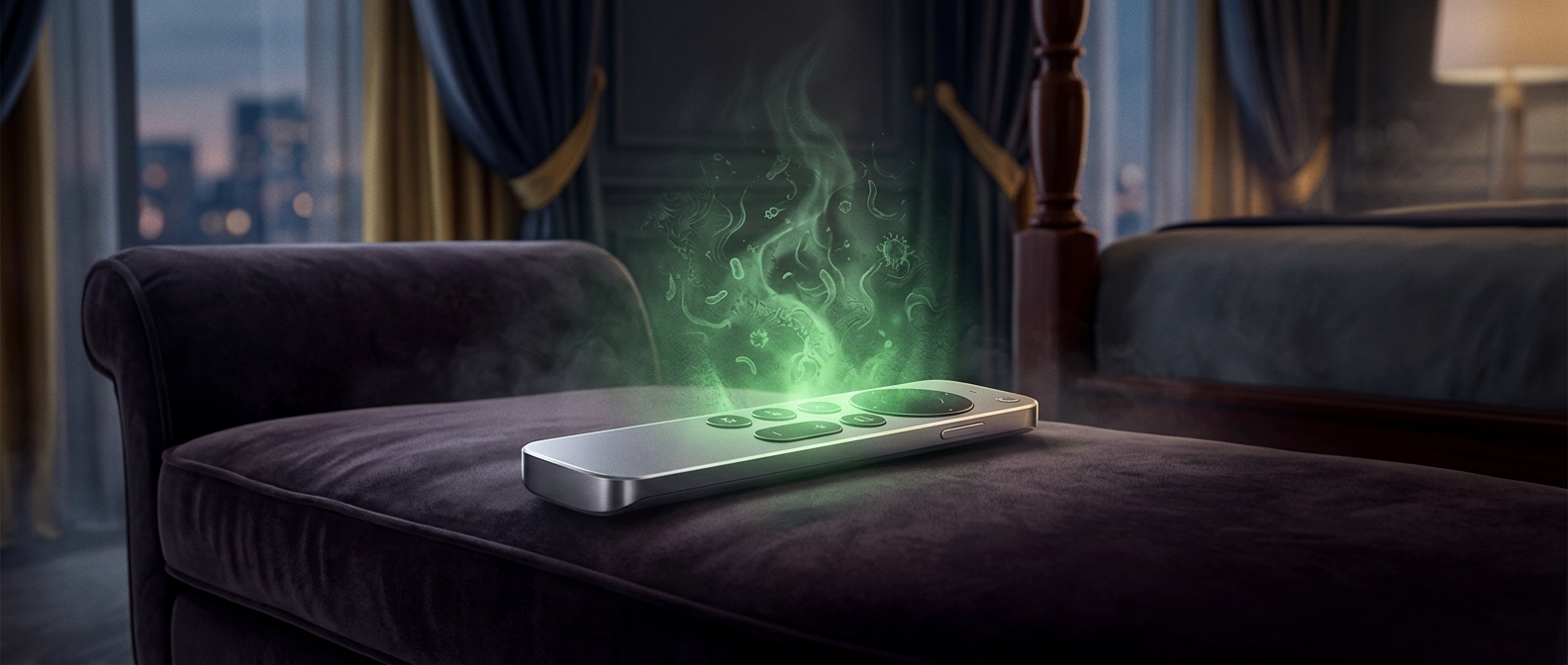
The object most often singled out is the TV remote. It passes through many hands, gets pressed repeatedly, and is easy to overlook during a quick room turnover. Unlike a bathroom counter or sink, it may not look dirty, so its buttons and crevices can escape routine wiping.
That makes it a plausible place for microbes left by previous users to linger. A surface swab can detect germs, but finding them does not by itself show that they are harmful or likely to make the next guest sick. The practical concern is transfer: a guest touches the remote, then touches their face or food.
A small cleaning blind spot
The remote’s shape is part of the problem. Its raised buttons and narrow gaps are harder to wipe thoroughly than a broad, smooth surface. Cleaning staff working under time pressure may focus on obvious surfaces, while a frequently handled device remains easy to miss.
The useful takeaway is not that every hotel remote is dangerous, but that it is a high-touch item worth wiping before use. A quick pass over the buttons—and the spaces around them—targets the very places a casual room inspection is least likely to catch.