Why wig fashion created a market for hair
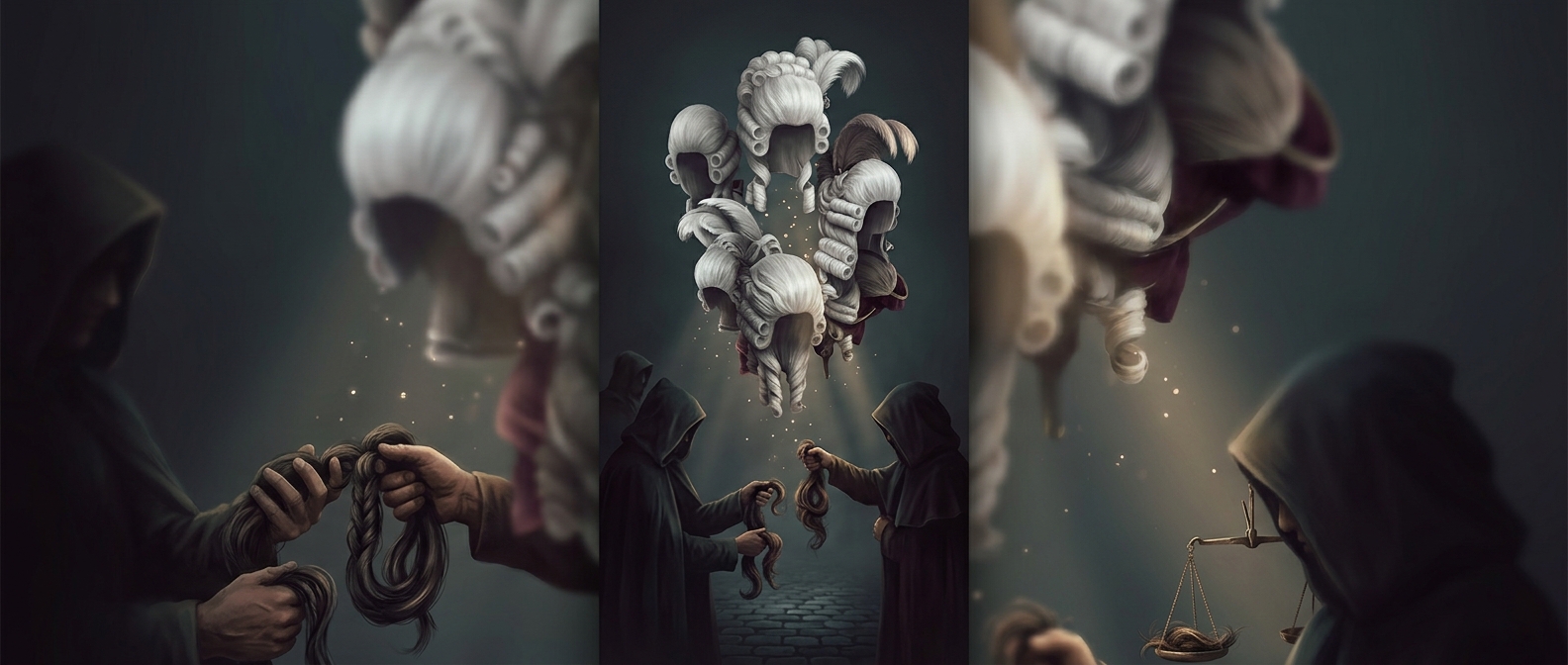
A powdered wig was not made of powder: it was a constructed hairpiece, often made from human hair and finished with powder. Making one required many strands arranged into a style, so wig makers needed a steady supply of hair. That demand turned a personal part of the body into a saleable material—and created an incentive to obtain it by force when legitimate sources fell short or cost too much.
From stolen locks to a finished wig
Hair taken from a corpse or a living person could enter the same trade once it reached a buyer. A wig maker could work the strands into a hairpiece, while the person who stole them profited from a commodity that was portable and could be sold. The chain connected fashionable customers to people far removed from the final purchase: consumers saw a finished wig, not the coercion that might have supplied its hair.
The danger was not simply that wigs were fashionable, but that their production depended on a material that had to be gathered from people. When demand made hair valuable, even a small, easily carried crop could make a grave or an isolated traveler a target. Fashion therefore had a human cost hidden inside the finished style.