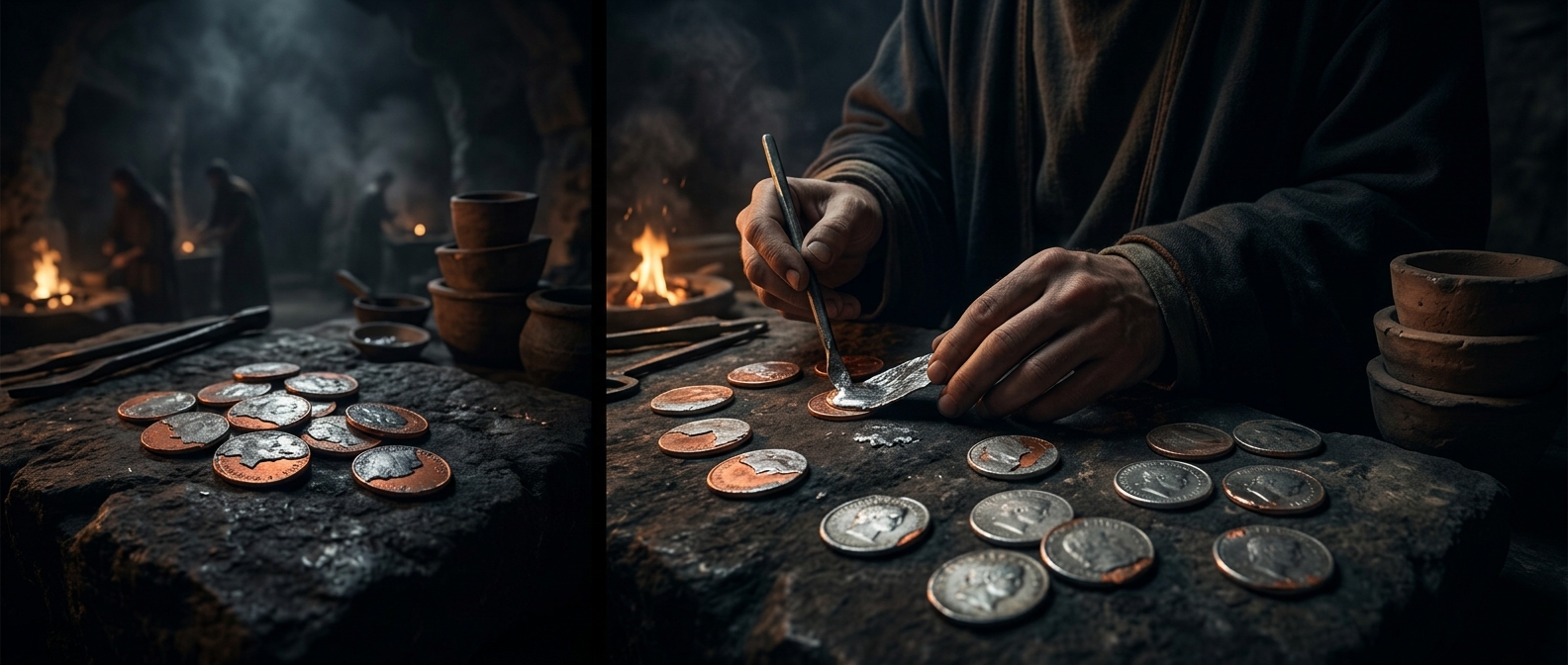
A silver surface over a cheaper core
A counterfeit silver coin could be made by shaping a base-metal core—often copper or a copper alloy—and covering it with a thin layer of silver. The coating supplied the color and shine people expected, while the core cost far less than a coin made mostly of silver. The deception depended on appearance: in ordinary exchange, a coin might be handled and passed along without anyone cutting it open.
Why the trick could work
Coins were useful because people could accept them without weighing and testing every payment from scratch. A familiar-looking piece offered a quick signal of value, especially in everyday transactions. A plated fake exploited that shortcut: it imitated the visible feature, while concealing the difference that mattered most to its metal value.
The disguise was vulnerable to use. Scratches, clipped edges, or repeated wear could expose the darker core beneath the silver. Once that happened, the coin was easier to identify and harder to pass off. A careful recipient could also inspect or test a suspicious piece, but routine trade did not make thorough checks practical for every coin.
The cost of lost confidence
A plated counterfeit was not just a cheap substitute for silver; it shifted the risk to whoever accepted it. If the coating held up long enough, the counterfeiter could spend the coin as though its surface represented its substance. If the deception was discovered, the recipient—not the maker—was left with a coin worth much less than it appeared.
That gap between what a coin looked like and what it contained is what made the trick possible. The thin silver layer did not need to fool everyone forever; it only had to survive long enough to reach the next person.