How a drop of resin became a record of life
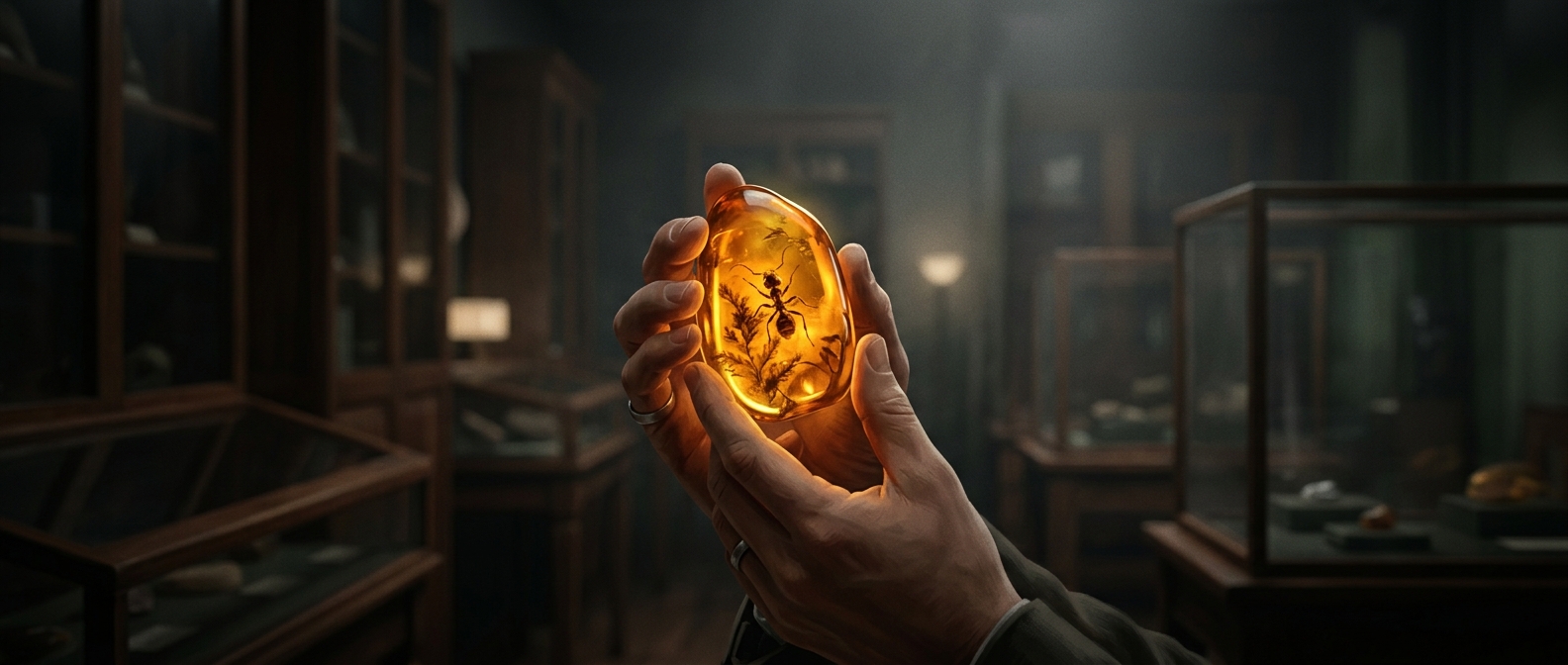
Amber begins as sticky tree resin. If an insect lands on it, the resin can trap the body; later flows may cover it. Over long periods, burial and chemical change turn the resin into a hard material. The insect is not simply sitting in a clear stone: it is enclosed within a natural capsule, sometimes with details fine enough to reveal features such as wings or legs.
That process is selective. Most resin never captures an insect in a way that preserves it, and many inclusions are hard to see or identify. A clear piece with a recognizable specimen therefore offered something ordinary amber jewelry could not: a small, tangible trace of an ancient ecosystem.
Why inclusions could raise the price
For buyers, an inclusion added both visual interest and rarity. A piece could be judged not only by its color and clarity but by what it contained and how clearly the specimen could be seen. That made amber a material whose value varied from one piece to the next, even when the pieces were similar in size.
The same qualities made it useful to collectors and naturalists. Unlike a fossil embedded in rock, an insect in amber can remain visible through the surrounding material, preserving a compact view of a creature caught in resin. It is evidence of a particular encounter—not a complete picture of the ancient forest, but a remarkably intimate one.
A portable luxury with a story inside
Baltic amber could be carried and worked into ornaments, helping it circulate far from the coasts where it was gathered. Its appeal joined beauty to a compelling selling point: a buyer could own a polished object that also held a specimen from a distant past. The rare inclusion turned amber from attractive material into a one-of-a-kind natural keepsake.