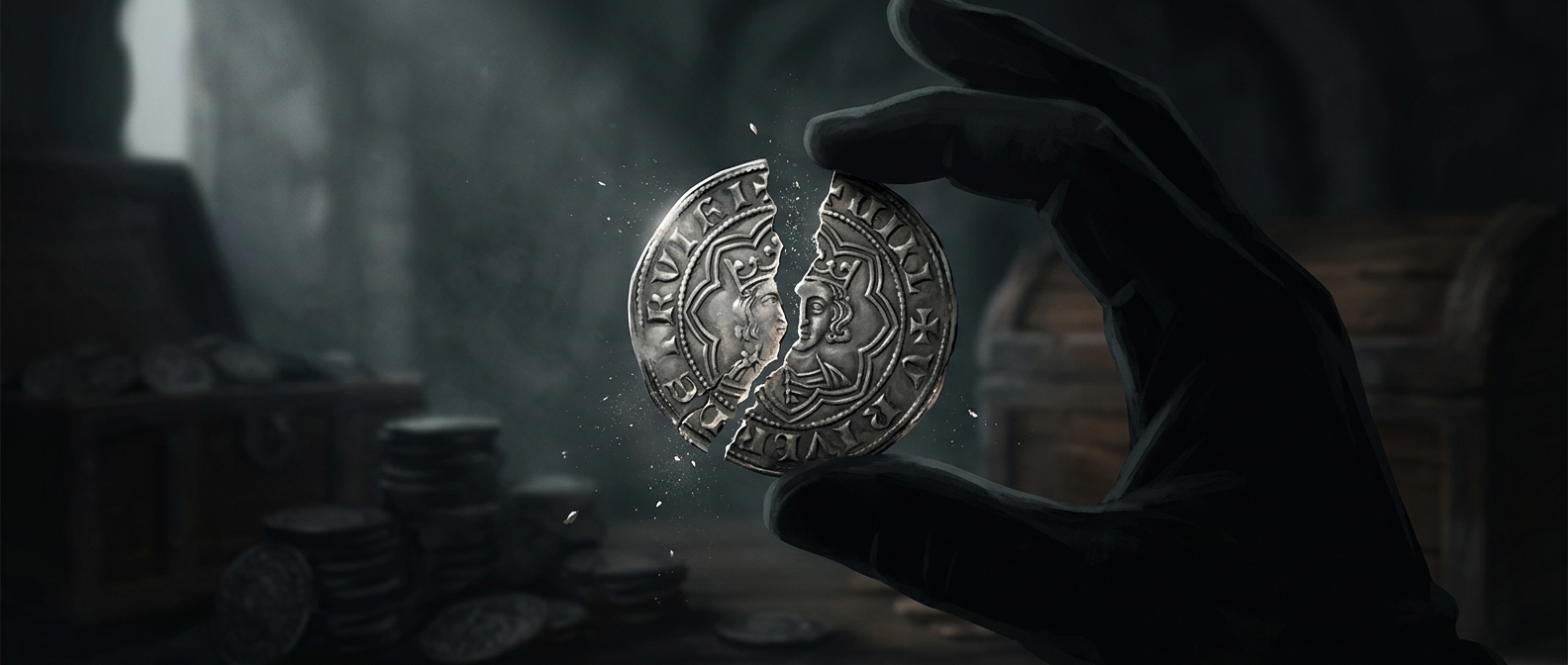
A Coin Designed to Lose Its Grip on Savings
A silver coin usually served two purposes: it paid for things, and it let its owner keep wealth for later. Rulers who issued unusually thin coins tried to weaken that second use. If a coin could be crushed between two fingers, it was a poor object to stash away and handle repeatedly as a durable store of value.
The more powerful measure was the annual recall. People had to return the old coins to be reminted, and the process came with a tax. That charge made simply holding coins costly: someone who kept silver out of circulation still had to surrender part of its value when the deadline came.
Turning the Calendar Into an Economic Tool
This system changed the tradeoff between spending and saving. A person who spent a coin before the recall could pass it along in ordinary trade. A person who kept it faced the reminting levy. The coin’s thinness reinforced the pressure by making it physically less suited to long-term storage, while the yearly tax gave the policy its recurring bite.
The aim was not to make silver worthless. It was to make these particular coins less attractive as a lasting reserve of wealth. In effect, the ruler used both the coin’s fragility and the cost of keeping it past the recall to push silver back into circulation—and to collect revenue when it returned. A coin could still buy goods, but keeping it safely for another year came with a price.